
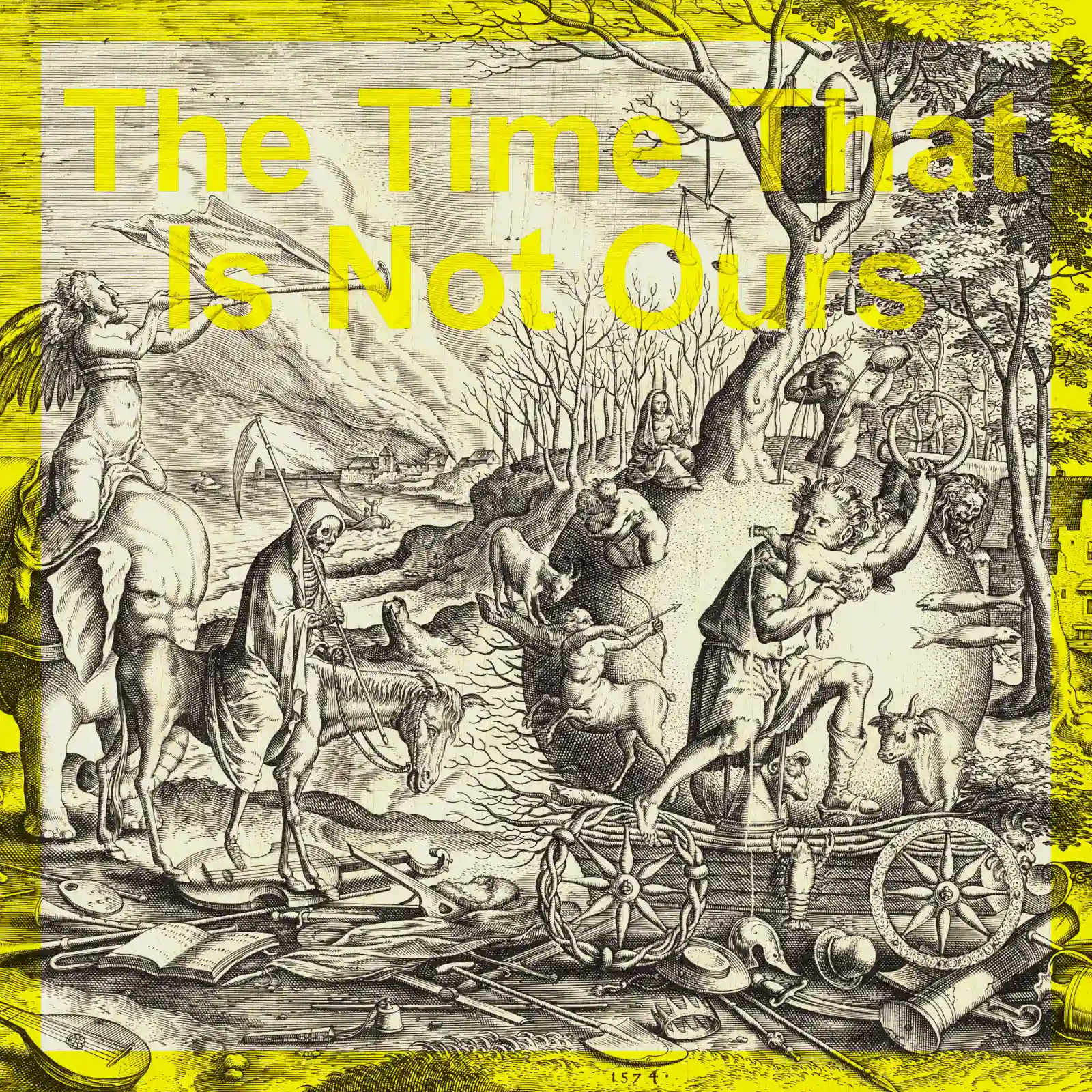
The Triumph of Time, Philip Galle, Rosenwald Collection
The Time That Is Not Ours
Beginnings, Primary Forgetting, and the Paulinian Interruption of Christianity, Rabbinic Judaism and Islam
“The question is whether the authority attributed to beginnings and to supersession already obscures another possible and, indeed, necessary relation to time, and to the urgency of the now.”
Sergey Dolgopolski
The Time That Is Not Ours:
Beginnings, Primary Forgetting, and the Paulinian Interruption of Christianity, Rabbinic Judaism and Islam
Al-zman means “the time” and tacitly implies the time now, and in that sense “our time.” Yet before asking how we ought to think our time, we might first ask what makes a time become “our time” at all. How does a historical configuration acquire the authority to present itself as the present? Through what processes does a particular now come to seem so immediate, so undeniable, and so urgent that its own conditions of emergence no longer require examination?
These questions acquire a particular urgency in the interreligious and interpersonal constellation that animates Al-Zman: that of the Christian, the Jew, and the Muslim. Discussions of the respective traditions are frequently organized through narratives of beginning and supersession, whether by appeal to Abrahamic origins, fulfilled covenants, corrected revelations, or recovered foundations. The programmatic proposal of Anoush Ganjipour refuses “conversion” to such narratives insofar as one remains or becomes captive to the self-descriptions of the traditions involved. Along related lines, Elad Lapidot’s reflections on defeat explore how a tradition may be engaged precisely through what appears to negate it, from without as well as from within. Both proposals invite us to see more clearly how the designation of “our time” remains bound to assumptions concerning beginning and supersession. The present reflections take up that conversation by asking whether the authority attributed to beginnings and to supersession already obscures another possible and, indeed, necessary relation to time, and to the urgency of the now.
Such inquiry emerges from a concern with presentism, but it is not exhausted by it. Presentism is often understood as an excessive preoccupation with contemporary events and concerns. Such a description is not entirely wrong, yet it remains insufficient. The problem is not that scholars investigate matters that are contemporaneous with them. Every inquiry necessarily begins from the circumstances in which it finds itself. Rather, presentism names a more subtle operation through which the contemporary ceases to appear as historically constituted and instead comes to function as the unquestioned horizon of intelligibility itself.
Yet this apparent obviousness is itself historically produced. What appears immediate is never simply immediate. From this perspective, the contemporary may be understood not as the opposite of the historical but as one of history’s most effective disguises. The past confronts us most forcefully precisely where it appears not as the past but as the present. We encounter the work of centuries while experiencing only the immediacy of the current moment.
Authority of Beginning
Once we read the present through a historical lens, however, we realize that the authority of the present and the authority of the beginning are more deeply connected than they first appear. Presentism challenges the authority of the past only because the past has already been conceived as something situated behind us, as a completed sequence of events leading toward the contemporary world. The contemporary acquires supremacy precisely because it occupies the endpoint of a narrative whose direction has already been established. Conversely, attempts to oppose presentism often respond by restoring authority to the origin. One seeks an earlier beginning, a forgotten inheritance, an obscured tradition, an ancient wisdom capable of correcting the blindness of the contemporary moment.
Both gestures remain organized by the same assumption: that thought must derive its orientation either from the present or from the beginning, or as Hans Urs von Balthasar1 has it, in speaking about Old and New Testaments, from both: the new is latent in the old and the old unfolds in the new, so that the two exert authority on each other.
What, however, if neither possesses the authority we assign to it?
This question emerges with particular force in contemporary forms of archaeology and genealogy. Archaeological criticism seeks to uncover the hidden strata from which contemporary realities emerge. Genealogical criticism traces the contingent processes through which apparently natural institutions and categories were produced. Such projects remain indispensable. Yet they also contain a strategic ambiguity. Archaeology searches for an arche. The Greek term designates not merely a beginning but a beginning that exercises authority. An arche is an origin that functions simultaneously as a principle.
The critical gesture therefore often proceeds by replacing one authoritative narrative with another. Something once assumed to be immediate is shown to derive from a concealed beginning. The present is displaced by a deeper history. Yet the privilege of beginning remains intact. What changes is merely which beginning receives authority.
The same ambiguity appears, in a different form, in Heidegger’s notion of the “other beginning.” Heidegger sought to escape the conception of history as a succession of epochs. The other beginning was not intended as another event added to a historical sequence. In his terms, it named instead an ongoing arrival in and through transforming relationship between thought and Being itself. Beyond his terms, it names an opening beginning, that one that works through and despite the epochs. Yet despite this radical displacement, the beginning remained operative. Thought still received its orientation from an inception. Authority remained tied to beginning even where beginning had ceased to be chronological and became future and past oriented despite all the chronological epochs.
My proposal is neither another other beginning, nor several other beginnings, however many. Nor is it a critique of one other beginning in the name of another other beginning. I invite asking instead whether beginning itself has become the unquestioned form through which Western thought authorizes itself.
The issue, thus, is not which beginning ought to guide us. The issue is why beginning should possess such privilege in the first place.
Suspension without Supersession
It is here that the question of supersession becomes important. Supersession is commonly understood as a theological structure through which one covenant succeeds another, one revelation fulfills another, one community replaces another. Yet the logic of supersession extends well beyond theology. Entire philosophies of history are organized by supersessionist assumptions. One age replaces another. One world supersedes its predecessor. One disclosure renders a prior disclosure obsolete. Even anti-supersessionist projects often reproduce the same logic through the claim that the age of supersession has itself been overcome.
Supersession presupposes that history can be gathered into the unfolding of a beginning. What comes later derives its intelligibility from what came first, while simultaneously claiming to fulfill, surpass or pass through and despite.
Against this logic I want to propose what might be called suspension without supersession. Such suspension does not reject beginnings. That would be impossible. Human existence unfolds through inheritances, foundations, inscriptions, and traditions. Nor does suspension establish itself as yet another beginning. It does not announce a new epoch beyond supersession. Rather, it seeks to restrain the authority that beginnings claim for themselves.
The implications of this proposal become clearer when we turn to the traditions that continue to shape much of our contemporary world. These traditions are typically grouped under the designation “Abrahamic.” The term appears inclusive. It emphasizes kinship and shared origin. Yet precisely for this reason it remains deeply tied to the authority of beginning. Judaism, Christianity, and Islam become intelligible through reference to a common ancestor. Their differences are interpreted against the background of a shared origin. Perhaps, however, origin is not what most fundamentally links them. Perhaps what binds these traditions together is not primarily a common beginning but a common exposure to instability. It is at this point that I would introduce what I call the Paulinian moment, but only after situating it within a much older drama.
The G-d Who Refuses a Name
This drama begins not with Paul but with the G-d of Exodus. The decisive scene occurs when Moses asks God for a name. The question itself is not innocent. Moses does not ask whether God exists. He asks what he should say when Israel inquires about the one who sent him. “What is his name?” is not merely a request for information. It is a very Egyptian question. It concerns identification, intelligibility, and authority. It seeks a designation through which the divine can be recognized, remembered, invoked, and distinguished from other powers.
Within the ancient Near Eastern world, such a question was entirely natural. Names belong to an economy of recognition. To name is to situate. To know a name is not merely to possess a label but to establish a relation within an order of intelligibility. The question therefore demands something more than a word. It seeks a place for a god within a system of knowledge.
The remarkable feature of Exodus is that G-d refuses to answer the question in the form in which it is posed. The response, Ehyeh Asher Ehyeh, has been translated in countless ways: “I am who I am,” “I will be what I will be,” “Ich werde dasein als, der ich dasein werde.”2 What matters here is not choosing among these translations but recognizing that none of them functions as an ordinary name. Moses asks for a noun and receives a verbal formulation. He asks for an identifier and receives a refusal of identification. The response does not satisfy the question. It interrupts it. The G-d of Exodus does not simply withhold a name. More radically, this G-d refuses the very logic of naming through which the question seeks an answer.
To say this is not to deny that names subsequently appear. Immediately after the refusal there is a concession. The G-d who refuses a name allows himself to be designated as the God of Abraham, the God of Isaac, and the God of Jacob. Later Rabbinic tradition will surround that refusal with elaborate practices of reverence, in which “The Name” comes to reverently refer to the refusal of naming. The refusal therefore does not abolish naming altogether. Yet this elaborate concession never cancels the refusal. The G-d of Exodus becomes nameable only under the sign of an antecedent resistance to being named.
This tension is crucial because it transforms how memory itself must be understood. Ordinarily, memory presupposes presence. Something first becomes present and is subsequently remembered. Forgetting then appears as a secondary phenomenon, the loss of what was once available. Memory is primary; forgetting is derivative. Yet, the narrative of Exodus suggests a different possibility.
What if Forgetting is Primary?
What if the relation to G-d begins not from possession but from an impossibility of possession? What if there is no original presence capable of becoming fully available to memory? In that case forgetting does not arise because something once present has been lost. Rather, forgetting belongs to the relation from the beginning.
The G-d who refuses nomination cannot become an object of complete recollection. One may remember the covenant, the deliverance, the commandments, the signs, the words, and the stories. Yet none of these exhausts the speaking from the burning bush. The G-d of Exodus always exceeds what a name can name or memory can retain.
The consequence is not to underestimate. Israel’s central drama is no longer simply the struggle to remember. It becomes the struggle to remember a relation whose very structure exceeds memory. This is why Deuteronomy is so preoccupied with forgetting. Again and again Moses warns Israel that entry into the land will be an onset of forgetting. Once houses are built, fields cultivated, and institutions established, Israel will forget. The warning is usually interpreted as a moral admonition: prosperity breeds complacency, success leads to ingratitude. No doubt this is part of the meaning.
Yet there may be something more fundamental at stake. The danger is not merely that Israel will fail to remember enough. The danger is that settlement in a land, in any land, even in the land designated by G-d, encourages the illusion that memory can be secured. The land offers stability. Stability creates institutions. Institutions preserve memories. Yet precisely through this process the radical instability disclosed in Exodus risks disappearing from view. The land therefore introduces a tension that will govern virtually everything that follows. Exodus names a movement whose source cannot be stabilized. Settlement seeks stabilization. Exodus points toward a God who refuses incorporation into existing orders of intelligibility. Settlement requires precisely such orders in order to sustain communal life.
The tension is unavoidable. It is also productive.
The establishment of kingship provides perhaps the clearest example of its instability and attempt at stabilization. Israel’s first king is Saul. This is not an accidental detail, and I will return to it. Saul stands precisely at the threshold where anointment seeks to become enthronement. The king is designated through a prophetic (unenthusiastic) election. Yet kingship simultaneously creates a political structure capable of obscuring the source from which it arose. The anointed one becomes ruler. The ruler becomes institution. The institution becomes permanence.
At every stage the risk grows that the G-d who cannot be remembered will be replaced by forms of remembrance that appear capable of securing his presence. The biblical narrative repeatedly returns to this danger. Saul fails in one way. David navigates it in another. Solomon attempts a different response altogether.
Solomon’s Temple represents perhaps the most ambitious effort to address the problem. If the G-d of Exodus cannot be housed, perhaps his name can. If divine presence cannot be secured, perhaps the place of remembrance can; and for all nations alike. The Temple thus becomes a remarkable compromise between refusal and permanence.
Yet the compromise remains unstable. The G-d who refused a name cannot finally be contained within a house dedicated to the name. The tension therefore survives the Temple just as it survived kingship. Indeed, one might say that Israel’s history unfolds through successive attempts to negotiate this instability without ever eliminating it.
Saul, Paul, and the Suspension of Enthronement
Returning to the first of these attempts, the figure of Saul acquires an importance that is often overlooked. Saul is usually remembered as the failed king who precedes David, the necessary but ultimately unsuccessful first experiment in Israelite kingdom. Within the biblical narrative, his significance is frequently reduced to the role of precursor. He is the king who must be surpassed so that another and more adequate kingship may emerge.
Such a reading is already supersessionist. Saul becomes intelligible only through what comes after him. His significance lies in preparing the way for David. Failure serves success. The first king acquires meaning through the second. Yet if we suspend the supersessionist logic that quietly governs this interpretation, Saul appears differently. Saul is not simply a failed king. He is the manifestation of a problem. He occupies the point at which anointment and enthronement are joined together and, at the same time, begin to separate. In Saul, Israel acquires what Israel asked for: a king like the nations. Yet the granting of this request simultaneously threatens the relation to the God who refuses stabilization.
Saul is therefore neither merely obedient nor merely disobedient. He inhabits a structurally impossible position. He must embody sovereignty while remaining subordinate to that which cannot be contained within sovereignty. He must convert divine election into political institution without allowing political institution to replace divine election.
The task is impossible. Not because Saul is personally deficient, but because the relation itself is unstable. One might say that Saul’s tragedy consists in becoming king at the precise moment when kingship threatens to eclipse the source from which it derives legitimacy. His failure is therefore not merely psychological or moral. It reveals a fault line within the very attempt to transform anointment into enthronement.
From Saul to Paul
This observation becomes important when we turn to Saul of Tarsus. The continuity of names should not be treated merely as coincidence. Of course, the Paul in the letters does not identify himself with Israel’s first king in any straightforward sense. Yet the name nevertheless invites reflection. For Paul also appears at the point where anointment and enthronement become separated.
The difference is decisive. Where the first Saul belongs to the completed movement from anointment toward enthronement, the second Saul interrupts that movement. Paul’s concern is not simply that Jesus is anointed or Messiah. Such a statement, taken by itself, remains entirely intelligible within existing messianic expectations. What is remarkable is the form that messiahship assumes. The Messiah is acknowledged, but enthronement remains suspended. Paul arguably writes from within this interval: “the appointed time has grown short” (1. Cor. 7:29) and “the form of this world is passing away” (1Cor. 7:31). Recognition occurs without fulfillment in the ordinary political sense. The anointed one does not occupy the throne around which historical expectations had traditionally been organized.
The interruption thereby becomes constitutive. Messiahship no longer serves as a bridge leading from promise to sovereignty. The bridge remains permanently unfinished. This unfinished character is decisive. For what Paul discovers is not another stage in the succession of historical epochs. Rather, he discovers a way of inhabiting the interval itself. The messianic event does not close the gap between anointment and enthronement.
It opens the gap.
To put the matter somewhat differently, the significance of Paul’s thought lies less in fulfillment than in suspension. Traditional accounts often describe Paul as the thinker of fulfillment. Christ fulfills prophecy. The new covenant fulfills the old. The nations are incorporated into what had previously belonged to Israel. Whether one views these developments positively or negatively, the underlying structure remains supersessionist. Something earlier is overcome through something later.
Calling Those Who Are Not
The key issue, I ask to submit, is not doctrine. It is calling. Paul is often understood as the one who delivers the call. Yet his significance lies equally in the fact that he is constituted through the call that he delivers. Saul becomes Paul, yet Saul never entirely disappears into Paul. The transformation introduces not a completed identity but a division. The call does not reconcile this division. It sustains it.
This instability becomes more pronounced in the call addressed to the goyim.3 Those addressed by the call are those who are not. They are summoned as though they were. The call constitutes the community to which it is addressed. The recipients do not simply preexist the summons and later respond. They become recipients through the very act of being called.
Yet another possibility becomes visible if we attend to the peculiar status of the call itself. Paul’s call does not resolve instability. It distributes instability. The recipients of the call are not invited into an already completed order. They are summoned into the very interval that the messianic interruption has opened. They are called into a belonging that lacks the ordinary guarantees of belonging.
This is why Talal Asad’s critique of “religion” as a universalizing category4, and even more Alain Badiou’s5 account of Paul as the thinker of a “universal address” that traverses differences, remain important, though neither fully captures what is at stake. The goyim are not merely included within a previously existing community. Nor are they simply universalized. The call constitutes them through a peculiar operation. They are addressed as though they already belonged to what they do not belong to; as though they were what they are not.
Paul formulates this logic in Romans when he speaks of “calling into being those which/who are not, as (or as if) they were ” (Rom. 4:17). The phrase does not merely concern creation from nothing. It names a peculiar logic of address: ta me onta are addressed as (if it were) ta onta; those who are not are summoned as though they were. The call thereby constitutes the very sender and recipients to whom it is addressed. This logic applies both to the never-ending production of the goy out of the ethnoi and to the emergence of Paul from his namesake Saul. The call thus calls non-being into being: not absolute non-being, of course, but social, political, and covenantal non-being. Those who are not part of Israel are addressed as if they were already implicated in the promises given to Israel. The call thereby constitutes what it addresses.
The goyim become recipients of a summons that creates the very condition under which they can receive it.
This places them in an even more unstable position than Paul himself. Paul never ceases to be Saul because he never ceases to belong to Israel. The division introduced by the call occurs within a prior belonging. The goyim, however, are called from outside. Their belonging is constituted entirely through the summons itself. They therefore exist in a condition of doubled instability. They become what they are only through a relation that cannot be grounded in ancestry, territory, or inherited inscription.
The ekklesia emerges from this instability of the call, klesis. Not as a stable people. Not as a nation. Not as a replacement for Israel. But as a gathering constituted through an unresolved relation to what calls it. The real recipient of Paul’s letters may therefore not be the nations (ethnoi) at all.
The nations are undoubtedly addressed, but they are addressed within a drama whose center remains Israel. Paul’s fundamental concern is Israel’s relation to the G-d of Exodus, the G-d who can neither be forgotten nor remembered. The call to the nations becomes one way of thinking that relation anew. It does not leave Israel behind. On the contrary, it intensifies the question of Israel.
For this reason, Paul’s move should be seen not as a departure from the biblical drama but as a radicalization of one of its deepest tensions. The unresolved relation between Exodus and settlement, between anointment and enthronement, between remembrance and forgetting, now appears in a new form. The interruption that haunted kingship becomes the principle of a new communal existence.
The importance of the Paulinian moment therefore lies neither in a new beginning nor in a new doctrine. Its importance lies in making visible a problem that neither kingship, nor Temple, nor memory, nor even messianic recognition can finally resolve. A relation to what cannot be made fully present. A relation to what remains constitutively susceptible to forgetting. A relation whose instability every tradition inherits, even as each seeks to stabilize it in its own way.
Neither Descendants nor Successors
What matters here is not Christian doctrine as such. Nor was the above reading of Paul doctrinal. Indeed, the significance of the Paulinian moment extends beyond Christianity, indeed beyond any doctrine. The instability disclosed by Paul becomes available for multiple trans- and extra-doctrinal receptions. Christianity develops one vast and intricate response to it. Rabbinic traditions develop another. One might locate the rabbinic analogue of the Paulinian suspension to the same interruption in the displacement of Temple service and kingdom into study as the privileged site of the non-forgetting through ongoing interpretation and ongoing disagreement. Here too, the beginning or originary event of exodus remains authoritatively present only through forms of transmission and memory that always approximate and never coincide with the movement of Exodus. The instability inaugurated by Exodus and landing is therefore not overcome but inhabits the rabbinic sense in another register, that of ongoing disagreement rather than a doctrinal settlement. Much later, Islamic traditions will inherit the same instability while reconfiguring the relation between revelation, inscription, recitation, and community in a different register altogether.
Islam, then, may also be understood as a goy responding to what Paul articulates as the klesis of the goy, yet without assuming that dimension of the call bound to Israel—or, more precisely, to Israel’s scriptures, whether inscribed on parchment or upon the heart. This should not be understood as a claim of historical dependence, textual reception, or genetic derivation. Nor is Paul treated here as the origin, first witness, or privileged bearer of the configuration under consideration. Rather, what Paul articulates as the klesis of the goy is approached as one articulation of a configuration that cannot be identified with any one of its articulations. The question is therefore not one of influence, genealogy, or precedence. Christianity and Islam are neither descendants nor successors of Paul in the sense intended here. Each articulates, in its own way, tensions belonging to a configuration that traverses them without belonging exclusively to either. No articulation authorizes the configuration by virtue of coming earlier; none exhausts it by virtue of claiming to come later. Nor are Paul, King Saul, or even Moses beginnings. They are only articulations of a drama held in suspense by the initial refusal to provide a name by which that which cannot be forgotten might be remembered.
The proposal that follows is therefore offered as a post-archaeological configuration of non-beginnings rather than as a settled historical account. It is submitted in anticipation of responses, revisions, and corrections from the critical scholarship of and in Islam and in Islamic studies, whether or not such scholarship proceeds from within Islam as a doctrinal tradition. Such responses are not external to the argument but belong to its very method. If the configuration described here exceeds every one of its historical articulations, then no single articulation—including the present essay—can claim to delimit its scope.
Approached in this way, Islam discloses a further tension within what Paul articulates as the klesis of the goy. Israel and scripture emerge as simultaneously unavoidable and unnecessary. They cannot simply be dispensed with, yet neither do they function in the same manner as they do within Paul’s own articulation of the call. The tension lies not in whether Israel remains, but in how Israel remains.
Islam, no less than the Christian articulation of the goy, cannot dispense with Israel. Yet it takes up Israel otherwise. Whereas the Christian ecclesia, responding to what Paul articulates as the klesis of the goy, comes to designate itself the “new Israel,” thereby rendering Israel the “old” Israel, and pigeonholing it as the “Jew,” Islam configures its relation through another genealogy. It identifies itself with Ishmael while retaining Israel as the descendants of Isaac. Israel is therefore neither erased nor simply replaced. Rather, its place within the configuration is redistributed. The people Israel increasingly comes to be detached from descent as the privileged locus of divine election and rearticulated primarily in religious terms – for which, ironically, “Jew” becomes the name, too.
In this respect, the supersessionist operation differs from its Christian counterpart without ceasing to be supersessionist. If the goy articulated by Paul already suspends ethnicity as the decisive criterion of belonging, the Islamic articulation renders that suspension even more visible. Israel remains indispensable, but increasingly as religion rather than as people. The supersession is therefore not one of replacement (however never complete) but of reconfiguration: Israel is retained while its mode of belonging is transformed in terms of Ishmael-Israel/Jew genealogy.
Whether this configuration can indeed be recognized within Islamic textual, juridical, and theological traditions remains a question for sustained inquiry rather than assertion. In the spirit of responsible agonism, the aim here is not to settle that question but to open it. The hypothesis is that the goy names neither a Christian identity nor a Pauline invention, but a configuration whose articulations exceed every claim of origin, priority, or exclusive ownership.
Three Responses to a Shared Impossibility
The decisive point is then that none of these traditions simply begins. Each emerges as a response. Each inherits a tension it did not create. Each seeks forms of stability without ever fully overcoming the instability from which it arose.
From this perspective, the Paulinian moment does not function as a beginning. It functions as the opposite of a beginning. A beginning gathers; explains; founds. The Paulinian moment unsettles every such operation. It exposes a constitutive incompletion at the heart of communal and historical existence. It reveals that transmission does not proceed from a secure beginning toward a determinate end, but from an interruption that cannot finally be closed.
What the three traditions share, then, may not be a common ancestor but a common exposure to this interruption. Their histories, doctrines, practices differ profoundly. Yet all three remain occupied, in one way or another, with the problem of sustaining relations to what cannot be made fully present and cannot be transformed into a stable foundation.
The question then becomes whether this instability should be regarded as a deficiency awaiting resolution, or whether it names something more fundamental. Perhaps what the traditions repeatedly attempt to stabilize is precisely what cannot be stabilized. Perhaps the endless production of institutions, commentaries, legal systems, theological syntheses, mystical renewals, reforms, and restorations testifies not to failure but to the impossibility of completing the task.
If so, then the significance of the Paulinian moment lies not in beginning a new history but in revealing why history never becomes complete. It discloses a relation to what exceeds memory, exceeds sovereignty, and exceeds every attempt to gather time into a single unfolding narrative, to make it the time, Al Zman. It is this relation, I would suggest, that allows us to reconsider Judaism, Christianity, and Islam not as three branches growing from a common root, but as three enduring responses to a shared impossibility.
I drew upon Ophir, Adi, and Ishay Rosen-Zvi. Goy: Israel’s Multiple Others and the Birth of the Gentile (Oxford, United Kingdom: Oxford University Press, 2018), but, as I do elsewhere, narrow their notion of Paulinian goy to refer not to all “non-Jews” but only to those whom Paul construes as responding to the call he delivers to accept Israel’s G-d.
- Shlomo D. Goitein, Jews and Arabs: Their Contacts Through the Ages (New York : 1974 [1955]) ; Ella Shohat, On the Arab-Jew, Palestine, and Other Displacements: Selected Writings (Londres : Pluto Press, 2017) ; Ammiel Alcalay, After Jews and Arabs: Remaking Levantine Culture (Minneapolis : University of Minnesota Press, 1993) ; Bernard Lewis, The Jews of Islam (Princeton : Princeton University Press, 2014 [1984]).
- Buber, Martin, and Franz Rosenzweig. 1930. Die fünf Bücher der Weisung (Berlin: Verlag Lambert Schneider, 1930) P.177
- I drew upon Ophir, Adi, and Ishay Rosen-Zvi. Goy: Israel’s Multiple Others and the Birth of the Gentile (Oxford, United Kingdom: Oxford University Press, 2018), but, as I do elsewhere, narrow their notion of Paulinian goy to refer not to all “non-Jews” but only to those whom Paul construes as responding to the call he delivers to accept Israel’s G-d.
- Asad, Talal Genealogies of Religion : Discipline and Reasons of Power in Christianity and Islam. (Baltimore: Johns Hopkins University Press, 1993).
- Badiou, Alain. 1997. Saint Paul: The Foundation of Universalism. Stanford, Calif.: Stanford University Press.
Le temps qui n’est pas le nôtre:
Commencements, oubli originaire et interruption paulinienne du christianisme, du judaïsme rabbinique et de l’islam
Al-zman signifie « le temps » et implique tacitement le temps présent, et en ce sens, « notre temps ». Pourtant, avant de nous demander comment nous devrions penser notre temps, nous pourrions d’abord nous interroger sur ce qui fait qu’un temps devient « notre temps ». Comment une configuration historique acquiert-elle l’autorité de se présenter comme le présent ? Par quels processus un « maintenant » particulier en vient-il à paraître si immédiat, si incontestable et si urgent que ses propres conditions d’émergence n’appellent plus aucun examen ?
Ces questions acquièrent une urgence particulière dans la constellation interreligieuse et interpersonnelle qui anime Al-Zman : celle du chrétien, du juif et du musulman. Les discussions sur ces différentes traditions s’organisent fréquemment autour de récits du commencement et de la substitution, que ce soit par l’appel à des origines abrahamiques, des alliances accomplies, des révélations corrigées ou à des fondements retrouvés. La proposition programmatique d’Anoush Ganjipour refuse la « conversion » à de tels récits, dans la mesure où l’on reste – ou l’on devient – captif des descriptions que les traditions concernées produisent sur elles-mêmes. Dans une perspective voisine, les réflexions d’Elad Lapidot sur la défaite explorent la manière dont on peut s’engager avec une tradition précisément à travers ce qui semble la nier, de l’extérieur comme de l’intérieur. Ces deux propositions nous invitent à comprendre plus clairement comment la désignation de « notre temps » demeure liée à des présupposés relatifs au commencement et à la substitution. Les présentes réflexions reprennent cette conversation en se demandant si l’autorité attribuée aux commencements et à la substitution n’occulte pas déjà un autre rapport possible, et même nécessaire, au temps et à l’urgence du « maintenant ».
Une telle enquête naît d’un souci du présentisme, sans toutefois s’y réduire. Le présentisme est souvent compris comme une préoccupation excessive pour les événements et les enjeux contemporains. Cette description n’est pas entièrement fausse, mais elle reste insuffisante. Le problème ne tient pas au fait que les chercheurs étudient des questions qui leur sont contemporaines. Toute enquête part nécessairement des circonstances dans lesquelles elle se trouve. Le présentisme désigne plutôt une opération plus subtile, par laquelle le contemporain cesse d’apparaître comme historiquement constitué et en vient à fonctionner comme l’horizon même de l’intelligibilité, incontesté.
Or cette évidence apparente est elle-même historiquement produite. Ce qui paraît immédiat ne l’est jamais simplement. De ce point de vue, le contemporain peut être compris non comme l’opposé de l’historique, mais comme l’un des déguisements les plus efficaces de l’histoire. Le passé nous confronte avec le plus de force précisément là où il apparaît non comme passé, mais comme présent. Nous rencontrons l’œuvre des siècles, tout en n’éprouvant que l’immédiateté du moment présent.
L’autorité du commencement
Dès lors que nous lisons le présent à travers un prisme historique, nous nous apercevons toutefois que l’autorité du présent et celle du commencement sont plus profondément liées qu’il n’y paraît d’abord. Le présentisme conteste l’autorité du passé uniquement parce que celui-ci a déjà été conçu comme ce qui se situe derrière nous, comme une suite achevée d’événements conduisant au monde contemporain. Le contemporain acquiert une suprématie précisément parce qu’il occupe le point d’aboutissement d’un récit dont la direction est déjà fixée. Inversement, les tentatives pour s’opposer au présentisme y répondent souvent en restituant son autorité à l’origine. On cherche un commencement plus ancien, un héritage oublié, une tradition occultée, une sagesse antique capable de corriger l’aveuglement du moment contemporain.
Les deux gestes demeurent structurés par le même présupposé : la pensée devrait tirer son orientation soit du présent, soit du commencement, ou, comme le dit Hans Urs von Balthasar1 à propos de l’Ancien et du Nouveau Testament, des deux à la fois : le nouveau est latent dans l’ancien, et l’ancien se déploie dans le nouveau, de sorte que chacun exerce une autorité sur l’autre.
Et si ni l’un ni l’autre ne possédait l’autorité que nous lui attribuons ?
Cette question se pose avec une force particulière dans les formes contemporaines de l’archéologie et de la généalogie. La critique archéologique cherche à mettre au jour les strates cachées dont procèdent les réalités contemporaines. La critique généalogique retrace les processus contingents par lesquels des institutions et des catégories apparemment naturelles ont été produites. De tels projets demeurent indispensables. Pourtant, ils recèlent aussi une ambiguïté stratégique. L’archéologie recherche une arkhè. Le terme grec ne désigne pas simplement un commencement, mais un commencement qui exerce une autorité. Une arkhè est une origine qui fonctionne en même temps comme un principe.
Le geste critique procède donc souvent en remplaçant un récit qui fait autorité par un autre. Quelque chose que l’on supposait immédiat se révèle dériver d’un commencement dissimulé. Le présent est supplanté par une histoire plus profonde. Mais le privilège du commencement reste intact. Ce qui change, c’est seulement le commencement auquel est conférée l’autorité.
La même ambiguïté apparaît, sous une autre forme, dans la notion heideggérienne d’« autre commencement ». Heidegger cherchait à échapper à la conception de l’histoire comme succession d’époques. L’autre commencement n’était pas censé être un événement de plus venant s’ajouter à une séquence historique. Dans ses propres termes, il désignait plutôt une advenue continue dans et par la relation transformatrice entre la pensée et l’Être lui-même. Au-delà de ce vocabulaire, il désigne un commencement qui ouvre, celui qui œuvre à travers les époques et en dépit d’elles. Pourtant, malgré ce déplacement radical, le commencement restait opérant. La pensée recevait encore son orientation d’une origine. L’autorité demeurait liée au commencement, même lorsque celui-ci avait cessé d’être chronologique et s’était orienté vers l’avenir et vers le passé, par-delà toutes les époques chronologiques.
Ma proposition n’est ni un autre commencement de plus, ni plusieurs autres commencements, si nombreux soient-ils. Elle n’est pas non plus la critique d’un autre commencement au nom d’un autre commencement de plus. Je propose plutôt de nous demander si le commencement lui-même n’est pas devenu la forme incontestée par laquelle la pensée occidentale s’autorise elle-même.
La question n’est donc pas de savoir quel commencement devrait nous guider. Elle est de savoir pourquoi le commencement devrait jouir d’un tel privilège en premier lieu.
La suspension sans la substitution
C’est ici que la question de la substitution devient importante. On l’entend communément comme une structure théologique par laquelle une alliance succède à une autre, une révélation en accomplit une autre, une communauté en remplace une autre. Mais la logique de la substitution s’étend bien au-delà de la théologie. Des philosophies de l’histoire entières sont organisées par des présupposés substitutionnistes. Une ère en remplace une autre. Un monde supplante son prédécesseur. Un dévoilement en rend obsolète un antérieur. Même les projets antisubstitutionnistes reproduisent souvent la même logique en affirmant que l’ère de la substitution a elle-même été dépassée.
La substitution présuppose que l’histoire peut être rassemblée dans le déploiement d’un commencement. Ce qui vient après tire son intelligibilité de ce qui est venu d’abord, tout en prétendant l’accomplir, le surpasser, ou le traverser et passer outre.
Contre cette logique, je voudrais proposer ce que l’on pourrait appeler une suspension sans substitution. Une telle suspension ne rejette pas les commencements. Ce serait impossible. L’existence humaine se déploie à travers des héritages, des fondations, des inscriptions et des traditions. La suspension ne s’érige pas non plus comme un commencement de plus. Elle n’annonce pas une époque nouvelle au-delà de la substitution. Elle cherche plutôt à limiter l’autorité que les commencements revendiquent pour eux-mêmes.
Les implications de cette proposition deviennent plus claires lorsque nous nous tournons vers les traditions qui continuent de façonner une grande partie de notre monde contemporain. Ces traditions sont habituellement regroupées sous la qualification d’« abrahamiques ». Le terme paraît inclusif. Il met l’accent sur la parenté et l’origine commune. Mais c’est précisément pour cette raison qu’il reste profondément lié à l’autorité du commencement. Le judaïsme, le christianisme et l’islam deviennent intelligibles par référence à un ancêtre commun. Leurs différences sont interprétées sur le fond d’une origine partagée. Cependant, l’origine n’est peut-être pas ce qui les relie le plus fondamentalement. Peut-être ce qui lie ces traditions entre elles n’est-il pas d’abord un commencement partagé, mais une exposition commune à l’instabilité. C’est à ce stade que je voudrais introduire ce que j’appelle le moment paulinien, mais seulement après l’avoir situé au sein d’un drame bien plus ancien.
Le D.ieu qui refuse un nom
Ce drame ne commence pas avec Paul, mais avec le D.ieu de l’Exode. La scène décisive survient lorsque Moïse demande à Dieu un nom. La question elle-même n’est pas innocente. Moïse ne demande pas si Dieu existe. Il demande ce qu’il devra dire lorsque Israël s’enquerra de celui qui l’a envoyé. « Quel est son nom ? » n’est pas une simple demande d’information. C’est une question très égyptienne. Elle concerne l’identification, l’intelligibilité et l’autorité. Elle cherche une désignation par laquelle le divin puisse être reconnu, remémoré, invoqué et distingué d’autres puissances.
Dans le monde du Proche-Orient ancien, une telle question était tout à fait naturelle. Les noms appartiennent à une économie de la reconnaissance. Nommer, c’est situer. Connaître un nom, ce n’est pas simplement posséder une étiquette, mais établir une relation au sein d’un ordre d’intelligibilité. La question exige par conséquent plus qu’un mot. Elle cherche une place pour un dieu au sein d’un système de savoir.
Le trait remarquable de l’Exode est que D.ieu refuse de répondre à la question sous la forme où elle est posée. La réponse, Ehyeh Asher Ehyeh, a été traduite de multiples manières : « Je suis qui je suis », « Je serai ce que je serai », « Ich werde dasein als, der ich dasein werde ».2 Ce qui importe ici n’est pas de choisir entre ces traductions, mais de reconnaître qu’aucune d’entre elles ne fonctionne comme un nom ordinaire. Moïse demande un nom et reçoit une formulation verbale. Il demande un moyen d’identification et reçoit un refus d’identification. La réponse ne satisfait pas la question. Elle l’interrompt. Le D.ieu de l’Exode ne se contente pas de retenir un nom. Plus radicalement, ce D.ieu refuse la logique même de la nomination par laquelle la question cherche une réponse.
Dire cela, ce n’est pas nier que des noms apparaissent par la suite. Immédiatement après le refus vient une concession. Le D.ieu qui refuse un nom se laisse désigner comme le Dieu d’Abraham, le Dieu d’Isaac et le Dieu de Jacob. La tradition rabbinique ultérieure entourera ce refus de pratiques élaborées de révérence, dans lesquelles « le Nom » en vient à désigner, avec déférence, le refus de la nomination. Le refus n’abolit donc pas entièrement la nomination. Mais cette concession élaborée n’annule jamais le refus. Le D.ieu de l’Exode ne devient nommable que sous le signe d’une résistance préalable à être nommé.
Cette tension est cruciale parce qu’elle transforme la manière dont la mémoire elle-même doit être comprise. D’ordinaire, la mémoire présuppose la présence. Quelque chose devient d’abord présent, puis est rappelé à la mémoire. L’oubli apparaît alors comme un phénomène secondaire, la perte de ce qui était autrefois disponible. La mémoire est première ; l’oubli est dérivé. Or, le récit de l’Exode suggère une autre possibilité.
Et si l’oubli était premier ?
Et si la relation à D.ieu commençait non par la possession, mais par une impossibilité de posséder ? Et s’il n’y avait aucune présence originaire capable de devenir pleinement disponible à la mémoire ? Dans ce cas, l’oubli ne surgit pas parce que quelque chose qui fut présent a été perdu. L’oubli appartient plutôt à la relation dès le commencement.
Le D.ieu qui refuse la nomination ne peut devenir l’objet d’une remémoration complète. On peut se souvenir de l’alliance, de la délivrance, des commandements, des signes, des paroles et des récits. Mais rien de cela n’épuise la parole qui s’élève du buisson ardent. Le D.ieu de l’Exode excède toujours ce qu’un nom peut désigner ou ce que la mémoire peut retenir.
La conséquence n’est pas négligeable. Le drame central d’Israël n’est plus simplement la lutte pour se souvenir. Il devient la lutte pour se souvenir d’une relation dont la structure même excède la mémoire. C’est pourquoi le Deutéronome est si préoccupé par l’oubli. À maintes reprises, Moïse avertit Israël que l’entrée dans le pays marquera le début de l’oubli. Une fois les maisons bâties, les champs cultivés et les institutions établies, Israël oubliera. L’avertissement est habituellement interprété comme rappel à l’ordre moral : la prospérité engendre la complaisance, le succès mène à l’ingratitude. C’est sans doute là une part du sens.
Mais il se pourrait que quelque chose de plus fondamental soit en jeu. Le danger n’est pas seulement qu’Israël ne parvienne pas à se souvenir suffisamment. Le danger est que l’installation dans un pays, dans n’importe quel pays, même dans le pays désigné par D.ieu, encourage l’illusion que la mémoire peut être assurée. Le pays offre la stabilité. La stabilité crée des institutions. Les institutions préservent des souvenirs. Mais c’est précisément par ce processus que l’instabilité radicale révélée dans l’Exode risque de disparaître de l’horizon. Le pays introduit donc une tension qui gouvernera presque tout ce qui suit. L’Exode désigne un mouvement dont la source ne peut être stabilisée. L’installation cherche la stabilisation. L’Exode désigne un Dieu qui refuse d’être intégré aux ordres d’intelligibilité existants. L’installation requiert précisément de tels ordres pour soutenir la vie communautaire.
La tension est inévitable. Elle est aussi féconde.
L’établissement de la royauté fournit peut-être l’exemple le plus clair de son instabilité et de sa tentative de stabilisation. Le premier roi d’Israël est Saül. Ce n’est pas un détail accidentel, et j’y reviendrai. Saül se tient précisément au seuil où l’onction cherche à devenir intronisation. Le roi est désigné par une élection prophétique (peu enthousiaste). Mais la royauté crée simultanément une structure politique capable d’occulter la source dont elle est issue. Celui qui est oint devient souverain. Le souverain devient institution. L’institution devient permanence.
À chaque étape, grandit le risque que le D.ieu dont on ne peut se souvenir soit remplacé par des formes de remémoration qui semblent capables d’assurer sa présence. Le récit biblique revient sans cesse à ce danger. Saül échoue d’une manière. David s’efforce de composer avec lui d’une autre. Salomon tente une tout autre réponse.
Le Temple de Salomon représente peut-être l’effort le plus ambitieux pour affronter ce problème. Si le D.ieu de l’Exode ne peut être logé, peut-être son nom le peut-il. Si la présence divine ne peut être assurée, peut-être le lieu de la remémoration le peut-il ; et ce, pour toutes les nations également. Le Temple devient ainsi un compromis remarquable entre refus et permanence.
Mais le compromis demeure instable. Le D.ieu qui a refusé un nom ne peut finalement être contenu dans une maison dédiée au nom. La tension survit donc au Temple comme elle avait survécu à la royauté. On pourrait même dire que l’histoire d’Israël se déploie à travers des tentatives successives pour composer avec cette instabilité sans jamais l’éliminer.
Saül, Paul et la suspension de l’intronisation
Pour revenir à la première de ces tentatives, la figure de Saül acquiert une importance souvent négligée. On se souvient habituellement de Saül comme du roi qui échoue et précède David, la première expérience, nécessaire mais finalement infructueuse, du royaume israélien. Au sein du récit biblique, sa signification est fréquemment réduite au rôle de précurseur. Il est le roi qui doit être surpassé pour qu’une autre royauté, plus adéquate, puisse émerger.
Une telle lecture est déjà substitutionniste. Saül ne devient intelligible qu’à travers ce qui vient après lui. Sa signification réside dans le fait qu’il prépare la voie à David. L’échec sert le succès. Le premier roi acquiert son sens à travers le second. Mais si nous suspendons la logique substitutionniste qui sous-tend discrètement cette interprétation, Saül apparaît autrement. Saül n’est pas simplement un roi qui a échoué. Il est la manifestation d’un problème. Il occupe le point où l’onction et l’intronisation sont réunies et commencent, dans le même temps, à se séparer. En Saül, Israël obtient ce qu’il a demandé : un roi comme toutes les nations. Mais l’octroi de cette demande menace simultanément la relation au Dieu qui refuse la stabilisation.
Saül n’est donc ni simplement obéissant ni simplement désobéissant. Il occupe une position structurellement impossible. Il doit incarner la souveraineté tout en restant subordonné à ce qui ne peut être contenu dans la souveraineté. Il doit convertir l’élection divine en institution politique sans permettre à celle-ci de remplacer l’élection divine.
La tâche est impossible. Non parce que Saül serait personnellement défaillant, mais parce que la relation elle-même est instable. On pourrait dire que la tragédie de Saül consiste à devenir roi au moment précis où la royauté menace d’éclipser la source dont elle tire sa légitimité. Son échec n’est donc pas seulement psychologique ou moral. Il révèle une ligne de faille au sein même de la tentative de transformer l’onction en intronisation.
De Saül à Paul
Cette observation devient importante lorsque nous nous tournons vers Saül de Tarse. La continuité des noms ne devrait pas être traitée comme une simple coïncidence. Certes, le Paul des épîtres ne s’identifie pas directement au premier roi d’Israël. Le nom invite néanmoins à la réflexion. Car Paul apparaît lui aussi au point où l’onction et l’intronisation se séparent.
La différence est déterminante. Là où le premier Saül appartient au mouvement accompli qui conduit de l’onction à l’intronisation, le second Saül interrompt ce mouvement. La préoccupation de Paul n’est pas simplement que Jésus soit oint, ou Messie. Un tel énoncé, pris en lui-même, reste parfaitement intelligible dans le cadre des attentes messianiques existantes. Ce qui est remarquable, c’est la forme que prend la messianité. Le Messie est reconnu, mais l’intronisation reste suspendue. Paul écrit, pourrait-on soutenir, depuis cet intervalle même : « le temps s’est fait court » (1 Co 7,29) et « la figure de ce monde passe » (1 Co 7,31). La reconnaissance a lieu sans accomplissement au sens politique ordinaire. Celui qui est oint n’occupe pas le trône autour duquel les attentes historiques s’étaient traditionnellement organisées.
L’interruption devient par là constitutive. La messianité ne sert plus de pont conduisant de la promesse à la souveraineté. Le pont demeure à jamais inachevé. Ce caractère inachevé est décisif. Car ce que Paul découvre n’est pas une étape de plus dans la succession des époques historiques. Il découvre plutôt une manière d’habiter l’intervalle lui-même. L’événement messianique ne referme pas l’écart entre l’onction et l’intronisation.
Il ouvre cet écart.
Pour le dire autrement, la signification de la pensée de Paul tient moins à l’accomplissement qu’à la suspension. Les récits traditionnels décrivent souvent Paul comme le penseur de l’accomplissement. Le Christ accomplit la prophétie. La nouvelle alliance accomplit l’ancienne. Les nations sont incorporées à ce qui appartenait auparavant à Israël. Que l’on considère ces développements positivement ou négativement, la structure sous-jacente reste substitutionniste. Quelque chose d’antérieur est dépassé par quelque chose de postérieur.
Appeler ceux qui ne sont pas
L’enjeu décisif, je me permets de le soutenir, n’est pas la doctrine. C’est l’appel. Paul est souvent compris comme celui qui transmet l’appel. Mais sa signification tient tout autant au fait qu’il est constitué par l’appel qu’il transmet. Saül devient Paul, mais Saül ne disparaît jamais entièrement dans Paul. La transformation n’introduit pas une identité achevée, mais une division. L’appel ne réconcilie pas cette division. Il la maintient.
Cette instabilité se manifeste avec encore plus de force dans l’appel adressé aux goyim.3 Ceux à qui l’appel est adressé sont ceux qui ne sont pas. Ils sont appelés comme s’ils étaient. L’appel constitue la communauté à laquelle il s’adresse. Les destinataires ne préexistent pas simplement à l’appel pour lui répondre ensuite. Ils deviennent destinataires par l’acte même d’être appelés.
Pourtant, une autre possibilité devient perceptible si nous prêtons attention au statut singulier de l’appel lui-même. L’appel de Paul ne résout pas l’instabilité. Il la distribue. Les destinataires de l’appel ne sont pas invités à entrer dans un ordre déjà achevé. Ils sont convoqués dans l’intervalle même que l’interruption messianique a ouvert. Ils sont appelés à appartenir sans les garanties ordinaires de l’appartenance.
C’est pourquoi la critique par Talal Asad de la « religion » comme catégorie universalisante,4 et plus encore la lecture qu’Alain Badiou5 propose de Paul comme penseur d’une « adresse universelle » qui traverse les différences, demeurent importantes, même si aucune des deux ne saisit pleinement ce qui est en jeu. Les goyim ne sont pas simplement inclus dans une communauté préexistante. Ils ne sont pas non plus simplement universalisés. L’appel les constitue par une opération singulière. Ils sont interpellés comme s’ils appartenaient déjà à ce à quoi ils n’appartiennent pas ; comme s’ils étaient ce qu’ils ne sont pas.
Paul formule cette logique dans l’Épître aux Romains lorsqu’il parle d’« appeler à l’être ceux qui ne sont pas, comme (ou comme s’)ils étaient » (Rm 4,17). La formule ne concerne pas seulement la création à partir de rien. Elle désigne une logique singulière de l’adresse : ta me onta sont interpellés comme (s’ils étaient) ta onta ; ceux qui ne sont pas sont convoqués comme s’ils étaient. L’appel constitue par là l’expéditeur et les destinataires mêmes auxquels il s’adresse. Cette logique s’applique à la fois à la production sans fin du goy à partir des ethnoi et à l’émergence de Paul à partir de son homonyme Saül. L’appel appelle ainsi le non-être à l’être : non pas le non-être absolu, bien sûr, mais un non-être social, politique et contractuel (relatif à l’alliance). Ceux qui ne font pas partie d’Israël sont interpellés comme s’ils étaient déjà impliqués dans les promesses faites à Israël. L’appel constitue par là ce à quoi il s’adresse.
Les goyim deviennent les destinataires d’un appel qui crée la condition même sous laquelle ils peuvent le recevoir.
Cela les place dans une position plus instable encore que celle de Paul lui-même. Paul ne cesse jamais d’être Saül, parce qu’il ne cesse jamais d’appartenir à Israël. La division introduite par l’appel se produit au sein d’une appartenance préalable. Les goyim, en revanche, sont appelés de l’extérieur. Leur appartenance est entièrement constituée par l’appel lui-même. Ils existent donc dans une condition d’instabilité redoublée. Ils ne deviennent ce qu’ils sont qu’à travers une relation qui ne peut se fonder ni sur l’ascendance, ni sur le territoire, ni sur une inscription héritée.
L’ekklesia émerge de cette instabilité de l’appel, la klesis. Non comme un peuple stable. Non comme une nation. Non comme un remplacement d’Israël. Mais comme un rassemblement constitué par une relation non résolue à ce qui l’appelle. Le véritable destinataire des lettres de Paul pourrait donc bien ne pas être les nations (ethnoi) elles-mêmes.
Les nations sont sans aucun doute interpellées, mais elles le sont au sein d’un drame dont le centre demeure Israël. La préoccupation fondamentale de Paul porte sur la relation d’Israël au D.ieu de l’Exode, le D.ieu qui ne peut être ni oublié ni remémoré. L’appel aux nations devient une manière de repenser cette relation. Il ne laisse pas Israël derrière lui. Au contraire, il intensifie la question d’Israël.
Pour cette raison, le geste de Paul devrait être compris non comme un écart par rapport au drame biblique, mais comme la radicalisation de l’une de ses tensions les plus profondes. La relation non résolue entre exode et installation, entre onction et intronisation, entre remémoration et oubli, apparaît désormais sous une forme nouvelle. L’interruption qui hantait la royauté devient le principe d’une nouvelle existence communautaire.
L’importance du moment paulinien ne réside donc ni dans un nouveau commencement ni dans une nouvelle doctrine. Elle réside dans le fait de rendre visible un problème que ni la royauté, ni le Temple, ni la mémoire, ni même la reconnaissance messianique ne peuvent définitivement résoudre. Une relation à ce qui ne peut être rendu pleinement présent. Une relation à ce qui demeure constitutivement susceptible d’être oublié. Une relation dont toute tradition hérite de l’instabilité, alors même que chacune cherche à la stabiliser à sa manière.
Ni descendants ni successeurs
Ce qui importe ici n’est pas la doctrine chrétienne en tant que telle. La lecture de Paul proposée ci-dessus n’était pas non plus doctrinale. De fait, la signification du moment paulinien s’étend au-delà du christianisme, et même au-delà de toute doctrine. L’instabilité révélée par Paul devient susceptible de faire l’objet de multiples réceptions trans- et extra-doctrinales. Le christianisme y développe une réponse vaste et complexe. Les traditions rabbiniques en développent une autre. On pourrait situer l’analogue rabbinique de la suspension paulinienne – en réponse à la même interruption – dans le déplacement du culte du Temple et de la royauté vers l’étude, lieu privilégié du non-oubli, grâce à une interprétation et une controverse continues. Ici aussi, le commencement ou l’événement originaire de l’exode ne demeure présent avec autorité qu’à travers des formes de transmission et de mémoire qui s’approchent toujours du mouvement de l’Exode sans jamais coïncider avec lui. L’instabilité inaugurée par l’exode et l’arrivée dans le pays n’est donc pas surmontée, mais habite le sens rabbinique dans un autre registre : celui de la controverse continue plutôt que de la fixation doctrinale. Bien plus tard, les traditions islamiques hériteront de la même instabilité tout en reconfigurant la relation entre révélation, inscription, récitation et communauté dans un tout autre registre.
L’islam peut alors être compris lui aussi comme un goy répondant à ce que Paul articule comme la klesis du goy, mais sans assumer cette dimension de l’appel liée à Israël – ou, plus précisément, aux Écritures d’Israël, qu’elles soient inscrites sur parchemin ou dans les cœurs. Il ne faut pas y voir l’affirmation d’une dépendance historique, d’une réception textuelle ou d’une dérivation génétique. Paul n’est pas non plus considéré ici comme l’origine, le premier témoin ou le porteur privilégié de la configuration considérée. Ce que Paul articule comme la klesis du goy est plutôt abordé comme l’une des articulations d’une configuration qui ne peut être réduite à aucune de ses articulations. La question n’est donc pas celle de l’influence, de la généalogie ou de l’antériorité. Le christianisme et l’islam ne sont ni des descendants ni des successeurs de Paul, au sens où je l’entends ici. Chacun articule, à sa manière, des tensions appartenant à une configuration qui les traverse sans appartenir exclusivement à l’un ou à l’autre. Aucune articulation n’autorise la configuration du fait qu’elle serait apparue plus tôt ; aucune ne l’épuise en prétendant être apparue plus tard. Ni Paul, ni le roi Saül, ni même Moïse ne sont des commencements. Ils ne sont que des articulations d’un drame tenu en suspens par le refus initial de donner un nom par lequel ce qui ne peut être oublié pourrait être remémoré.
La proposition qui suit est donc offerte comme une configuration post-archéologique de non-commencements plutôt que comme un récit historique établi. Elle est soumise dans l’attente de réponses, de révisions et de corrections de la part de la recherche critique sur l’islam et en islam, ainsi que des études islamiques, que cette recherche procède ou non de l’intérieur de l’islam comme tradition doctrinale. De telles réponses ne sont pas extérieures à l’argument, mais appartiennent à sa méthode même. Si la configuration décrite ici excède chacune de ses articulations historiques, alors aucune articulation particulière – y compris le présent essai – ne peut prétendre en délimiter la portée.
Abordé de cette manière, l’islam révèle une tension supplémentaire au sein de ce que Paul articule comme la klesis du goy. Israël et l’Écriture apparaissent à la fois comme incontournables et comme non indispensables. On ne peut simplement s’en passer, mais ils ne fonctionnent pas non plus de la même manière qu’au sein de l’articulation paulinienne de l’appel. La tension ne porte pas sur la question de savoir si Israël demeure, mais sur la manière dont Israël demeure.
L’islam, pas moins que l’articulation chrétienne du goy, ne peut se passer d’Israël. Mais il se réapproprie Israël autrement. Alors que l’ecclesia chrétienne, répondant à ce que Paul articule comme la klesis du goy, en vient à se désigner comme le « nouvel Israël », faisant ainsi d’Israël l’« ancien » Israël et l’enfermant dans la catégorie du « Juif », l’islam configure sa relation à travers une autre généalogie. Il s’identifie à Ismaël tout en maintenant Israël comme les descendants d’Isaac. Israël n’est donc ni effacé ni simplement remplacé. Sa place au sein de la configuration est plutôt redistribuée. Le peuple d’Israël en vient de plus en plus à être détaché de l’ascendance comme lieu privilégié de l’élection divine et à être réarticulé avant tout en termes religieux – dont, ironiquement, « Juif » devient aussi le nom.
À cet égard, l’opération substitutionniste diffère de son pendant chrétien sans cesser d’être substitutionniste. Si le goy articulé par Paul suspend déjà l’ethnicité comme critère décisif d’appartenance, l’articulation islamique rend cette suspension plus visible encore. Israël reste indispensable, mais de plus en plus en tant que religion plutôt que comme peuple. La substitution n’est donc pas un remplacement (du reste jamais complet), mais une reconfiguration : Israël est conservé tandis que son mode d’appartenance est transformé à travers la généalogie Ismaël–Israël/Juif.
La question de savoir si cette configuration peut effectivement être reconnue au sein des traditions textuelles, juridiques et théologiques islamiques relève d’une enquête approfondie plutôt que d’une simple affirmation. Dans l’esprit d’un agonisme responsable, il ne s’agit pas ici de trancher cette question, mais de l’ouvrir. L’hypothèse est que le goy ne nomme ni une identité chrétienne ni une invention paulinienne, mais une configuration dont les articulations excèdent toute revendication d’origine, d’antériorité ou de propriété exclusive.
Trois réponses à une impossibilité partagée
Le point décisif est alors qu’aucune de ces traditions ne commence simplement. Chacune émerge comme une réponse. Chacune hérite d’une tension qu’elle n’a pas créée. Chacune cherche des formes de stabilité sans jamais parvenir à surmonter pleinement l’instabilité dont elle est issue.
De ce point de vue, le moment paulinien ne fonctionne pas comme un commencement. Il fonctionne comme le contraire d’un commencement. Un commencement rassemble ; explique ; fonde. Le moment paulinien ébranle chacune de ces opérations. Il expose une incomplétude constitutive au cœur de l’existence communautaire et historique. Il révèle que la transmission ne procède pas d’un commencement assuré vers une fin déterminée, mais d’une interruption qui ne peut être définitivement être refermée.
Ce que les trois traditions partagent n’est donc peut-être pas un ancêtre commun, mais une exposition commune à cette interruption. Leurs histoires, leurs doctrines, leurs pratiques diffèrent profondément. Pourtant, toutes trois restent occupées, d’une manière ou d’une autre, par le problème de maintenir des relations avec ce qui ne peut être rendu pleinement présent et ne peut être transformé en un fondement stable.
La question devient alors de savoir si cette instabilité doit être considérée comme une déficience en attente de résolution, ou si elle nomme quelque chose de plus fondamental. Peut-être ce que les traditions tentent sans cesse de stabiliser est-il précisément ce qui ne peut être stabilisé. Peut-être la production sans fin d’institutions, de commentaires, de systèmes juridiques, de synthèses théologiques, de renouveaux mystiques, de réformes et de restaurations témoigne-t-elle non d’un échec, mais de l’impossibilité d’achever la tâche.
S’il en est ainsi, la signification du moment paulinien ne réside pas dans le commencement d’une histoire nouvelle, mais dans la révélation de la raison pour laquelle l’histoire ne s’achève jamais. Il met au jour une relation à ce qui excède la mémoire, la souveraineté et toute tentative de rassembler le temps en un récit unique et déployé, d’en faire le temps, Al Zman. C’est cette relation, me semble-t-il, qui nous permet de reconsidérer le judaïsme, le christianisme et l’islam non comme trois branches issues d’une racine commune, mais comme trois réponses durables à une impossibilité partagée.
- Hans Urs Von Balthasar, Hans Urs and Alexander Dru (trans.) Martin Buber and Christianity: A Dialogue Between Israel and Church (London: Harvill Press, [1958] 1961) p. 20.
- Buber, Martin, and Franz Rosenzweig. 1930. Die fünf Bücher der Weisung (Berlin: Verlag Lambert Schneider, 1930) P.177
- Je me suis appuyé sur Ophir, Adi, and Ishay Rosen-Zvi. Goy: Israel’s Multiple Others and the Birth of the Gentile(Oxford, United Kingdom: Oxford University Press, 2018), mais, comme je le fais ailleurs, je restreins leur notion de goy paulinien pour désigner non pas tous les « non-Juifs », mais seulement ceux que Paul conçoit comme répondant à l’appel qu’il transmet à accepter le D.ieu d’Israël.
- Asad, Talal Genealogies of Religion : Discipline and Reasons of Power in Christianity and Islam. (Baltimore: Johns Hopkins University Press, 1993).
- Badiou, Alain. 1997. Saint Paul: The Foundation of Universalism. Stanford, Calif.: Stanford University Press.
הזמן שאינו שלנו:
ראשיתות, שכחה ראשונית, והקטיעה הפאולינית של הנצרות, היהדות הרבנית והאסלאם
אל-זמן פירושו ״הזמן״, והוא רומז באופן סמוי על הזמן שעכשיו, ובמובן זה על ״הזמן שלנו״. אולם, בטרם נשאל כיצד עלינו לחשוב את הזמן שלנו, ראוי אולי לשאול תחילה מה בכלל הופך זמן ל״זמננו״. כיצד תצורה היסטורית מסוימת מקבלת את הסמכות להציג את עצמה כהווה? מהם התהליכים שדרכם עכשיו מסוים נעשה מיידי כל כך, בלתי ניתן להכחשה כל כך ודחוף כל כך, עד שתנאי התהוותו שלו כבר לא דורשים בחינה?
שאלות אלה מקבלות דחיפות מיוחדת בתוך המערך הבין-דתי והבין-אישי שמפיח חיים באל-זמן: המערך של הנוצרי, היהודי והמוסלמי. דיונים במסורות השונות מאורגנים לעתים קרובות סביב נרטיבים של ראשית והחלפה [supersession], על-ידי פנייה למקורות אברהמיים, לבריתות שקוימו, להתגלויות שתוקנו או ליסודות שהושבו על כנם. ההצעה הפרוגרמטית של אנוש גנג’יפור מסרבת ל״המרה״ אל נרטיבים שכאלה, במידה שנותרים, או שנעשים, שבויים בתיאורים העצמיים של המסורות הנדונות. בכיוון דומה, הרהוריו של אלעד לפידות על התבוסה בוחנים כיצד ניתן לעסוק במסורת דווקא דרך מה שנראה כשולל אותה, מבחוץ כמו גם מבפנים. שתי ההצעות הללו מזמינות אותנו לראות ביתר בהירות כיצד הכינוי ״זמננו״ נותר כבול להנחות הנוגעות לראשית והחלפה. ההרהורים שלהלן נוטלים חלק בשיחה זו בכך שהם שואלים אם הסמכות המיוחסת לראשיתות ולהחלפה אינה מסתירה מלכתחילה יחס אחר, אפשרי ואף הכרחי, לזמן ולדחיפותו של העכשיו.
חקירה כזאת צומחת מתוך עיסוק בעכשוויזם [presentism], אך אינה מתמצה בו. העכשוויזם מובן לעתים קרובות כעיסוק מופרז באירועים ובעניינים בני-זמננו. תיאור זה אינו שגוי לגמרי, אך הוא בלתי מספק. הבעיה אינה בכך שחוקרים בוחנים עניינים עכשוויים. כל חקירה מתחילה בהכרח מן הנסיבות שבהן היא מוצאת את עצמה. עכשוויזם מציין, אם כן, פעולה עדינה יותר, שבאמצעותה מה שהוא בן-זמננו חדל להופיע כמכוּנן באופן היסטורי, ובמקום זאת מתפקד כאופק המובנות עצמו, שאין עליו עוררין.
אולם מה שנדמה כמובן מאליו הוא עצמו תוצר היסטורי. מה שנראה כמיידי, לעולם אינו פשוט מיידי. מנקודת מבט זו, אפשר להבין את מה שהוא בן-זמננו לא כהיפוכו של ההיסטורי אלא כאחת מן התחפושות האפקטיביות ביותר של ההיסטוריה. העבר ניצב מולנו בעוצמה הגדולה ביותר דווקא היכן שהוא מופיע לא כעבר אלא כהווה. אנו נתקלים במלאכתן של מאות שנים בעודנו חווים רק את מיידיותו של הרגע הנוכחי.
סמכותה של הראשית
אולם ברגע שאנו קוראים את ההווה דרך עדשה היסטורית, אנו מבינים שסמכות ההווה וסמכות הראשית קשורות זו בזו באופן עמוק משנראה תחילה. העכשוויזם מערער על סמכות העבר רק משום שהעבר כבר נתפס כמשהו הממוקם מאחורינו, כרצף שלם של אירועים המוביל אל העולם בן-זמננו. מה שהוא בן-זמננו זוכה בעליונותו דווקא משום שהוא מתמקם בנקודת הסיום של נרטיב שכיוונו כבר נקבע. ובאופן הפוך, ניסיונות להתנגד לעכשוויזם לעיתים קרובות מגיבים אליו באמצעות השבת הסמכות אל המקור. מבקשים ראשית קדומה יותר, ירושה נשכחת, מסורת סמויה מן העין, חוכמה עתיקה המסוגלת לתקן את עיוורונו של הרגע בן-הזמן.
שתי המחוות נותרות מאורגנות על ידי אותה הנחת יסוד: שהמחשבה חייבת לגזור את התמצאותה מן ההווה או מן הראשית, או, כפי שגורס הנס אורס פון בלתזר,1 בדברו על הברית הישנה והברית החדשה, משתיהן גם יחד: החדש טמון בישן והישן נפרשׁ בחדש, כך שכל אחד מהם מפעיל סמכות על חברו.
אולם, מה אם לאף אחד מהם אין את הסמכות שאנו מייחסים לו?
שאלה זו עולה ביתר שאת בצורות של ארכאולוגיה וגנאלוגיה בנות זמננו. הביקורת הארכאולוגית מבקשת לחשוף את השכבות הנסתרות שמהן צומחות המציאויות העכשוויות. הביקורת הגנאלוגית מתחקה אחר התהליכים המקריים שבאמצעותם יוצרו מוסדות וקטגוריות הנראים כטבעיים. פרויקטים שכאלה נותרים הכרחיים. אולם יש בהם גם עמימות אסטרטגית. הארכאולוגיה מחפשת אַרְכֵה(arche). המונח היווני מציין לא סתם ראשית, אלא ראשית המפעילה סמכות. אַרְכֵה היא מקור המתפקד בו-בזמן כעיקרון.
וכך, המחווה הביקורתית לעתים קרובות מתקדמת תוך החלפת נרטיב סמכותי אחד באחר. מה שהונח בעבר כמיידי מתגלה כנגזר מראשית סמויה. ההווה נדחק מפני היסטוריה עמוקה יותר. אולם, זכות היתר של הראשית נותרת על כנה. כל שמשתנה הוא הראשית המסוימת שלה מוענקת הסמכות.
אותה עמימות מופיעה, בצורה אחרת, במושג ״הראשית האחרת״ של היידגר. היידגר ביקש לחמוק מתפיסת ההיסטוריה כרצף של תקופות. הראשית האחרת לא נועדה להיות עוד אירוע הנוסף לרצף ההיסטורי. במונחיו של היידגר, היא מציינת דווקא הגעה מתמשכת בתוך ודרך יחסים משתנים בין המחשבה וההוויה. מעבר למונחיו, היא מציינת ראשית פותחת, ראשית הפועלת דרך וחרף התקופות. אולם למרות התקה רדיקלית זו, הראשית נותרה פעילה. המחשבה עדיין קיבלה את התמצאותה מן התחילה. הסמכות נותרה קשורה לראשית גם היכן שהראשית חדלה להיות כרונולוגית והפכה למכוונת עתיד ועבר למרות כל התקופות הכרונולוגיות.
מה שאני מציע אינו עוד ראשית אחרת, וגם לא כמה ראשיתות אחרות, יהיו רבות ככל שיהיו. אין זו גם ביקורת על ראשית אחרת אחת בשמה של ראשית אחרת אחרת. תחת זאת, אני מזמין לשאול אם הראשית עצמה לא הפכה לצורה שאין עליה עוררין, שבאמצעותה המחשבה המערבית מעניקה סמכות לעצמה.
השאלה, אם כן, אינה איזו ראשית צריכה להנחות אותנו. השאלה היא מדוע צריכה הראשית ליהנות מזכות יתר שכזו מלכתחילה.
השעיה ללא החלפה
זה המקום שבו שאלת ההחלפה נעשית חשובה. החלפה מובנת בדרך כלל כמבנה תיאולוגי שבאמצעותו ברית אחת באה על חשבון האחרת, התגלות אחת היא התגשמותה של אחרת, קהילה אחת מחליפה אחרת. אולם היגיון ההחלפה משתרע הרבה מעבר לתיאולוגיה. פילוסופיות שלמות של ההיסטוריה מאורגנות על פי הנחות מוצא החלפתיות. עידן אחד מחליף את משנהו. עולם אחד בא במקום קודמו. חשיפה אחת הופכת חשיפה קודמת למיושנת. אפילו מפעלים אנטי-החלפתיים משחזרים לעתים קרובות את אותו היגיון בטענה שעידן ההחלפה עצמו כבר הושאר מאחור.
ההחלפה מניחה שניתן לאסוף את ההיסטוריה אל תוך התפרשׂותה של הראשית. מה שבא אחר כך שואב את מובנותו ממה שבא קודם, ובו-בזמן טוען שהוא ממלא אותו, עולה עליו, או עובר דרכו ולעומתו.
כנגד היגיון זה אני מבקש להציע את מה שאפשר לכנות השעיה ללא החלפה . השעיה שכזו אינה דוחה ראשיתות. דבר מעין זה הינו בלתי אפשרי. הקיום האנושי נפרש דרך מוֹרָשׁוֹת, יסודות, רשימות ומסורות. מנגד, ההשעיה גם לא מכוננת עצמה כעוד ראשית. היא לא מכריזה על עידן חדש שמעבר להחלפה. היא מבקשת, תחת זאת, לרסן את הסמכות שהראשיתות תובעות לעצמן.
השלכותיה של הצעה זו מתבהרות כשאנו פונים אל המסורות שממשיכות לעצב חלק ניכר מעולמנו העכשווי. מסורות אלה מקובצות לרוב תחת הכינוי ״אברהמיות״. המונח נראה אינקלוסיבי. הוא מדגיש יחסי שארות ומקור משותף. אולם דווקא משום כך הוא נותר קשור קשר עמוק לסמכותה של הראשית. היהדות, הנצרות והאסלאם הופכות למובנות תוך מציאת יחס לאב קדמון משותף. ההבדלים ביניהן מתפרשׁים על רקע מקור משותף. אך אולי המקור הוא לא מה שמקשר ביניהן באופן היסודי ביותר. אולי מה שקושר את המסורות האלה האחת לשנייה אינו בעיקרו ראשית משותפת, אלא חשיפה משותפת לאי-יציבות. בנקודה זו הייתי מבקש להציג את מה שאני מכנה הרגע הפאוליני, אך אעשה זאת רק לאחר שאמקם אותו בתוך דרמה עתיקה הרבה יותר.
הא-ל המסרב לשם
דרמה זו לא מתחילה בפאולוס אלא בא-ל של ספר שמות. הסצנה המכרעת מתרחשת כאשר משה שואל את אלוהים לשמו. השאלה עצמה אינה תמימה. משה אינו שואל אם אלוהים קיים. הוא שואל מה יוכל להגיד כאשר ישראל ישאלו מי ששלח אותו. ״מַה שְּׁמוֹ?״ אינה רק בקשת מידע. זו שאלה מצרית מאוד. היא נוגעת לזיהוי, למובנות ולסמכות. היא מבקשת כינוי שבאמצעותו יוכל האלוהי להיות מזוהה, נזכר, נקרא ומובחן מכוחות אחרים.
בעולם המזרח הקדום, שאלה שכזו הייתה טבעית לחלוטין. שמות שייכים לכלכלת ההכרה. נתינת שם משמעה למקם. הכרת השם אינה רק החזקה בתווית, אלא היא כינון של יחס בתוך סדר של מובנות. ממילא, השאלה דורשת משהו שהוא יותר מאשר מילה. היא מבקשת מקום עבור האל בתוך מערכת של ידע.
המאפיין יוצא הדופן של ספר שמות הוא שהא-ל מסרב להשיב על השאלה בצורה שבה היא נשאלת. התשובה, ״אֶהְיֶה אֲשֶׁר אֶהְיֶה״, תורגמה בדרכים אין-ספור: ״I am who I am״, ״I will be what I will be״, ״ Ich werde dasein als, der ich dasein werde״.2 מה שחשוב כאן אינו הבחירה בין התרגומים הללו, אלא ההכרה בכך שאף אחד מהם אינו מתפקד כשם רגיל. משה מבקש שם עצם ומקבל ניסוח פועלי. הוא מבקש תו מזהה ומקבל סירוב להזדהות. התשובה אינה מספקת את השאלה. היא קוטעת אותה. הא-ל של ספר שמות אינו רק נמנע משיום. באופן רדיקלי יותר, א-ל זה מסרב להיגיון השיום עצמו, שבאמצעותו מבקשת השאלה תשובה.
אין משמעות הדברים שלא יופיעו שמות בשלב מאוחר יותר. מיד לאחר הסירוב בא ויתור. הא-ל המסרב לשם מתיר לכנותו אלוהי אברהם, אלוהי יצחק ואלוהי יעקב. המסורת הרבנית המאוחרת תקיף את הסירוב הזה במנהגי יראה מורכבים, שבהם ״השם״ בא להורות, ביראה, על הסירוב לשיום. הסירוב, אם כן, אינו מבטל את השיום כליל. עם זאת, הוויתור המורכב הזה לעולם אינו מבטל את הסירוב. הא-ל של ספר שמות נעשה בר-שיום רק תחת סימנה של התנגדות קודמת להיקרא בשם.
מתח זה הוא מהותי, משום שהוא משנה את האופן שבו יש להבין את הזיכרון עצמו. לרוב, הזיכרון מניח נוכחות. משהו הופך תחילה לנוכח ולאחר מכן נזכר. השכחה מופיעה אז כתופעה משנית, אובדן של מה שהיה פעם זמין. הזיכרון הוא ראשוני; השכחה נגזרת. אולם הסיפור של ספר שמות מרמז על אפשרות אחרת.
מה אם השכחה ראשונית?
מה אם היחס לא-ל אינו מתחיל מאחיזה, אלא מאי-האפשרות לאחוז? מה אם אין נוכחות מקורית המסוגלת להיעשות זמינה לחלוטין עבור הזיכרון? במקרה זה, השכחה אינה נוצרת משום שמשהו שפעם היה נוכח אבד. תחת זאת, השכחה משתייכת ליחס מלכתחילה.
הא-ל המסרב לשיום אינו יכול להיעשות מושא של היזכרות שלמה. אפשר לזכור את הברית, את הגאולה, את המצוות, את האותות, את הדברים ואת הסיפורים. אולם אף אחד מאלה אינו ממצה את הדיבור מתוך הסנה הבוער. הא-ל של ספר שמות תמיד מתעלה על מה ששם יכול לשיים או שהזיכרון יכול לשמר.
אין להמעיט במשמעות הדבר. הדרמה המרכזית של ישראל אינה עוד פשוט מאבק לזכור. היא נעשית המאבק לזכור יחס שעצם מבנהו חורג מהזיכרון. זו הסיבה שהשכחה מטרידה כל כך את ספר דברים. שוב ושוב מזהיר משה את ישראל שהכניסה לארץ תהפוך להתחלת שכחה. משייבנו בתים, יעובדו שדות ויכוננו מוסדות, ישראל ישכח. האזהרה מתפרשת בדרך כלל כתוכחה מוסרית: השפע מוליד שאננות, ההצלחה מובילה לכפיות טובה. אין ספק שזה חלק ממשמעות הדבר.
אולם ייתכן שמשהו יסודי יותר מונח על הכף. הסכנה אינה רק שישראל לא יזכור דיו. הסכנה היא שההתיישבות בארץ, בכל ארץ, אפילו בארץ שיועדה על ידי הא-ל, מעודדת את האשליה שאפשר להבטיח את הזיכרון. הארץ מציעה יציבות. היציבות יוצרת מוסדות. המוסדות משמרים זיכרונות. אולם דווקא בתהליך זה אי-היציבות הרדיקלית שנחשפה ביציאת מצרים עלולה להיעלם מן העין. הארץ מציגה אפוא מתח שישלוט כמעט בכל מה שעתיד להתרחש. יציאת מצרים מציינת תנועה שאת מקורה אי אפשר לייצב. ההתיישבות דורשת ייצוב. יציאת מצרים מצביעה על אל המסרב להיכלל בסדרים קיימים של מובנות. ההתיישבות דורשת בדיוק סדרים שכאלה על מנת לקיים חיים קהילתיים.
המתח הוא בלתי נמנע. הוא גם פורה.
כינון המלוכה מספק אולי את הדוגמה הברורה ביותר לאי-יציבות זו ולניסיון לייצבה. המלך הראשון של ישראל הוא שאול. אין זה פרט מקרי, ועוד אשוב אליו. שאול ניצב בדיוק על הסף שבו המשיחה מבקשת להפוך להמלכה. המלך נקבע על-ידי בחירה נבואית (מסויגת משהו). אולם, בו-בזמן, המלוכה יוצרת מבנה פוליטי המסוגל להאפיל על המקור שממנו צמחה. המשוח נעשה שליט. השליט נעשה מוסד. המוסד נעשה קביעות.
בכל שלב גדל הסיכון שהא-ל שאינו ניתן לזכירה יוחלף בצורות של זיכרון הנראות כמסוגלות להבטיח את נוכחותו. הסיפור המקראי חוזר שוב ושוב אל הסכנה הזאת. שאול נכשל בדרך אחת. דוד מנווט אותה בדרך אחרת. שלמה מנסה מענה אחר לגמרי.
מקדש שלמה מייצג אולי את המאמץ השאפתני ביותר להתמודד עם הבעיה. אם לא ניתן לשכן את הא-ל של ספר שמות בתוך בית, אולי ניתן לשכן שם את שמו. אם אי אפשר להבטיח את הנוכחות האלוהית, אולי ניתן להבטיח את מקום הזיכרון; ולכל העמים כאחד. המקדש נעשה אפוא פשרה מופלאה בין סירוב לקביעות.
אולם הפשרה נותרת בלתי יציבה. הא-ל שסירב לשם אינו יכול בסופו של דבר להיות מוכל בבית המוקדש לשם. המתח שורד אפוא את המקדש כפי ששרד את המלוכה. ואכן, אפשר לומר שתולדות ישראל נפרשות דרך ניסיונות עוקבים להתמודד עם אי-יציבות זו מבלי לבטלה לעולם.
שאול, פאולוס והשעיית ההמלכה
אם נשוב אל הראשון שבניסיונות הללו, דמותו של שאול מקבלת חשיבות שלעיתים קרובות לא נותנים עליה את הדעת. שאול נזכר בדרך כלל כמלך הכושל שקדם לדוד, הניסוי הראשון בתולדות מלכות ישראל, שהיה הכרחי אך בסופו של דבר התברר כלא מוצלח. בסיפור המקראי, משמעותו מצטמצמת לעתים קרובות לתפקיד המבשר. הוא המלך שיש להתגבר עליו כדי שמלוכה אחרת והולמת יותר תוכל לצמוח.
קריאה כזו היא כבר החלפתית. שאול נעשה מובן רק דרך מה שבא אחריו. משמעותו טמונה בהכשרת הדרך לדוד. הכישלון משרת את ההצלחה. המלך הראשון זוכה למשמעות דרך השני. אולם אם נשעה את ההיגיון ההחלפתי השולט בחשאי בפרשנות זו, שאול מופיע בפנינו באופן אחר. שאול הוא לא פשוט מלך כושל. הוא התגלמותה של בעיה. הוא תופס את הנקודה שבה משיחה והמלכה מתחברות זו לזו, ובו-בזמן מתחילות להיפרד. בשאול, ישראל מקבל את מה שביקש: מלך ככל הגויים. אולם ההיענות לבקשה זו מאיימת במקביל על היחס לאל המסרב להתייצב.
שאול לפיכך אינו רק צייתן או רק סורר. הוא מתמקם בעמדה בלתי אפשרית מבחינה מבנית. עליו לגלם ריבונות תוך שהוא נשאר כפוף למה שאינו ניתן להכלה בתוך הריבונות. עליו להמיר בחירה אלוהית במוסד פוליטי מבלי לאפשר למוסד הפוליטי להחליף את הבחירה האלוהית.
המשימה הינה בלתי אפשרית. לא בגלל פגם אישי של שאול, אלא משום שהיחס עצמו בלתי-יציב. אפשר לומר שהטרגדיה של שאול היא בכך שנעשה מלך בדיוק ברגע שבו המלוכה מאיימת להאפיל על המקור שממנו היא שואבת את הלגיטימיות שלה. כך שכישלונו אינו פשוט פסיכולוגי או מוסרי. הוא חושף קו שבר בעצם הניסיון להפוך משיחה להמלכה.
משאול לפאולוס
הבחנה זו נעשית חשובה כשאנו פונים אל שאול התרסי. אין להתייחס להמשכיות בין השמות כאל צירוף מקרים גרידא. כמובן, פאולוס של האיגרות לא מזהה את עצמו עם המלך הראשון של ישראל במובן ישיר כלשהו. אולם השם מזמין בכל זאת עיון. שכן גם פאולוס מופיע בנקודה שבה המשיחה וההמלכה נפרדות.
ההבדל הוא מכריע. בעוד שאול הראשון שייך לתנועה השלמה מן המשיחה אל ההמלכה, שאול השני קוטע תנועה זו. עניינו של פאולוס אינו פשוט בכך שישוע הוא משוח או משיח. אמירה שכזו, כשלעצמה, מובנת לחלוטין בתוך הציפיות המשיחיות הקיימות. מה שמופלא הוא הצורה שהמשיחוּת [messiahship] לובשת. מכירים במשיח, אך ההמלכה מושעית. אפשר לטעון שפאולוס כותב מתוך המרווח הזה: ״הַשָּׁעָה דְּחוּקָה״ (הראשונה אל הקורינתים ז, 29) ו״תַעֲבֹר צוּרַת הָעוֹלָם הַזֶּה״ (הראשונה אל הקורינתים ז, 31).3 ההכרה מתרחשת בלי המימוש במובן הפוליטי הרגיל. המשוח לא יושב על כס המלוכה שסביבו הציפיות ההיסטוריות התארגנו באופן מסורתי.
בכך נהיית הקטיעה מכוֹננת. המשיחוּת חדלה מלשמש כגשר המוביל מן ההבטחה אל הריבונות. הגשר נותר לעד בלתי-גמור. האופי הלא-גמור הזה הינו מכריע. שכן מה שפאולוס מגלה אינו עוד שלב ברצף התקופות ההיסטוריות. הוא מגלה, תחת זאת, דרך לשכון בתוך המרווח עצמו. האירוע המשיחי לא סוגר את הפער בין משיחה להמלכה.
הוא פותח את הפער.
אם לנסח את הדברים באופן קצת אחר, המשמעות של מחשבת פאולוס טמונה פחות בהגשמה מאשר בהשעיה. תיאורים מסורתיים מציגים לעתים קרובות את פאולוס כהוגה ההגשמה. המשיח מגשים את הנבואה. הברית החדשה מגשימה את הישנה. הגויים נכללים במה שהיה שייך קודם לכן לישראל. בין אם שופטים את ההתפתחות הזו לחיוב או לשלילה, המבנה שביסודן נותר החלפתי. משהו מוקדם יותר נעקף על ידי משהו מאוחר יותר.
לקרוא לאלה שאינם
הסוגיה המרכזית, כך אבקש לטעון, אינה הדוקטרינה. היא הקריאה. פאולוס מובן לעתים קרובות כמי שמוסר את הקריאה. אולם משמעותו טמונה במידה שווה בכך שהוא עצמו מכוּנן דרך הקריאה שהוא מוסר. שאול נעשה פאולוס, אך שאול לעולם אינו נבלע לחלוטין בפאולוס. השינוי לא מציג זהות שלמה אלא פיצול. הקריאה לא מיישבת את הפיצול הזה. היא מקיימת אותו.
אי-יציבות זו מתחדדת בקריאה המופנית אל הגויים.4 אלה שאליהם מופנית הקריאה הם אלה שאינם. מזמנים אותם כאילו היו. הקריאה מכוננת את הקהילה שאליה היא מופנית. הנמענים אינם פשוט קיימים לפני הזימון ומשיבים לו אחר כך. הם נעשים נמענים דרך עצם מעשה ההיקראות.
ובכל זאת, אפשרות נוספת מתגלה אם שמים לב למעמדה המיוחד של הקריאה עצמה. הקריאה של פאולוס אינה פותרת את אי-היציבות. היא מפיצה אותה. נמעני הקריאה אינם מוזמנים אל סדר שכבר הושלם. הם מזומנים אל תוך אותו מרווח שהקטיעה המשיחית פתחה. הם נקראים להצטרף לשייכות שחסרה את הערובות הרגילות של שייכות.
ולכן הביקורת של טלאל אסד על ״דת״ כקטגוריה מכלילה,5 ועוד יותר מכך תיאורו של אלן באדיו6 את פאולוס כהוגה של ״פנייה אוניברסלית״ חוצת הבדלים, נותרים חשובים, אף שאף אחד מהם אינו תופס לגמרי את מה שעומד על הפרק. הגויים לא רק נכללים בקהילה שהתקיימה קודם לכן. וגם אינם פשוט עוברים אוניברסליזציה. הקריאה מכוננת אותם דרך פעולה מיוחדת במינה. פונים אליהם כאילו כבר היו שייכים אל מה שהם שאינם שייכים אליו; כאילו היו מה שאינם.
פאולוס מנסח היגיון זה באיגרת אל הרומים, כשהוא מדבר על ״הַקּוֹרֵא לְמַה־שֶּׁלֹא־הָיָה כְּמוֹ (או כאילו היה) הוֶֹה״ (רומים ד, 17).7 משפט זה אינו נוגע רק לבריאה יש מאין. הוא מציין היגיון מיוחד במינו של פנייה: אל ta me onta [אלו שאינם] פונים כמו (כאילו היו) ta onta [אלו שהינם]; אלה שאינם, מזומנים כאילו היו. הקריאה מכוֹננת בכך את השולח ואת הנמענים שאליהם היא מופנית. היגיון זה חל הן על הייצור האינסופי של הגוי מתוך ה-ethnoi והן בנוגע להגחתו של פאולוס מתוך בן-שמו, שאול. הקריאה קוראת אפוא את חסר-ההוויה אל ההוויה: לא חסר-הוויה לחלוטין, כמובן, אלא חוסר-הוויה חברתי, פוליטי ושנוגע לברית. אל אלה שאינם חלק מישראל פונים כאילו כבר היו מעורבים בהבטחות שניתנו לישראל. הקריאה מכוננת בכך את אלו שאליהם היא פונה.
הגויים נעשים נמענים של זימון היוצר את עצם התנאי שבו הם יכולים לקבלו.
וזה מציב אותם בעמדה בלתי יציבה אף יותר מזו של פאולוס עצמו. פאולוס לעולם אינו חדל מלהיות שאול, משום שהוא לעולם לא חדל להשתייך לישראל. הפיצול שהקריאה מציגה מתרחש בתוככי שייכות קודמת. הגויים, לעומת זאת, נקראים מבחוץ. שייכותם מכוּננת כל כולה דרך הזימון עצמו. הם מתקיימים אפוא במצב של אי-יציבות כפולה. הם נעשים מה שהם רק דרך יחס שאינו יכול להתבסס על יוחסין, טריטוריה או רישום שעבר בירושה.
האקלסיה צומחת מתוך אי-יציבות זו של הקריאה, הקלסיס. לא כעם יציב. לא כאומה. לא כתחליף לישראל. אלא כהתכנסות המכוננת דרך יחס בלתי פתור למה שקורא לה. מי שבאמת מקבל את איגרות פאולוס אולי בכלל אינו העמים (ethnoi).
העמים הם ללא ספק נמענים, אך הפנייה אליהם נעשית בתוך דרמה שמרכזה נותר ישראל. עניינו היסודי של פאולוס הוא יחסו של ישראל לא-ל של ספר שמות, הא-ל שאי אפשר לא לשכוח ולא לזכור. הקריאה לעמים הופכת לדרך מסוימת לחשוב את היחס הזה מחדש. היא אינה מותירה את ישראל מאחור. להפך, היא מעצימה את שאלת ישראל.
מסיבה זו, במהלכו של פאולוס יש לראות לא נטישה של הדרמה המקראית, אלא רדיקליזציה של אחד המתחים העמוקים ביותר בה. היחס הבלתי פתור בין יציאה להתיישבות, בין משיחה להמלכה, בין זכירה לשכחה, מופיע כעת בצורה חדשה. הקטיעה שרדפה את המלוכה נעשית לעיקרון של קיום קהילתי חדש.
חשיבותו של הרגע הפאוליני אינה טמונה אפוא לא בראשית חדשה ולא בדוקטרינה חדשה. חשיבותו טמונה בכך שהוא חושף בעיה שלא המלוכה, לא המקדש, לא הזיכרון ואף לא ההכרה המשיחית יכולים לפתור באופן סופית. יחס למה שאינו יכול להיעשות נוכח במלואו. יחס למה שנותר, באופן מכונן, חשוף לשכחה. יחס שאת אי-יציבותו כל מסורת יורשת, גם כאשר כל אחת מהן מבקשת לייצבו בדרכה.
לא צאצאים ולא ממשיכים
מה שחשוב כאן אינו הדוקטרינה הנוצרית כשלעצמה. ועל כן גם הקריאה בפאולוס שלעיל לא הייתה דוקטרינרית. אכן, משמעותו של הרגע הפאוליני חורגת מעבר לנצרות, ולמעשה מעבר לכל דוקטרינה. אי-היציבות שפאולוס חושף נעשית זמינה לקבלות רבות, טרנס- וחוץ-דוקטרינריות. הנצרות מפתחת תגובה אחת, עצומה ומורכבת לאי-יציבות זו. המסורות הרבניות מפתחות תגובה אחרת. ניתן למקם את המקבילה הרבנית להשעיה הפאולינית בקטיעה של התקת עבודת המקדש והמלוכה אל הלימוד כאתר המועדף של אי-השכחה דרך פרשנות מתמדת ואי-הסכמה מתמדת. גם כאן, הראשית או האירוע המקורי של היציאה ממצרים נותרים נוכחים באופן סמכותי רק דרך צורות של מסירה וזיכרון המתקרבות תמיד אל התנועה של יציאת מצרים ולעולם אינן חופפות אותה. בהתאם, אין התגברות על אי-היציבות שנפתחה ביציאת מצרים ובהגעה אל הארץ, אלא היא שוכנת במובן הרבני במישור אחר: זה של מחלוקת מתמדת ללא יישוב דוקטרינרי. מאוחר הרבה יותר, המסורות האסלאמיות יירשו את אותה אי-יציבות, תוך שהן מעצבות מחדש את היחס בין התגלות, כתיבה, דקלום וקהילה במישור אחר לגמרי.
לפיכך, האסלאם יכול גם הוא להיות מובן כגוי המשיב למה שפאולוס מנסח כקלסיס של הגוי, אך מבלי ליטול על עצמו את אותו ממד של הקריאה הכבול לישראל – או, ליתר דיוק, לכתבי הקודש של ישראל, בין שנכתבו על קלף ובין שנחקקו על לוח הלב. אין להבין זאת כטענה בנוגע לתלות היסטורית, להתקבלות טקסטואלית או לגזירה גנטית. פאולוס אף לא נתפס כאן כמקור, כעֵד הראשון או כנושא המיוחס של התצורה בה אנו דנים. מה שפאולוס מנסח כקלסיס של הגוי נבחן, במקום זאת, כניסוח אחד של תצורה שאין לזהותה עם אף אחד מביטויה. השאלה אינה, אפוא, שאלה של השפעה, גנאלוגיה או קדימות. הנצרות והאסלאם אינם, במובן אליו אנו מכוונים כאן, לא צאצאים ולא ממשיכים של פאולוס. כל אחד מהם מנסח, בדרכו, מתחים השייכים לתצורה החוצה אותם מבלי להשתייך באופן בלעדי לאף אחד מהם. אף ניסוח אינו מעניק סמכות לתצורה מכוח היותו מוקדם יותר; אף ניסוח אינו ממצה אותה מכוח טענתו להיות מאוחר יותר. וגם פאולוס, שאול המלך ואפילו משה אינם ראשיתות. הם רק ניסוחים של דרמה המוחזקת בהשעיה על ידי הסירוב הראשוני לתת שם שמתוכו הדבר שאין לשכחו עשוי להיות נזכר.
ההצעה שלהלן מוצעת אפוא כתצורה פוסט-ארכאולוגית של אי-ראשיתות, ולא כתיאור היסטורי מוכרע. היא מוגשת מתוך ציפייה לתגובות, לעדכונים ולתיקונים מצד המחקר הביקורתי על ומתוך האסלאם, ומצד לימודי האסלאם, בין שמחקר זה נובע מתוך האסלאם כמסורת דוקטרינרית ובין אם לא. תגובות כאלה אינן חיצוניות לטיעון, אלא שייכות לעצם שיטתו. אם התצורה המתוארת כאן חורגת מכל אחד מניסוחיה ההיסטוריים, הרי שאף ניסוח יחיד – כולל המסה הנוכחית – אינו יכול לטעון שהוא תוחם את היקפה.
אם ניגשים אליו מתוך הגישה הזו, האסלאם חושף מתח נוסף בתוך מה שפאולוס מנסח כקלסיס של הגוי. ישראל וכתבי הקודש מופיעים כבלתי נמנעים ובו-בזמן כבלתי הכרחיים. אי אפשר פשוט לוותר עליהם, אך הם גם אינם מתפקדים באותו אופן שבו הם מתפקדים בניסוח הקריאה של פאולוס עצמו. המתח אינו נעוץ בשאלה אם ישראל נשאר, אלא באופן שבו ישראל נשאר.
האסלאם, לא פחות מהניסוח הנוצרי של הגוי, אינו יכול לוותר על ישראל. אולם הוא קולט את ישראל באופן אחר. בעוד שהאקלסיה הנוצרית, בהשיבה למה שפאולוס מנסח כקלסיס של הגוי, באה לכנות את עצמה ״ישראל החדש״, ובכך הופכת את ישראל ל״ישראל הישן״ ומקבעת אותו בתבנית ה״יהודי״, האסלאם מעצב את יחסו דרך גנאלוגיה אחרת. הוא מזהה את עצמו עם ישמעאל, ומשמר את ישראל כצאצאי יצחק. ישראל, אם כן, לא נמחק ואף לא פשוט מוחלף. תחת זאת, מקומו בתצורה מחולק מחדש. עם ישראל הולך ומתנתק בהדרגה מן היוחסין כמקום המיוחס של הבחירה האלוהית, והוא מנוסח מחדש בעיקר במונחים דתיים – שבאופן אירוני, ״יהודי״ הופך להיות גם שמם.
מבחינה זו, הפעולה ההחלפתית שונה מן המקבילה הנוצרית שלה מבלי לחדול מלהיות החלפתית. אם הגוי שפאולוס מנסח כבר משעה את האתניות כקריטריון המכריע של השייכות, הניסוח האסלאמי הופך את ההשעיה הזו לגלויה אף יותר. ישראל נותר הכרחי, אך באופן הולך וגובר כדת ולא כעם. ההחלפה, אם כן, אינה תחליף (שלעולם אינו מוחלט), אלא עיצוב מחדש: ישראל נשמר, בעוד אופן שייכותו משתנה במונחי הגנאלוגיה ישמעאל-ישראל/יהודי.
האם תצורה זו אכן ניתנת לזיהוי בתוך המסורות הטקסטואליות, המשפטיות והתיאולוגיות של האסלאם – זוהי לא קביעה אלא שאלה הדורשת חקירה מפורטת. ברוח האגוניזם האחראי, המטרה כאן אינה להכריע בשאלה זו אלא לפתוח אותה. ההשערה היא שהגוי אינו מציין לא זהות נוצרית ולא המצאה פאולינית, אלא תצורה שניסוחיה חורגים מכל טענה למקור, לקדימות או לבעלות בלעדית.
שלוש תגובות לאי-אפשרות משותפת
הנקודה המכרעת היא, אפוא, שאף אחת מן המסורות הללו אינה פשוט מתחילה. כל אחת מהן מגיחה כתגובה. כל אחת יורשת מתח שלא היא יצרה. כל אחת מבקשת צורות של יציבות מבלי להתגבר אי-פעם לגמרי על אי-היציבות שממנה צמחה.
מנקודת מבט זו, הרגע הפאוליני לא מתפקד כראשית. הוא מתפקד כהיפוכה של ראשית. הראשית מכנסת; מסבירה; מייסדת. הרגע הפאוליני מערער כל מהלך שכזה. הוא חושף אי-שלמות מכוננת בלב הקיום הקהילתי וההיסטורי. הוא מגלה שהמסירה אינה מתקדמת מראשית בטוחה אל קץ מוגדר, אלא מקטיעה שאי אפשר לסגור באופן סופי.
מה שמשותף לשלוש המסורות, אם כן, אולי אינו אב קדמון משותף, אלא חשיפה משותפת לקטיעה זו. תולדותיהן, הדוקטרינות שלהן והפרקטיקות שלהן שונות זו מזו באופן עמוק. אולם שלושתן נותרות עסוקות, בדרך זו או אחרת, בבעיה של קיום יחס למה שאינו יכול להיעשות נוכח במלואו ואינו יכול להפוך ליסוד יציב.
השאלה היא לכן אם יש לראות באי-יציבות זו פגם הממתין לפתרון, או שמא היא מציינת דבר מה יסודי יותר. אולי מה שהמסורות מנסות שוב ושוב לייצב הוא בדיוק מה שאינו ניתן לייצוב. אולי הייצור האינסופי של מוסדות, פירושים, מערכות משפט, סינתזות תיאולוגיות, התחדשויות מיסטיות, רפורמות ורסטורציות מעיד לא על כישלון, אלא על אי-האפשרות להשלים את המשימה.
אם כך, משמעותו של הרגע הפאוליני אינה טמונה בהתחלה של היסטוריה חדשה, אלא בגילוי הסיבה לכך שההיסטוריה לעולם לא נשלמת. הוא חושף יחס למה שחורג מן הזיכרון, חורג מן הריבונות וחורג מכל ניסיון לכנס את הזמן לתוך נרטיב יחיד שהולך ונפרש, להפוך אותו ל״הזמן״, אל-זמן. זהו היחס, אני מבקש להציע, המאפשר לנו לשקול מחדש את היהדות, הנצרות והאסלאם לא כשלושה ענפים הצומחים משורש משותף, אלא כשלוש תגובות מתמשכות לאי-אפשרות משותפת.
- Hans Urs Von Balthasar, Hans Urs and Alexander Dru (trans.) Martin Buber and Christianity: A Dialogue Between Israel and Church (London: Harvill Press, [1958] 1961) p. 20.
- Buber, Martin, and Franz Rosenzweig. 1930. Die fünf Bücher der Weisung (Berlin: Verlag Lambert Schneider, 1930) P.177
- [תרגום: פרנץ דליטש].
- נסמכתי על Ophir, Adi, and Ishay Rosen-Zvi. Goy: Israel’s Multiple Others and the Birth of the Gentile (Oxford, United Kingdom: Oxford University Press, 2018) [עדי אופיר וישי רוזן-צבי, מגוי קדוש לגוי של שבת: האחר של היהודים: קווים לדמותו (ירושלים: כרמל, 2021)]. אבל כפי שהסברתי במקומות אחרים, אני מצמצם את מושג הגוי הפאוליני שלהם כך שיתייחס לא לכל ה״לא-יהודים״, אלא רק לאלה שפאולוס מבנה כמי שמשיבים לקריאה שהוא מוסר לקבל את א-לוהי ישראל.
- Asad, Talal Genealogies of Religion : Discipline and Reasons of Power in Christianity and Islam. (Baltimore: Johns Hopkins University Press, 1993).
- Badiou, Alain. 1997. Saint Paul: The Foundation of Universalism. Stanford, Calif.: Stanford University Press.
- כך בתרגום דליטש. אמנם, את התרגום האנגלי בו משתמש המחבר ניתן לתרגם כך: ״הקורא אלי הוויה את מי [או את מה] שאינם, כפי (או כאילו) שהינם״.
الزمن الذي ليس لنا:
البدايات، والنسيان الأولي، والمقاطعة البولسية لكلٍّ من المسيحية، و اليهودية الحاخامية، والإسلام
يعني مصطلح «الزمان» الوقت، ويشير ضمنياً إلى الوقت الراهن، أو بعبارة أخرى: «زماننا». ولكن قبل التساؤل عن كيفية التفكير في زماننا، ربما يجدر بنا أولاً أن نسأل: ما الذي يجعل حقبةً زمنيةً ما تصبح «زماننا»؟ كيف تكتسب تشكيلةٌ تاريخيةٌ السلطةَ التي تخوّلها أن تصف نفسها ب”الحاضر”؟ عبر أيّ عمليّاتٍ يغدو “حاضرٌ” أو “الاًن” بعينه مباشرًا إلى هذا الحدّ، وغيرَ قابلٍ للإنكار، وملحًّا، بحيث لم تعد شروطُ نشوئه تستدعي أيَّ مساءلة؟
تكتسب هذه الأسئلة طابعاً ملحاً بشكل خاص ضمن السياق الديني والاجتماعي الذي يحرّك “الزمان” (Al-Zman)؛ وهو سياق يجمع بين المسيحي واليهودي والمسلم. فغالباً ما تُصاغ النقاشات حول هذه التقاليد الدينية عبر سرديّاتِ تتناول “البدايات” و”الإحلال” (أي حلول تقليدٍ ما محلَّ آخر)، سواء كان ذلك بالاستناد إلى الأصول الإبراهيمية، أو العهود المُنجَزة، أو الوحي المُصَحَّح، أو استعادة الأسس الأصلية. يرفض الطرح الذي يقدمه أنوش غنجيبور “الانخراط” في مثل هذه السرديات، لأن ذلك يعني البقاء -أو الوقوع- رهينةً للطريقة التي تصف بها هذه التقاليدُ نفسَها. وفي سياقٍ موازٍ، تبحث تأملات إيلاد لابيدوت حول مفهوم “الهزيمة” في كيفية التعامل مع تقليدٍ ما من خلال ما يبدو أنه ينفيه -سواء جاء هذا النفي من الخارج أو من الداخل. وكلا الطرحين يدعواننا إلى إدراكٍ أوضح لكيفية ارتباط مفهوم “زماننا” بافتراضاتٍ مسبقة حول البدايات الإحلال. وتستأنف هذه التأملات الحوار، بالتساؤل عما إذا كانت السلطةُ المنسوبة للبدايات ولعمليات الإحلال تحجبُسلفًا علاقةً أخرى بالزمن؛ علاقةً ممكنةً، بل وضرورية، ترتبط بإلحاح “الآن”.
ينبثق هذا التساؤل من انشغالٍ بـ” النزعة الحاضرية” (presentism)، لكنّه لا يُختزَل فيها. فكثيرًا ما تُفهَم الحاضريّة بوصفها انشغالًا مُفرِطًا بالأحداث والهموم المعاصرة. وهذا الوصف ليس خاطئًا تمامًا، غير أنّه يظلّ قاصرًا. فالمشكلة ليست في أنّ الباحثين يتناولون مسائل معاصرةً لهم؛ إذ إنّ كلّ تساؤلٍ ينطلق بالضرورة من الظروف التي تحيط به. بل إنّ الحاضريّة تشير إلى عمليّةً أكثر دقّةً، يكفّ المعاصرُ من خلالها عن الظهور بوصفه كشيءٍ تشكّل تاريخيًا ويتحول إلى أفقٍ بديهيٍّ ومُسلَّمٍ به للفهم والإدراك.
غير أنّ هذه البداهة الظاهرة هي نفسها نتاجٌ تاريخيّ. فما يبدو مباشرًا لا يكون مباشرًا ببساطة أبدًا. ومن هذا المنظور، يمكن فهمُ المعاصر لا بوصفه نقيضَ التاريخيّ، بل بوصفه أحدَ أنجع أقنعة التاريخ.
إذ يواجهنا الماضي بأقوى صوره حين لا يبدو لنا ماضيًا، بل حاضرًا؛ فنحن نصادف نتاج قرونٍ طويلة، بينما لا نختبر في الواقع سوى مباشرة اللحظة الراهنة.
سلطة البداية
ما إن نقرأ الحاضر من منظورٍ تاريخيّ، حتّى ندرك أنّ سلطة الحاضر وسلطة البداية مترابطتان على نحوٍ أعمق ممّا تبدوان عليه للوهلة الأولى. فالحاضريّة لا تتحدّى سلطةَ الماضي إلّا لأنّ الماضي قد صُوِّر سلفًا بوصفه شيئًا قابعًا خلفنا، أي بوصفه سلسلةً مكتملةً من الأحداث تُفضي إلى العالم المعاصر. ويكتسب المعاصرُ سيادتَه تحديدًا لأنّه يحتلّ نقطةَ النهاية في سرديّةٍ تحدّد اتّجاهُها سلفًا. وفي المقابل، كثيرًا ما تسعى محاولاتُ مناهضة الحاضريّة بإعادة السلطة إلى الأصل؛ فيُبحَث عن بدايةٍ أسبق، أو إرثٍ منسيّ، أو تقليدٍ محجوب، أو حكمةٍ قديمة قادرة على تصحيح ما يعتري اللحظة المعاصرة من عمى وفقدان بصيرة.
يظلّ كلا الفعلين محكومَين بالافتراض ذاته: أنّ على الفكر أن يستمدّ وجهتَه إمّا من الحاضر وإمّا من البداية، أو كما يقول هانس أورس فون بالتازار1 في حديثه عن العهدين القديم والجديد، منهما معًا: فالجديد كامنٌ في القديم، والقديم يتجلّى في الجديد، بحيث يمارس كلٌّ منهما سلطتَه على الآخر.
ولكن، ماذا لو لم يكن لأيٍّ منهما السلطةُ التي ننسبها إليه؟
يبرز هذا السؤال بقوّةٍ خاصّة في الأشكال المعاصرة من الأركيولوجيا (الحفريّات) الجينيالوجيا (علم الأنساب). فالنقد الأركيولوجيّ يسعى إلى الكشف عن الطبقات الخفيّة التي تنبثق منها الوقائع المعاصرة، فيما يتتبّع النقد الجينيالوجيّ العمليّاتِ العَرَضيّة التي أُنتِجت عبرها مؤسّساتٌ ومقولاتٌ تبدو في ظاهرها طبيعيّة. وتظلّ مثل هذه المشاريع لا غنى عنها، غير أنّها تنطوي أيضًا على التباسٍ استراتيجيّ. فالأركيولوجيا تبحث عن «أرخي» (arkhē). وهذا المصطلح اليونانيّ لا يدلّ على مجرّد بداية، بل على بدايةٍ تمارس سلطة. فالـ«أرخي» أصلٌ يعمل في الوقت ذاته بوصفه مبدأً.
ولذلك كثيرًا ما يمضي الفعلُ النقديّ عبر استبدال سرديّةٍ ذات سلطة بسرديّةٍ أخرى. فما كان يُفترَض أنّه مباشر، يتبيّن أنّه مستمَدٌّ من بدايةٍ محجوبة، إذ يحلّ تاريخٌ أكثر عمقاً محلّ الحاضر. غير أنّ امتيازَ البداية يبقى على حاله؛ وكلّ ما يتغيّرهو أيُّ بدايةٍ تُمنَح تلك السلطة.
ويظهر الالتباسُ ذاته، في صورةٍ مختلفة، في مفهوم هايدغر عن «البداية الأخرى». فقد سعى هايدغر إلى الإفلات من تصوّر التاريخ بوصفه تعاقبًا للحِقَب الزمنية. ولم تكن البداية الأخرى مقصودةً بوصفها حدثًا آخر يُضاف إلى تسلسلٍ تاريخيّ، بل كانت تشير، بحسب مصطلحاته،إلى صيرورةٍ مستمرةٍ للظهور تحدث في العلاقة المتحوّلة بين الفكر والكينونة ذاتها، وبتعبيرٍ يتجاوز مصطلحاته، فإن البداية يمكن وصفها بأنها “بدايةٌ انفتاحية”، بدايةً تعمل عبر الحِقَب ورغمًا عنها. غير أنّه، رغم هذه الإزاحة الجذريّة، ظلّت البداية فاعلة؛ إذ ظلّ الفكر يستمدّ وجهتَه من بَدْءٍ ما. وبقيت السلطة مرتبطةً بالبداية، حتّى حين كفّت عن كونها حدثاً زمنياً (كرونولوجياً) وأصبحت متجهةً نحو المستقبل والماضي، متجاوزةً بذلك كافة الحقب الزمنية المتعاقبة.
لا يمثل مقترحي «بدايةً أخرى» جديدة، ولا «بداياتٍ أخرى» متعدّدة مهما كثرت. ولا هو نقدٌ لـ”بدايةٍ أخرى” باسم “بدايةٍ أخرى” غيرها. بل أدعو بدلًا من ذلك إلى التساؤل عمّا إذا كانت البداية نفسها قد غدت الصيغةَ غيرَالمُسلَّم بها التي يمنح بها الفكرُ الغربيّ نفسَه السلطة و الشرعيةَ.
فالمسألة، إذن، ليست أيّ بدايةٍ ينبغي أن تهدينا، بل المسألة هي: لماذا ينبغي أن تحظى البداية بهذا الامتياز أصلًا؟
تعليقٌ دون إحلال
وهنا تكتسب مسألةُ الإحلال أهميّتها. فالإحلال يُفهَم عادةً بوصفه بنيةً لاهوتيّة يخلف من خلالها عهدٌ عهدًا آخر، ويُتمّم وحيٌ وحيًا آخر، وتحلّ جماعةٌ محلّ جماعةٍ أخرى. غير أنّ منطق الإحلال يتجاوز اللاهوت بكثير؛ إذ تنتظم فلسفاتٌ كاملة للتاريخ وفق افتراضاتٍ إحلاليّة: عصرٌ يحلّ محلّ عصر، وعالمٌ يحلّ محلّ سابقه، وانكشافٌ يجعل انكشافًا سابقًا متقادمًا. بل إنّ المشاريع المناهِضة للإحلال كثيرًا ما تُعيد إنتاج المنطق ذاته، عبر الادّعاء بأنّ عصر الإحلال نفسه قد جرى تجاوزه.
فالإحلال يفترض مسبقًا أنّ التاريخ يمكن أن يُجمَع في تكشّف بدايةٍ ما. فما يأتي لاحقًا يستمدّ معقوليّته ممّا جاء أوّلًا، في حين يدّعي في الوقت ذاته أنّه يُتمّمه، أو يتخطّاه، أو يعبر من خلاله ورغمًا عنه.
في مقابل هذا المنطق، أودّ أن أقترح ما يمكن تسميته «تعليقًا بلا إحلال». فهذا التعليق لا يرفض البدايات، إذ إنّ ذلك مستحيل؛ فالوجود الإنسانيّ يتكشّف عبر الموروثات والأسس والنقوش والتقاليد. كما أنّ التعليق لا يُرسّخ نفسَه كبدايةٍ أخرى، ولا يُعلن حقبةً جديدة تتجاوز الإحلال، بل يسعى إلى كبح السلطة التي تدّعيها البدايات لنفسها.
تتجلّى دلالاتُ هذا الاقتراح أكثر حين نلتفت إلى التقاليد التي لا تزال تُشكّل جانبًا كبيرًا من عالمنا المعاصر. فعادةً ما تُجمَع هذه التقاليد تحت تسمية “الإبراهيميّة”. ويبدو هذا المصطلح جامعًا؛ إذ يُشدّد على القرابة وعلى الأصل المشترك. غير أنّه، لهذا السبب تحديدًا، يظلّ مرتبطًا ارتباطًا عميقًا بسلطة البداية. فتغدو اليهوديّة والمسيحيّة والإسلام مفهومةً من خلال الإحالة إلى سلفٍ مشترك، وتُؤوَّل اختلافاتُها على خلفيّة أصلٍ مشترك. لكن، ربّما لا يكون الأصل هو ما يربط بينها بشكل عميق. وربّما ما يجمع هذه التقاليد ببعضها ليس، في المقام الأوّل، بدايةً مشتركة، بل تعرّضٌ مشترك لعدم الاستقرار. وعند هذه النقطة تحديدًا أودّ أن أقدّم ما أسمّيه “اللحظة البولسيّة” (نسبةً إلى بولس) ، ولكن فقط بعد أن أضعها في سياق دراما أقدم منها بكثير.
الإله الذي يأبى أن يُسمّى
لا تبدأ هذه الدراما مع بولس، بل مع إله سفر الخروج. فالمشهد الحاسم يقع حين يسأل موسى الإلهَ عن اسمه. والسؤال نفسه ليس بريئًا؛ فموسى لا يسأل عمّا إذا كان الله موجودًا، بل يسأل عمّا ينبغي أن يقوله حين يستفسر بنو إسرائيل عمّن أرسله. فـ«ما اسمه؟» ليس مجرّد طلبٍ للمعلومات، بل هو سؤالٌ ذو طابعٍ مصريٍّ بامتياز. إنّه يتعلّق بالتحديد الهوية والقابلية للفهم والسلطة، ويبحث عن تسميةٍ يمكن من خلالها التعرّف إلى ما هو “الإلهيّ”، وتذكّره، والتضرّع إليه، وتمييزه عن القوى الأخرى. وفي عالم الشرق الأدنى القديم، كان مثل هذا السؤال طبيعيًّا تمامًا. فالأسماء تنتمي إلى اقتصادٍ من التعرّف؛ فأن تُسمّي شيئًا يعني أن تُحدِّد وتُعيّن موقعه. ومعرفة الاسم ليست مجرّد امتلاكٍ لتسمية، بل هي إقامةُ علاقةٍ داخل نظامٍ من المعقوليّة يجعل الأشياء مفهومةً وقابلةً للإدراك. ولذلك فإنّ هذا السؤال يتجاوز مجرّد طلبِ كلمةٍ؛ إنّه يبحث عن مكانٍ لإلهٍ داخل منظومةٍ من المعرفة.
إنّ السمة اللافتة في سفر الخروج هي أنّ الله يأبى أن يُجيب عن السؤال بالصيغة التي طُرح بها. فالجواب، “إهيه أشير إهيه”، تُرجم بطرقٍ لا حصر لها: “أنا هو الذي هو أنا”، “سأكون ما سأكون”، “سأكون حاضرًا بوصفي كوني حاضرًا2. وما يهمّ هنا ليس المفاضلة بين هذه الترجمات، بل إدراك أنّ أيًّا منها لا يعمل بوصفه “اسمًا” بمعناه المعتاد. فموسى يطلب اسمًا، فيتلقّى صيغةً فعليّة؛ ويطلب مُعرِّفًا، فيتلقّى رفضًا للتعريف. والجواب لا يلبي السؤال، بل يقطعه. فإله سفر الخروج لا يكتفي بحجب الاسم؛ بل، على نحوٍ أكثر جذريّة، يأبى هذا الإله منطقَ التسمية ذاته الذي يسعى السؤال من خلاله إلى جواب.
إنّ قولَ ذلك لا يعني إنكارَ ظهور الأسماء لاحقًا. فمباشرةً بعد الرفض يأتي نوعٌ من التنازل؛ فالإله الذي يأبى أن يُسمّى يقبل أن يُشار إليه بوصفه إلهَ إبراهيم وإلهَ إسحاق وإلهَ يعقوب. وتُحيط التقاليدُ الحاخاميّة اللاحقة هذا الرفضَ بممارساتٍ مُفصَّلة من التبجيل، يغدو فيها “الاسم” إشارةً مُبجِّلة إلى رفض التسمية ذاته. وعليه، فإنّ الرفض لا يُلغي التسمية كليًّا. غير أنّ هذا التنازل المُفصَّل لا يُبطل الرفضَ أبدًا. فإله سفر الخروج لا يصير قابلًا للتسمية إلّا في ظلِّ دلالةٍ تشير إلى مقاومةٍ سابقةٍ لأن يُسمّى.
يُعدّ هذا التوتر جوهرياً، لأنّه يُغيّر الطريقة التي ينبغي أن تُفهَم بها الذاكرة نفسها. فالذاكرة، عادةً، تفترض الحضور مسبقًا: شيءٌ ما يصير حاضرًا أوّلًا، ثمّ يُتذكَّر لاحقًا. ويبدو النسيان حينئذٍ ظاهرةً ثانويّة، أي فقدانًا لما كان متاحًا ذات يوم. فالذاكرة أصليّة، والنسيان مُشتقّ. غير أنّ سرديّة سفر الخروج تطرح إمكانيّةً مختلفة.
ماذا لو كان النسيان هو الأصل؟
ماذا لو كانت العلاقة بالإله لا تبدأ من الامتلاك، بل من استحالة الامتلاك؟ وماذا لو لم يكن ثمّة حضورٌ أصليّ قادر على أن يصبح متاحاً بالكامل للذاكرة؟ في هذه الحالة، لا ينشأ النسيان لأنّ شيئًا كان حاضرًا ذات يوم قد فُقِد، بل إنّ النسيان ينتمي إلى العلاقة منذ البداية.
فالإله الذي يأبى التسمية لا يمكن أن يغدو موضوعًا لاستذكارٍ كامل. قد يتذكّر المرء العهدَ، والخلاصَ، والوصايا، والآيات، والكلمات، والحكايات؛ غير أنّ أيًّا منها لا يستنفد الكلامَ الصادر من العُلّيقة المشتعلة. فإله سفر الخروج يتجاوز دائمًا ما يستطيع الاسمُ أن يُسمّيه، أو ما تستطيع الذاكرة أن تحتفظ به.
لا ينبغي الاستهانة بهذه النتيجة. فلم تعد المأساة المركزيّة لبني إسرائيل مجرّدَ صراعٍ من أجل التذكّر، بل غدت صراعًا من أجل تذكّر علاقةٍ تتجاوز بنيتُها ذاتُها حدودَ الذاكرة. ولهذا السبب يولي سفر التثنية اهتمامًا بالغًا لمسألة النسيان. فمرّةً تلو الأخرى يُحذّر موسى بني إسرائيل من أنّ دخولهم الأرض سيكون إيذانًا بالنسيان: فما إن تُبنى البيوت، وتُزرع الحقول، وتُرسى المؤسّسات، حتّى ينسى بنو إسرائيل. وعادةً ما يُفسَّر هذا التحذير بوصفه موعظةً أخلاقيّة: الرخاء يُولّد التراخي، والنجاح يقود إلى الجحود. ولا شكّ في أنّ هذا جزءٌ من المعنى المقصود.
ومع ذلك، قد يكون ثمّة شيءٌ أكثر جوهريّةً على المحكّ. فالخطر لا يكمن فحسب في أن يُخفق بنو إسرائيل في التذكّر بما يكفي، بل في أنّ الاستيطان في أرضٍ ما – في أيّ أرض، حتّى في الأرض التي عيّنها الإله – يُغذّي وهمَ أنّ الذاكرة يمكن تأمينها. فالأرض تمنح الثبات، والثبات يُنشئ المؤسّسات، والمؤسّسات تحفظ الذكريات. غير أنّه عبر هذه العمليّة تحديدًا، يتعرّض عدمُ الاستقرار الجذريّ الذي انكشف في سفر الخروج لخطر التواري عن الأنظار. وبالتالي، تُدخِل الأرضُ توتّرًا سيحكم تقريبًا كلَّ ما يلي. فالخروج يُسمّي حركةً لا يمكن تثبيتُ مصدرها، أمّا الاستيطان فيسعى إلى التثبيت. والخروج يُشير إلى إلهٍ يأبى أن يُدمَج في أنظمة المعقوليّة القائمة، أمّا الاستيطان فيتطلّب على وجه التحديد مثل هذه الأنظمة للحفاظ على الحياة الجماعيّة.
هذا التوتّر لا مفرّ منه؛ وهو أيضًا توتّرٌ مُثمِر.
لعلّ قيام المَلَكيّة يُقدّم المثالَ الأوضح على عدم الاستقرار هذا وعلى محاولة تثبيت دعائمه. فأوّل ملوك بني إسرائيل هو شاول. و هذا ليس تفصيلًا عَرَضيًّا، سأعود إليه لاحقًا. يقف شاول تحديدًا على العتبة التي يسعى فيها “المَسْحُ” إلى أن يصير “تنصيبًا”. إذ يُعيَّن الملك عبر اختيارٍ نبويّ (فاترٍ). غير أنّ المَلَكيّة، في الوقت ذاته، تُنشئ بنيةً سياسيّة قادرة على حجب المصدر الذي انبثقت منه. فالممسوح يصير حاكمًا، والحاكم يصير مؤسّسة، والمؤسّسة تتحول إلى كيانٍ دائم.
وفي كلّ مرحلةٍ يتعاظم خطرُ أن يُستبدَل الإلهُ، الذي يتعذر استحضاره في الذاكرة، بأشكالٍ من التذكّر تبدو وكأنها قادرةً على ضمان حضوره. وتعود السرديّة التوراتيّة مرارًا إلى هذا الخطر: فشاول يُخفق على نحوٍ ما، وداود يجتازه على نحوٍ آخر، وسليمان يُحاول تقديم استجابةً مختلفةً تمامًا.
يُمثّل هيكل سليمان أكثرَ المساعي طموحًا لمعالجة هذه المشكلة. فإذا كان إله سفر الخروج لا يمكن احتواؤه في مسكن، فربّما يمكن احتواء “اسمه”. وإن كان الحضور الإلهيّ لا يمكن ضمانُه، فلعلّ مكان التذكّر يمكن تأمينه؛ ولجميع الأمم على السواء. وهكذا يغدو الهيكل تسويةً لافتة بين الرفض والرغبة في الديمومة.
غير أنّ هذه التسوية تظلّ غير مستقرّة. فالإله الذي أبى أن يُسمّى لا يمكن، في نهاية المطاف، أن يُحتوى داخل بيتٍ مُكرَّس للاسم. ومن ثمّ، يبقى التوتّر قائمًا بعد الهيكل، كما بقي بعد المَلَكيّة. بل يمكن القول إنّ تاريخ بني إسرائيل يتكشّف عبر محاولاتٍ متعاقبة للتعامل مع عدم الاستقرار هذا من دون التمكّن من القضاء عليه نهائيًّا.
شاول وبولس وتعليقُ التنصيب
بالعودة إلى أولى هذه المحاولات، تكتسب شخصيّةُ شاول أهميّةً كثيرًا ما يُغفَل عنها. فعادةً ما يُستذكَر شاول بوصفه الملكَ الفاشل الذي سبق داود، أي التجربة الأولى الضروريّة، ولكن الفاشلة في نهاية المطاف، في المَلَكيّة الإسرائيليّة. وفي داخل السرديّة التوراتيّة، كثيرًا ما تُختزَل أهمّيته في دور المُمهِّد؛ فهو الملك الذي ينبغي تجاوزه كي تنبثق مَلَكيّةٌ أخرى أكثر جدارة.
وهذه القراءة إحلاليّةٌ أصلًا (أي اعتبار اللاحق بديلاً أرقى للسابق) . فشاول لا يكتسب معقوليّته و يصبح مفهوماً إلّا عبر ما يأتي بعده، وتكمن أهمّيته في تمهيد الطريق لداود. فالفشل يخدم النجاح، والملك الأوّل يكتسب معناه عبر الثاني. غير أنّنا إذا علّقنا المنطقَ الإحلاليّ الذي يحكم هذا التأويل ضمنياً، ظهر شاول على نحوٍ مختلف. فشاول ليس مجرّد ملكٍ فاشل، بل هو تجسيدٌ لإشكاليةٍ ما. إنّه يشغل النقطة التي يلتقي فيها المَسْحُ (التكريس) والتنصيب، ويبدآن في الوقت ذاته بالانفصال. ففي شخصية شاول ينال بنو إسرائيل ما طلبوه: ملكًا كسائر الشعوب. غير أنّ تلبية هذا الطلب تُهدّد، في الوقت ذاته، العلاقةَ بالإله الذي يأبى التثبيت.
وعليه، فإنّ شاول ليس مطيعًا فحسب، ولا هو عاصٍ فحسب، بل يشغل موقعًا مستحيلًا بنيويًّا. فيتحتّم عليه أن يُجسّد السيادة، وأن يظلّ في الوقت ذاته خاضعًا لما لا يمكن احتواؤه داخل السيادة. ويتعيّن عليه أن يُحوّل الاختيارَ الإلهيّ إلى مؤسّسةٍ سياسيّة، من دون أن يسمح للمؤسّسة السياسيّة بأن تحلّ محلّ الاختيار الإلهيّ.
إنّها مهمّةٌ مستحيلة؛ لا لأنّ شاول قاصرٌ على المستوى الشخصيّ، بل لأنّ العلاقة نفسها غير مستقرّة. ويمكن القول إنّ مأساة شاول تكمن في أنّه صار ملكًا في اللحظة ذاتها التي باتت فيها المَلَكيّة تُهدّد بأن تحجب المصدرَ الذي تستمدّ منه شرعيّتها. ومن ثمّ، فإنّ إخفاقه ليس نفسيًّا أو أخلاقيًّا فحسب، بل يكشف عن صدعٍ في صميم محاولة تحويل المَسْح إلى تنصيب.
من شاول إلى بولس
وتكتسب هذه الملاحظة أهمّيتها حين ننتقل إلى شاول الطرسوسيّ. فلا ينبغي التعامل مع استمراريّة الأسماء بوصفها مجرّد مصادفة. صحيحٌ أنّ بولس، كما يظهر في رسائله، لا يُماهي نفسه مع أوّل ملوك بني إسرائيل بأيّ شكلٍ مباشر، غير أنّ الاسم يدعو إلى التأمّل؛ إذ إنّ بولس يظهر هو الآخر عند النقطة التي ينفصل فيها المَسْحُ عن التنصيب.
والفارق حاسم. فبينما يمثّل شاول الأوّل الحركةَ المكتملة من المَسْح نحو التنصيب، يقطع شاول الثاني هذه الحركة. فليس همُّ بولس مجرّدَ القول إنّ يسوع ممسوحٌ أو إنّه المسيح؛ إذ يظلّ مثل هذا القول، بحدّ ذاته، مفهومًا تمامًا ضمن التوقّعات المسيانيّة السائدة آنذاك. أمّا اللافت فهو الشكل الذي تتّخذه المسيانيّة. فالمسيح يُعتَرف به، لكنّ التنصيب يبقى مُعلَّقًا. ويمكن القول إنّ بولس يكتب من داخل هذه الفسحة الفاصلة: «الوقت منذ الآن مُقصَّر» (1 كورنثوس 7: 29)، و«هيئة هذا العالم تزول» (1 كورنثوس 7: 31). فالاعتراف يحدث من دون تحقّقٍ بالمعنى السياسيّ المعهود؛ إذ لا يعتلي الممسوحُ العرشَ الذي انتظمت حوله التوقّعات التاريخيّة تقليديًّا.
وهكذا يغدو الانقطاعُ تأسيسيًّا. فلم تعد المسيانيّة جسرًا يؤدّي من الوعد إلى السيادة، بل يظلّ الجسرُ غيرَ مكتملٍ على الدوام. وهذا الطابع غير المكتمل حاسم؛ إذ إنّ ما يكتشفه بولس ليس مرحلةً أخرى في تعاقب الحِقَب التاريخيّة، بل طريقةً في سُكنى الفسحة الفاصلة ذاتها. فالحدث المسيانيّ لا يُغلق الهوّة بين المَسْح والتنصيب،
بل يفتحها.
وبعبارةٍ أخرى، تكمن أهمّية فكر بولس في التعليق أكثر ممّا تكمن في التتميم. فكثيرًا ما تصف القراءاتُ التقليديّة بولسَ بوصفه مفكّرَ التتميم: المسيح يُتمّم النبوءة، والعهد الجديد يُتمّم القديم، والأمم تُدمَج في ما كان يخصّ بني إسرائيل من قبل. وسواء نظر المرء إلى هذه التطوّرات نظرةً إيجابيّة أو سلبيّة، تظلّ البنية العميقة إحلاليّة: شيءٌ سابق يُتجاوَز عبر شيءٍ لاحق.
دعوةُ مَن ليسوا
أودّ أن أطرح فكرةً مفادها أنّ القضيّة الجوهريّة ليست العقيدة، بل الدعوة. غالبًا ما يُنظر إلى بولس باعتباره مَن يُبلّغ الدعوة. غير أنّ أهمّيته تكمن بالقدر نفسه في كونه يتشكّل عبر الدعوة التي يُبلّغها. فشاول يصير بولس، لكنّ شاول لا يختفي كلّيًّا في بولس أبدًا. فالتحوّل لا يُفضي إلى هويّةٍ مكتملة، بل إلى انقسام. والدعوة لا تُصالح هذا الانقسام، بل تُديمه.
ويزداد عدم الاستقرار هذا وضوحًا في الدعوة الموجّهة إلى “الأمم” (goyim)3. فالمدعوّون “هم الذين ليسوا”؛ يُستدعَون كأنّهم كائنون. والدعوة تُنشئ الجماعة التي تتوجّه إليها؛ فالمتلقّون لا يسبقون النداءَ في الوجود ثمّ يستجيبون له لاحقًا، بل يصيرون متلقّين عبر فعل الدعوة ذاته.
تتّضح إمكانيّةٌ أخرى إذا ما أولينا اهتمامًا للوضع الغريب للدعوة ذاتها. فدعوة بولس لا تحسم حالةَ عدمِ الاستقرار، بل توزّعها. فالمدعوّون لا يُدعَون إلى نظامٍ مكتملٍ سلفًا، بل يُستدعَون إلى الفسحة الفاصلة ذاتها التي فتحها الانقطاعُ المسيانيّ. إنّهم مدعوّون إلى انتماءٍ يفتقر إلى الضمانات المعهودة للانتماء.
ولهذا السبب يظلّ نقدُ طلال أسد4 لمفهوم «الدين» بوصفه مقولةً تعميميّة، بل وأكثر منه طرحُ آلان باديو5 حول بولس بوصفه مفكّرَ «خطابٍ كونيٍّ» يعبر الاختلافات، أمرين مهمّين، وإن كان أيٌّ منهما لا يُحيط تمامًا بجوهر المسألة وما هو على المحكّ. فالأمم (goyim) لا تُدمَج فحسب في جماعةٍ قائمةٍ مسبقًا، ولا هي تُعمَّم ببساطة. بل إنّ الدعوة تُنشئها من خلال آليّةٍ غريبة: إذ تُخاطَب كأنّها تنتمي أصلًا إلى ما لا تنتمي إليه؛ وكأنّها، في جوهرها، ما ليست هي.
يصوغ بولس هذا المنطق في رسالته إلى أهل رومية حين يتحدّث عن “دعوةِ ما ليس موجودًا، وكأنّه موجود” (رومية 4: 17). ولا تقتصر هذه العبارة على الخلق من العدم، بل تشير إلى منطقٍ فريد في أسلوب النداء والمخاطبة: فـ”تا مي أونتا” (ta me onta، أي غير الكائنات) تُخاطَب كأنّها “تا أونتا” (ta onta، أي الكائنات)؛ فالذين “ليسوا” يُستدعَون كأنّهم كائنون. وهكذا تُنشئ الدعوةُ المُرسِلَ والمتلقّين أنفسهم الذين تتوجّه إليهم. وينطبق هذا المنطق على كلٍّ من العمليّة المستمرّة لتكوين “الأمم” (goyim) من بين الشعوب (ethnē)، وانبثاق بولس من سَميّه شاول. وهكذا تدعو الدعوةُ اللاكينونةَ إلى الكينونة: لا اللاكينونة المطلقة بالطبع، بل اللاكينونة الاجتماعيّة والسياسيّة والعهديّة. فالذين ليسوا جزءًا من بني إسرائيل يُخاطَبون كأنّهم معنيّون أصلًا بالمواعيد التي أُعطيت لبني إسرائيل. وهكذا تُنشئ الدعوةُ جوهرَ ما تُخاطبه.
فيصير “الأمم” متلقّين لنداءٍ يُنشئ الشرطَ ذاته الذي يُتيح لهم تلقّيه.
وهذا ما يضعهم في موقعٍ أقلّ استقرارًا من موقع بولس نفسه. فبولس لا يكفّ أبدًا عن أن يكون شاول، لأنّه لا يكفّ أبدًا عن الانتماء إلى بني إسرائيل؛ والانقسام الذي تُحدثه الدعوة يقع داخل انتماءٍ سابق. أمّا “الأمم” فيُدعَون من الخارج، ويتشكّل انتماؤهم كلّيًّا عبر النداء ذاته. ولذلك فهم يعيشون في حالةٍ من عدم الاستقرار المزدوج؛ إذ لا يصيرون ما هم عليه إلّا عبر علاقةٍ لا يمكن تأصيلها في نَسَبٍ، أو أرضٍ، أو نقشٍ موروث.
تنبثق الـ”إكليسيا” (ekklesia) من عدم الاستقرار هذا الكامن في الدعوة (klesis): لا بوصفها شعبًا مستقرًّا، ولا بوصفها أمّة، ولا بوصفها بديلًا عن بني إسرائيل، بل بوصفها جماعةً تتشكّل عبر علاقةٍ غير محسومة مع المصدر الذي يدعوها. ولذلك، قد لا يكون المتلقّي الحقيقيّ لرسائل بولس هو “الأمم” (ethne) أصلًا.
لا شكّ في أنّ الأمم مُخاطَبة، لكنّها مُخاطَبة داخل دراما يظلّ مركزها بني إسرائيل. فالهمّ الأساسيّ لبولس هو علاقة بني إسرائيل بإله سفر الخروج، الإله الذي لا يمكن نسيانه ولا تذكّره. وتغدو الدعوة الموجّهة إلى الأمم طريقةً لإعادة التفكير في هذه العلاقة. فهي لا تترك بني إسرائيل وراءها، بل على العكس، تُكثّف سؤالَ بني إسرائيل.
لهذا السبب، ينبغي النظر إلى خطوة بولس لا بوصفها خروجًا عن الدراما التوراتيّة، بل بوصفها جذْرنةً لأحد أعمق توتّراتها. فالعلاقة غير المحسومة بين الخروج والاستيطان، وبين المَسْح والتنصيب، وبين التذكّر والنسيان، تظهر الآن في صورةٍ جديدة. والانقطاع الذي ظلّ يُلاحق المَلَكيّة يصير مبدأً تأسيسيّ لوجودٍ جماعيّ جديد.
وعليه، لا تكمن أهمّية “اللحظة البولسيّة” في كونها بدايةً جديدةً أو عقيدةً جديدة، بل في أنّها تكشف مشكلةً لا تستطيع المَلَكيّة، ولا الهيكل، ولا الذاكرة، ولا حتّى الاعتراف المسيانيّ، أن تحسمها نهائيًّا: علاقةٌ بما لا يمكن جعله حاضرًا حضورًا كاملًا؛ علاقةٌ بما يظلّ، بحكم تكوينه، عُرضةً للنسيان؛ علاقةٌ يرث كلُّ تقليدٍ عدمَ استقرارها، حتّى وهو يسعى إلى تثبيت دعائمها على طريقته الخاصّة.
لَا سُلَالَاتٍ وَلَا خُلَفَاء
ليس ما يهمّ هنا العقيدةَ المسيحيّة في حدّ ذاتها، كما أنّ القراءة السابقة لبولس لم تكن قراءةً عقائديّة. بل إنّ أهمّية “اللحظة البولسيّة” تتجاوز المسيحيّة، بل تتجاوز أيّ عقيدة. فعدم الاستقرار الذي كشفه بولس يصير متاحًا لتلقّياتٍ متعدّدة، عابرةٍ للعقائد وخارجةٍ عنها. فالمسيحيّة تُطوّر استجابةً واسعةً ومُعقّدة له، والتقاليد الحاخاميّة تُطوّر استجابةً أخرى. ويمكن العثور على النظير الحاخاميّ للتعليق البولسيّ إزاء الانقطاع ذاته في إزاحة خدمة الهيكل والمَلَكيّة نحو الدراسة، بوصفها الموضع المُمَيَّز لعدم النسيان، عبر تأويلٍ متواصل وخلافٍ متواصل. وهنا أيضًا، لا تبقى البداية، أي الحدث الأصليّ للخروج، حاضرةً حضورًا ذا سلطة إلّا عبر أشكالٍ من النقل والذاكرة التي تقترب دائمًا من حركة الخروج، ولا تتطابق معها أبدًا. ومن ثمّ، فإنّ عدم الاستقرار الذي دشّنه الخروجُ والحلولُ في الأرض لا يُتجاوَز، بل يسكن الحسَّ الحاخاميّ في مقامٍ آخر، مقام الخلاف المتواصل لا التسوية العقائديّة. وفي زمنٍ لاحقٍ بكثير، سترث التقاليد الإسلاميّة عدمَ الاستقرار ذاته، فيما تُعيد تشكيل العلاقة بين الوحي، والتدوين، والتلاوة، والجماعة، في سجلٍّ مختلفٍ كلّيًّا.
ومن ثمّ، يمكن فهم الإسلام أيضًا بوصفه “أمميًّا” (goy) يستجيب لما يصوغه بولس بوصفه “دعوة الأمميّ” (klesis)، ولكن من دون أن يتبنّى ذلك البُعد من الدعوة المرتبط ببني إسرائيل، أو بعبارةٍ أدقّ، بكتب بني إسرائيل المقدّسة، سواء أكانت منقوشةً على الرَّقّ أم على القلب. ولا ينبغي فهم هذا بوصفه ادّعاءً بتبعيّةٍ تاريخيّة، أو تلقٍّ نصّيّ، أو اشتقاقٍ تكوينيّ. كما لا يُعامَل بولس هنا بوصفه أصلَ النَّسَق موضوعِ البحث، ولا شاهدَه الأوّل، ولا حاملَه المُمَيَّز. بل يُقارَب ما يصوغه بولس بوصفه “دعوة الأمميّ” باعتباره صياغةً واحدةً لنسقٍ لا يمكن اختزاله في أيٍّ من صياغاته الفرديّة. ومن ثمّ، فالمسألة ليست مسألة تأثيرٍ، أو نسبٍ، أو أسبقيّة. فالمسيحيّة والإسلام ليسا، بالمعنى المقصود هنا، أحفادًا لبولس ولا خلفاء له. بل يصوغ كلٌّ منهما، على طريقته الخاصّة، توتّراتٍ تنتمي إلى نسقٍ يعبرهما من دون أن ينتمي حصرًا إلى أيٍّ منهما. فلا صياغةَ تمنح النسقَ سلطةً بحكم أسبقيّتها، ولا صياغةَ تستنفده بحكم ادّعائها أنّها لاحقة. وليس بولس، ولا الملك شاول، ولا حتّى موسى، بدايات؛ بل هم مجرّد صياغاتٍ لدراما ظلّت مُعلَّقة منذ الرفض الأوّل لإعطاء اسمٍ يمكن به تذكّرُ ما لا يمكن نسيانه.
وعليه، يُقدَّم الاقتراح الآتي بوصفه نسقًا ما بعد أركيولوجيّ من اللابدايات، لا بوصفه سرداً تاريخياً محسوماً. وهو مطروحٌ في انتظار الردود والمراجعات والتصويبات من الدراسات النقديّة حول الإسلام وفي داخله، وفي حقل الدراسات الإسلاميّة، سواء انطلقت هذه الدراسات من داخل الإسلام بوصفه تقليدًا عقائديًّا أم لا. فمثل هذه الردود ليست خارجةً عن الحجّة، بل تنتمي إلى منهجها ذاته. فإذا كان النسق الموصوف هنا يتجاوز كلَّ صياغاته التاريخيّة، فلا يمكن لأيّ صياغةٍ منفردة – بما في ذلك هذا المقال – أن تدّعي رسمَ حدود نطاقه أو حصره.
وبمقاربته على هذا النحو، يكشف الإسلام عن توتّرٍ إضافيّ داخل ما يصوغه بولس بوصفه “دعوة الأمميّ”. إذ يبرز بنو إسرائيل والكتاب المقدّس بوصفهما أمرين لا مفرّ منهما وغير ضروريّين في آنٍ واحد: فلا يمكن الاستغناء عنهما ببساطة، غير أنّهما لا يؤدّيان الوظيفة ذاتها التي يؤدّيانها في صياغة بولس نفسه للدعوة. فالتوتّر لا يكمن في ما إذا كان بنو إسرائيل يبقون، بل في كيف يبقون.
لا يستطيع الإسلام، شأنه شأن الصياغة المسيحيّة لمفهوم الأمميّ، أن يستغني عن “إسرائيل”، غير أنّه يتعامل مع “إسرائيل” بطريقةٍ مختلفة. فبينما تأتي الإكليسيا المسيحيّة، في استجابتها لما يصوغه بولس بوصفه “دعوة الأمميّ”، لتُسمّي نفسها “إسرائيل الجديدة”، جاعلةً بذلك “إسرائيل” الأصليّة “إسرائيل القديمة”، وحاصرةً إيّاها في خانة “اليهوديّ”، يُشكّل الإسلام علاقته بها عبر نسبٍ آخر: إذ يُماهي نفسه مع إسماعيل، مع إبقائه على بني إسرائيل بوصفهم ذرّيّة إسحاق. ومن ثمّ، فبنو إسرائيل لا يُمحَون ولا يُستبدَلون ببساطة، بل يُعاد توزيع موقعهم داخل النسق. فيغدو شعب إسرائيل منفصلًا على نحوٍ متزايد عن النسب بوصفه الموضع المُمَيَّز للاصطفاء الإلهيّ، وتُعاد صياغتُه أساسًا بمصطلحاتٍ دينيّة – ما يجعل “اليهوديّ”، ويا للمفارقة، اسمًا لهذه الصياغة الدينيّة أيضًا.
ومن هذه الناحية، تختلف العمليّة الإحلاليّة هنا عن نظيرتها المسيحيّة من دون أن تكفّ عن كونها إحلاليّة. فإذا كان الأمميّ، كما يصوغه بولس، يُعلّق أصلًا الإثنيّةَ بوصفها المعيار الحاسم للانتماء، فإنّ الصياغة الإسلاميّة تجعل هذا التعليق أكثر وضوحًا. إذ تظلّ “إسرائيل” لا غنى عنها، ولكن على نحوٍ متزايد بوصفها دينًا لا بوصفها شعبًا. ومن ثمّ، فالإحلال هنا ليس إحلالَ استبدال (وإن لم يكتمل قطّ)، بل إحلالُ إعادة تشكيل: إذ يُحتفَظ بـ”إسرائيل”، فيما يتحوّل نمط انتمائها وفق نسب إسماعيل – إسرائيل/اليهوديّ.
أمّا ما إذا كان هذا النسق يمكن التعرّف إليه فعلًا داخل التقاليد الإسلاميّة النصّيّة والفقهيّة والكلاميّة، فيظلّ سؤالًا يستدعي بحثًا متواصلًا لا مجرّد تأكيد. وبروح “التنازعيّة المسؤولة” (responsible agonism)، لا يهدف هذا المقال إلى حسم هذا السؤال، بل إلى فتحه. والفرضيّة هي أنّ “الأمميّ” لا يُشير إلى هويّةً مسيحيّة، ولا ابتكارًا بولسيًّا، بل نسقًا تفيض صياغاته كلّ ادّعاءٍ بالأصل، أو الأسبقيّة، أو الملكيّة الحصريّة.
ثلاث استجاباتٍ لاستحالةٍ مشتركة
تكمن النقطة الحاسمة في أنّ أيًّا من هذه التقاليد لا يبدأ ببساطة. فكلٌّ منها ينبثق بوصفه استجابة، وكلٌّ منها يرث توتّرًا لم يصنعه، وكلٌّ منها يسعى إلى أشكالٍ من الاستقرار من دون أن يتغلّب كلّيًّا على عدم الاستقرار الذي نشأ منه. ومن هذا المنظور، لا تعمل “اللحظة البولسيّة” بوصفها بداية، بل بوصفها نقيضَ البداية. فالبداية تَجمع، وتُفسّر، وتُؤسّس؛ أمّا “اللحظة البولسيّة” فتُزعزع كلّ عمليّةٍ من هذا القبيل. إنّها تكشف عن نقصانٍ تأسيسيّ في صميم الوجود الجماعيّ والتاريخيّ، وتُبيّن أنّ التوارث لا يمضي من بدايةٍ آمنة نحو نهايةٍ محدّدة، بل من انقطاعٍ لا يمكن إغلاقه نهائيًّا. وعليه، ربّما لا يكمن القاسم المشترك بين هذه التقاليد الثلاثة في وجود “سلفٍ مشترك”، بل في تعرّضٍ مشتركٍ لهذا الانقطاع. فتواريخها وعقائدها وممارساتها تختلف اختلافًا عميقًا، غير أنّها جميعًا تظلّ منشغلةً، بطريقةٍ أو بأخرى، بمشكلة الحفاظ على علاقاتٍ بما لا يمكن استحضاره حضورًا كاملًا، ولا يمكن تحويله إلى أساسٍ مستقرّ. فيغدو السؤال إذن: هل ينبغي النظر إلى عدم الاستقرار هذا بوصفه نقصًا ينتظر الحسم، أم أنّه يشير إلى شيءٍ أكثر جوهريّة؟ لعلّ ما تحاول التقاليد تثبيته مرارًا وتكرارًا هو تحديدًا ما لا يمكن تثبيته. ولعلّ الإنتاج الذي لا ينتهي للمؤسّسات، والشروح، والأنظمة التشريعيّة، والتركيبات اللاهوتيّة، والتجديدات الصوفيّة، والإصلاحات، والاستعادات، لا يشهد على الفشل، بل على استحالة إتمام المهمّة. وإن صحّ ذلك، فإنّ أهمّية “اللحظة البولسيّة” لا تكمن في تدشين تاريخٍ جديد، بل في الكشف عن السبب الذي يجعل التاريخ يظلّ دائمًا غير مكتمل. إنّها تكشف عن علاقةٍ بما يفيض عن الذاكرة، ويفيض عن السيادة، ويفيض عن كلّ محاولةٍ لجمع الزمن في سرديّةٍ واحدةٍ متكشّفة، أي لجعله “الزمان”. وهذه العلاقة، فيما أرى، هي ما يُتيح لنا إعادة النظر في اليهوديّة والمسيحيّة والإسلام، لا بوصفها ثلاثةَ فروعٍ تنمو من جذرٍ مشترك، بل بوصفها ثلاثَ استجاباتٍ دائمةٍ لاستحالةٍ مشتركة.
- هانس أورس فون بالتازار، «مارتن بوبر والمسيحية: حوار بين إسرائيل والكنيسة»، ترجمة ألكسندر درو (لندن: دار نشر هارفيل، [1958] 1961)، ص 20.
- بوبر، مارتن، وفرانز روزنزويج. 1930. Die fünf Bücher der Weisung (برلين: دار نشر لامبرت شنايدر، 1930) ص.177
- استعنت بكتاب أوفير وعادي وإيشاي روزن-زفي، *غوي: “الآخرون” المتعددون في إسرائيل وميلاد “الغوي” (غير اليهودي)* (أكسفورد، المملكة المتحدة: دار نشر جامعة أكسفورد، 2018)؛ غير أنني -كما أفعل في مواضع أخرى- أُضيّق نطاق مفهومهم لـ “الغوي” (goy) عند بولس، بحيث لا يشير إلى كل “غير اليهود”، بل يقتصر فقط على أولئك الذين يصوّرهم بولس بوصفهم مستجيبين للدعوة التي يوجهها إليهم لقبول إله إسرائيل.
- أسد، طلال. أنساب الدين: الانضباط وأسباب السلطة في المسيحية والإسلام. (بالتيمور: مطبعة جامعة جونز هوبكينز، 1993).
- باديو، ألان. 1997. القديس بولس: تأسيس العالمية. ستانفورد، كاليفورنيا: مطبعة جامعة ستانفورد.
زمانی که از آنِ ما نیست:
آغازها، فراموشیِ نخستین، و گسستِ پولسی در مسیحیت، یهودیتِ رَبانی و اسلام
«الزمن» (al-zman) یعنی «زمان»، و به طور ضمنی به زمان حال، و به این معنا به «زمانِ ما»، اشاره دارد. اما پیش از آنکه بپرسیم چگونه باید به زمانِ خود بیاندیشیم، شاید نخست باید پرسید اصلاً چه چیزی زمانی را به «زمانِ ما» تبدیل میکند. یک پیکربندیِ تاریخی چگونه این اقتدار را به دست میآورد که خود را بهعنوانٍ «اکنون» معرفی کند؟ از طریق چه فرایندهایی اکنونی خاص چنان بیواسطه، چنان انکارناپذیر و چنان مبرم جلوه میکند که شرایط پیدایش خودش دیگر نیازی به بررسی ندارد؟
این پرسشها در منظومهی بینادینی و بینافردیای که به «الزمن» شکل میدهند، یعنی منظومهی مسیحی، یهودی و مسلمان، ضرورتی ویژه مییابند. بحث دربارهی این سنتها اغلب حول روایتهای مربوط به آغاز و جانشینی [supersession] میچرخد، خواه با توسل به خاستگاههای ابراهیمی، عهدهای تحققیافته، و وحیهای بازخوانیشده، و خواه با رجوع به بنیادهای بازیافتشده. طرح برنامهمندِ انوش گنجیپور سرباز زدن از «گرویدن» به چنین روایتهایی است، از آن رو که شخص اسیرِ خودتوصیفیهای سنتهای مورد نظر میماند یا میشود. در همین راستا، تأملاتِ الاد لاپیدوت دربارهی شکست بررسی میکنند که چگونه میتوان با یک سنت دقیقاً از رهگذرِ آنچه که به نظر میرسد، هم از بیرون و هم از درون، نفی میکند، درگیر شد. هر دو طرح ما را فرا میخوانند تا روشنتر ببینیم که چگونه نامیدنِ «زمانِ ما» همچنان به پیشفرضهایی دربارهی آغاز و جانشینی گره خورده است. تأملاتِ حاضر در این مقاله این گفتوگو را پی میگیرند آن هم با طرحِ این پرسش که آیا اقتداری که به آغازها و به جانشینی نسبت داده میشود، از پیش رابطهی ممکن و در واقع ضروریِ دیگری را با زمان و با فوریتِ اکنون پنهان نمیکند.
چنین پژوهشی از دغدغهی اکنونگرایی (presentism) ناشی میشود، اما به آن خلاصه نمیشود. اکنونگرایی اغلب بهعنوان توجه افراطی به رویدادها و دغدغههای معاصر فهمیده میشود. این توصیف یکسره نادرست نیست، اما ناکافی است. مسئله این نیست که پژوهشگران به موضوعاتِ معاصرِ خود میپردازند. هر پژوهشی ناگزیر از شرایطی آغاز میکند که خود را در آن مییابد. اکنونگرایی نامِ رویکردی ظریفتر است که از رهگذرِ آن امرِ معاصر دیگر همچون امری تاریخاً برساخته پدیدار نمیشود و در عوض در مقامِ افقِ پرسشناپذیرِ خودِ ادراک عمل میکند.
با این همه، این بداهتِ ظاهری خود محصولی تاریخی است. آنچه بیواسطه مینماید هرگز بهسادگی بیواسطه نیست. از این منظر، امرِ معاصر را میتوان نه نقطهی مقابلِ امرِ تاریخی، بلکه یکی از کارآمدترین نقابهای تاریخ فهمید. گذشته دقیقاً آنجا با بیشترین قوت با ما روبهرو میشود که نه همچون گذشته، بلکه همچون اکنون پدیدار میشود. ما، در حالی که تنها بیواسطگیِ لحظهی کنونی را تجربه میکنیم، در واقع با محصول قرنها مواجه میشویم.
اقتدارِ آغاز
اما اگر اکنون را از دریچهای تاریخی بخوانیم، درمییابیم که اقتدارِ اکنون و اقتدارِ آغاز عمیقتر از آنچه در نگاهِ نخست مینماید به هم پیوستهاند. اکنونگرایی اقتدارِ گذشته را تنها از آن رو به چالش میکشد که گذشته پیشاپیش همچون چیزی واقع در پشتِ سرِ ما تصور میشود، همچون رشتهای کامل از رویدادها که به جهانِ معاصر میانجامد. امرِ معاصر برتریاش را دقیقاً از آن رو به دست میآورد که نقطهی پایانِ روایتی را اشغال کرده که جهتاش از پیش تعیین شده است. در مقابل، رویکردهایی که میکوشند در برابرِ اکنونگرایی بایستند واکنششان اغلب بازگرداندنِ اقتدار به خاستگاه است. آغازی کهنتر جستوجو میشود، میراثی فراموششده، سنتی بهمحاقرفته، حکمتی باستانی که بتواند کوریِ لحظهی معاصر را اصلاح کند.
هر دو رویکرد بر پایهی پیشفرضی واحد شکل گرفتهاند: اینکه اندیشه باید جهتگیریاش را یا از اکنون بگیرد یا از آغاز، یا، چنانکه هانس اورس فون بالتازار1 در بحثاش درباب عهدِ عتیق و عهدِ جدید اشاره میکند، از هر دو: جدید در قدیم نهفته است و قدیم در جدید تداوم مییابد، تا آنجا که هر یک بر دیگری اقتدار میورزد.
اما اگر هیچیک از اقتداری که به آن نسبت میدهیم برخوردار نباشد، چه؟
این پرسش با قوتی ویژه در اشکالِ معاصرِ دیرینهشناسی و تبارشناسی سر برمیآورد. نقدِ دیرینهشناختی میکوشد لایههای پنهانی را آشکار کند که واقعیتهای معاصر از آنها ناشی میشوند. نقدِ تبارشناختی فرایندهای ممکنی را ردیابی میکند که نهادها و مقولاتِ بهظاهر طبیعی از رهگذرِ آنها تولید شدهاند. چنین طرحهایی همچنان ضروری اند. اما ابهامی راهبردی نیز در خود دارند. دیرینهشناسی (archaeology) در جستوجوی آرخه (arche) است. این واژهی یونانی نه صرفاً بر آغاز بلکه بر آغازی دلالت دارد که اقتدار میورزد. آرخه خاستگاهی است که همزمان بهعنوان قاعده عمل میکند.
از همین رو، حرکتِ انتقادی اغلب با جایگزین کردنِ یک روایتِ مقتدر با روایتی دیگر پیش میرود. چیزی که زمانی بیواسطه فرض میشد، معلوم میشود که از آغازی پنهان نشئت گرفته است. زمانِ اکنون به نفع تاریخی ژرفتر جابهجا میشود. بااینحال، مزیتِ آغاز دستنخورده باقی میماند. آنچه تغییر میکند فقط این است که کدام آغاز میتواند اقتدار را از آنِ خود کند.
همین ابهام، به شکلی دیگر، در مفهومِ «آغازِ دیگر» نزدِ هایدگر پدیدار میشود. هایدگر میکوشید از این تصور که تاریخ توالیِ دورانهاست بگریزد. آغازِ دیگر قرار نبود رویدادی دیگر باشد که به زنجیرهی تاریخ افزوده میشود.برعکس، به تعبیرِ خود او، آغازِ دیگر بر فرارسیدنی مداوم دلالت داشت که در، و از طریقِ، نسبتِ دگرگونشوندهی میانِ اندیشه و خودِ هستی، پدیدار میشود. فراتر از تعابیرِ خود او، آغازِ دیگر نامِ آغازی گشاینده است، آغازی که از رهگذرِ دورانها و بهرغمِ آنها عمل میکند. بااینحال، بهرغمِ این جابهجاییِ رادیکال، نزد هایدگر آغاز همچنان در کار بود. اندیشه همچنان جهتگیریاش را از یک سرآغاز دریافت میکرد. اقتدار و آغاز همچنان به هم گره خورده ماندند، حتا آنجا که آغاز دیگر گاهشمارانه نبود و بهرغمِ همهی دورانهای گاهشمارانه معطوف به آینده و گذشته شده بود.
پیشنهادِ من نه یک آغازِ دیگر است، و نه چند آغازِ دیگر، هر چند هم که بسیار باشند. نقدِ یک آغازِ دیگر، به نامِ آغازی دیگر، نیز نیست. در عوض، دعوت میکنم بپرسیم آیا خودِ آغاز به صورتی چونوچراناپذیر بدل نشده است که اندیشهی غربی از رهگذرِ آن به خود اقتدار میبخشد.
بنابراین، مسئله این نیست که کدام آغاز باید راهنمای ما باشد. مسئله این است که اصلاً چرا آغاز باید از چنین امتیازی برخوردار باشد.
تعلیق بدون جانشینی
اینجاست که مسئلهی جانشینی اهمیت مییابد. جانشینی معمولاً همچون ساختاری الاهیاتی فهمیده میشود که از طریقِ آن عهدی جانشینِ عهدی دیگر میشود، وحیای وحیِ دیگری را به کمال میرساند، جماعتی جای جماعتی دیگر را میگیرد. بااینحال، منطقِ جانشینی گسترهای بسیار فراتر از الاهیات دارد. بسیاری از فلسفههای تاریخِ بر پایهی پیشفرضهای جانشینانگارانه سامان یافتهاند. عصری جای عصری دیگر را میگیرد. جهانی جانشینِ جهانِ پیشین میشود. انکشافی انکشافِ پیشین را منسوخ میکند. حتا طرحهای ضدِ جانشینانگاری نیز اغلب منطقِ آن را بازتولید میکنند، با این ادعا که خودِ عصرِ جانشینی به سر آمده است.
پیشفرض جانشینی این است که میتوان تاریخ را از منظرِ بسطِ یک آغاز انسجام بخشید: فهمِ آنچه بعدتر میآید از طریق آنچه نخست آمده ممکن میشود، در عین حال که ادعا میشود که آنچه که بعدتر آمده آن آغاز را به کمال میرساند، از آن فراتر میرود، یا از رهگذر آن و بهرغمِ آن ممکن میشود.
در برابرِ این منطق، میخواهم چیزی را پیشنهاد کنم که میتوان آن را تعلیقِ بدون جانشینی نامید. چنین تعلیقی آغازها را رد نمیکند. این کار ناممکن است. هستیِ انسانی از طریق میراثها، بنیادها، نگاشتهها و سنتها بسط مییابد. تعلیق خود را همچون آغازی دیگر نیز مستقر نمیکند. دورانی تازه فراسوی جانشینی اعلام نمیکند. بلکه میکوشد اقتداری که آغازها برای خود قائل میشوند را مهار کند.
پیامدهای این پیشنهاد زمانی روشنتر میشود که به سنتهایی روی آوریم که همچنان بخشِ بزرگی از جهانِ معاصرِ ما را شکل میدهند. این سنتها معمولاً ذیلِ عنوانِ «ابراهیمی» دستهبندی میشوند. این اصطلاح فراگیر به نظر میرسد. بر خویشاوندی و خاستگاهِ مشترک تأکید میکند. اما درست به همین دلیل عمیقاً به اقتدارِ آغاز وابسته میماند. یهودیت، مسیحیت و اسلام با ارجاع به نیایی مشترک فهمپذیر میشوند. تفاوتهایشان بر زمینهی خاستگاهی مشترک تفسیر میشود. اما خاستگاه شاید آن چیزی نباشد که به شیوهای بنیادی آنها را به هم پیوند میدهد. شاید آنچه در وهلهی نخست این سنتها را به هم پیوند میزند نه آغازی مشترک، بلکه این واقعیت باشد که این سنتها مشترکاً در معرضِ ناپایداری قرار دارند. در این نقطه است که میخواهم آنچه را که «لحظهی پولسی» مینامم مطرح کنم، اما ابتدا آن را در بستر داستانی بسیار کهنتر جای میدهم.
خداوندی که نام نمیپذیرد
این داستان نه با پولس، بلکه با خداوندِ سِفرِ خروج آغاز میشود. صحنهی تعیینکننده آنجاست که موسی از خدا نامی میخواهد. خودِ این پرسش معصومانه نیست. موسی نمیپرسد که آیا خدا وجود دارد. میپرسد هنگامی که بنیاسرائیل دربارهی کسی که او را فرستاده جویا شوند، او چه باید بگوید. «نامِ او چیست؟» صرفاً درخواستِ اطلاعات نمیکند. این پرسشی کاملاً مصری است. به شناسایی، ادراک و اقتدار مربوط است. او در پیِ نامی است که بواسطهی آن بتوان امرِ الوهی را بازشناخت، به یاد آورد، فراخواند و از دیگر قدرتها متمایز کرد.
در جهانِ خاورِ نزدیکِ باستان، چنین پرسشی کاملاً طبیعی بود. نامها به اقتصادِ بازشناسی تعلق دارند. نام نهادن یعنی جای دادن. دانستنِ یک نام نه صرفاً داشتنِ یک برچسب، بلکه برقرار کردنِ نسبتی در چارچوب نظامِ ادراک است. از این رو، این پرسش چیزی بیش از یک واژه طلب میکند. در پیِ جایی برای یک خدا درونِ نظامی از دانش است.
ویژگیِ شگفتانگیزِ سِفرِ خروج این است که خداوند از پاسخ دادن به این پرسش به شیوهای که طرح شده سر باز میزند. پاسخِ «اِهیه اَشِر اِهیه» به شیوههای بیشمار ترجمه شده است: «هستم آنکه هستم»، «خواهم بود آنچه خواهم بود»، «Ich werde dasein als, der ich dasein werde».2 آنچه اینجا اهمیت دارد نه انتخاب میانِ این ترجمهها، بلکه بازشناختنِ این نکته است که هیچیک از آنها همچون نامی معمولی عمل نمیکند. موسی اسمی میخواهد و صورتبندیای لفظی دریافت میکند. شناسهای میخواهد و امتناع از شناسایی دریافت میکند. پاسخ پرسش را ارضا نمیکند. آن را میگسلد. خداوندِ سِفرِ خروج صرفاً نام را دریغ نمیکند. بهشیوهای رادیکالتر، این خداوند خودِ منطقِ نامگذاری را، منطقی که پرسش از طریق آن پاسخی میجوید، رد میکند.
گفتنِ این نکته به معنای انکارِ این نیست که نامها بعدتر پدیدار میشوند. بلافاصله پس از امتناع، ارفاقی داده میشود. خداوندی که از نام سر باز میزند اجازه میدهد او را خدای ابراهیم، خدای اسحاق و خدای یعقوب بخوانند. سنتِ ربّانیِ متأخر این امتناع را در لفافهی آدابِ پیچیدهای از حرمت قرار میدهد، آدابی که در آن «نام» بهشیوهای حرمتآمیز به امتناع از نامگذاری اشاره میکند. بنابراین، امتناع از نام یکسره نامگذاری را ملغا نمیکند. بااینحال، این ارفاقِ پیچیده هرگز امتناع را ملغا نمیکند. خداوندِ سِفرِ خروج تنها تحت لوای مقاومتی پیشین در برابرِ نامیده شدن، نامپذیر میشود.
این تنش تعیینکننده است، زیرا شیوهای را که خودِ حافظه باید فهمیده شود دگرگون میکند. حافظه معمولاً حضور را پیشفرض میگیرد. چیزی نخست حاضر میشود و سپس به یاد آورده میشود. آنگاه فراموشی همچون پدیدهای ثانوی جلوه میکند، بهمثابهی ازدسترفتنِ آنچه زمانی در دسترس بود. حافظه نخستین است؛ فراموشی فرعی. اما روایتِ سِفرِ خروج امکانِ دیگری را پیش میکشد.
اگر نخست فراموشی باشد، چه؟
اگر نسبت با خداوند نه از تملک، بلکه از ناممکنیِ تملک آغاز شود، چه؟ اگر هیچ حضورِ آغازینی وجود نداشته باشد که بتواند بهتمامی در دسترسِ حافظه قرار گیرد، چه؟ در این صورت، علت فراموشی این نیست که چیزی که زمانی حاضر بود از دست رفته است. برعکس، فراموشی از آغاز به خودِ نسبت تعلق پیدا میکند.
خداوندی که از نامگذاری سر باز میزند نمیتواند کاملاً به یاد آورده شود. میتوان عهد، رهایی، فرمانها، نشانهها، کلمات و داستانها را به یاد آورد. اما هیچیک از اینها سخن گفتن از دلِ بوتهی سوزان را بهتمامی در خود جای نمیدهد. خداوندِ سِفرِ خروج همواره از آنچه نامی بتواند بنامد یا حافظهای بتواند نگاه دارد فراتر میرود.
پیامدِ این امر را نباید دستکم گرفت. داستانِ محوریِ اسرائیل دیگر صرفاً تلاش برای بهیادآوری نیست. این داستان به تلاش برای به یاد آوردنِ نسبتی بدل میشود که در بطن ساختارش از حافظه فراتر میرود. از همین روست که دغدغهی اصلیِ سفرِ تثنیه فراموشی است. موسی بارها و بارها به اسرائیل هشدار میدهد که ورود به سرزمین [مقدس] آغازِ فراموشی خواهد بود. آنگاه که خانهها ساخته شوند، کشتزارها کشت شوند و نهادها برپا گردند، اسرائیل فراموش خواهد کرد. این هشدار معمولاً همچون اندرزی اخلاقی تفسیر میشود: رفاه آسودگیطلبی ایجاد میکند، و کامیابی به ناسپاسی میانجامد. بیگمان این بخشی از معنای این سفر است.
اما شاید چیزی بنیادیتر در میان باشد. خطر صرفاً این نیست که اسرائیل به اندازهی کافی به یاد نیاورد. خطر این است که سکنا گزیدن در سرزمینی، در هر سرزمینی، حتا در سرزمینی که خداوند تعیین کرده، به این توهم دامن میزند که میتوان حافظه را تضمین کرد. سرزمین ثبات میآورد. ثبات نهادها را میآفریند. نهادها خاطرهها را حفظ میکنند. اما دقیقاً در طی همین فرایند، ناپایداریِ رادیکالی که سفر خروج برملا میکند در خطرِ محو از دیدگان قرار میگیرد. از این رو، سرزمین تنشی را وارد میکند که عملاً بر همهی آنچه پس از آن میآید حاکم خواهد بود. سفر خروج حرکتی را نامگذاری میکند که سرچشمهاش را نمیتوان تثبیت کرد. سکنا گزیدن در پیِ تثبیت است. سفر خروج به خدایی اشاره میکند که از ادغام در نظمهای موجودِ ادراک سر باز میزند. سکنا گزیدن، برای پایدار نگه داشتنِ زندگیِ جمعی، دقیقاً به چنین نظمهایی نیاز دارد.
این تنش گریزناپذیر است. زاینده نیز هست.
استقرار پادشاهی شاید روشنترین مثال از ناپایداریِ این وضع و کوشش برای تثبیتاش باشد. نخستین پادشاهِ اسرائیل شائول است. این امر جزئی تصادفیای نیست، و به آن بازخواهم گشت. شائول دقیقاً بر آستانهای ایستاده است که در آن تدهین با روغن مقدس در پی آن است که به جلوس بر تخت تبدیل شود. پادشاه از طریق انتخابی نبوی (و بیشور و هیجان) تعیین میشود. بااینحال، پادشاهی همزمان ساختاری سیاسی پدید میآورد که میتواند سرچشمهای را که از آن برخاسته بپوشاند. تدهینشده فرمانروا میشود. فرمانروا نهاد میشود. و نهاد به دوام تبدیل میشود.
در هر مرحله، این خطر فزونی میگیرد که خداوندی که به یادآوردنی نیست با اَشکالی از یادآوری جایگزین شود که به نظر میرسد میتوانند حضورش را تضمین کنند. روایتِ کتاب مقدس بارها به این خطر بازمیگردد. شائول به یک شیوه شکست میخورد. داوود به شیوهای دیگر از آن گذر میکند. سلیمان پاسخی یکسره متفاوت را میآزماید.
معبدِ سلیمان شاید بلندپروازانهترین کوشش برای پرداختن به این مسئله باشد. اگر نمیتوان خداوندِ سِفرِ خروج را در خانهای جای داد، شاید بتوان نامِ او را جای داد. اگر نمیتوان حضورِ الاهی را تضمین کرد، شاید بتوان مکانِ یادآوری را تضمین کرد؛ آن هم برای همهی ملتها به یکسان. این چنین، معبد به مصالحهای شگفتانگیز میانِ امتناع و دوام بدل میشود.
اما این مصالحه ناپایدار میماند. خداوندی که از نام سر باز زده نمیتواند دست آخر در خانهای که وقفِ نام شده است محصور بماند. از این رو، تنش از معبد جان به در میبرد، همانگونه که از پادشاهی جان به در برده بود. در واقع، میتوان گفت تاریخِ اسرائیل در طی کوششهای پیاپی برای کنار آمدن با این ناپایداری، بیآنکه هرگز آن را از میان بردارد، بسط مییابد.
شائول، پولس و تعلیق تاجگذاری
با بازگشت به نخستین مثال این کوششها، چهرهی شائول اهمیتی مییابد که اغلب نادیده گرفته شده است. از شائول معمولاً بهعنوان پادشاهِ ناکامی یاد میشود که پیش از داوود آمد، نخستین آزمونِ ضروری اما در نهایت ناموفق در پادشاهیِ اسرائیلی. در روایتِ کتاب مقدس، اهمیتِ او اغلب به نقشِ پیشدرآمد فروکاسته میشود. او پادشاهی است که باید کنار گذاشته شود تا پادشاهی دیگر و شایستهتر پدید آید.
چنین خوانشی پیشاپیش جانشینانگارانه است. شائول تنها بهواسطهی آنچه پس از او میآید درک میشود. اهمیتاش در هموار کردنِ راه برای داوود است. شکست به خدمتِ موفقیت درمیآید. نخستین پادشاه معنایش را از رهگذرِ دومی به دست میآورد. اما اگر منطقِ جانشینانگارانهای را که بیصدا بر این تفسیر حاکم است به تعلیق درآوریم، شائول به گونهای دیگر پدیدار میشود. شائول صرفاً پادشاهی ناکام نیست. او تجلیِ یک مسئله است. او در نقطهای قرار میگیرد که در آن تدهین با روغن مقدس و تاجگذاری به هم میپیوندند و، همزمان، شروع به جدا شدن از هم میکنند. از طریق شائول، اسرائیل آنچه را خواسته بود به دست میآورد: پادشاهی مانندِ سایرِ ملتها. اما برآوردنِ این خواسته همزمان نسبت با خدایی را که از تثبیت سر باز میزند تهدید میکند.
بنابراین شائول نه صرفاً فرمانبردار است و نه صرفاً نافرمان. او در جایگاهی که بهلحاظ ساختاری ناممکن است سکنا دارد. باید حاکمیت را تجسم بخشد و در همان حال تابعِ چیزی بماند که درونِ حاکمیت نمیگنجد. باید برگزیدگیِ الوهی را به نهادی سیاسی بدل کند بیآنکه بگذارد نهادِ سیاسی جای برگزیدگیِ الوهی را بگیرد.
این وظیفه ناممکن است. نه از آن رو که شخص شائول نقصی دارد، بل از آن رو که خودِ این نسبت ناپایدار است. میتوان گفت تراژدیِ شائول در این است که درست در لحظهای پادشاه میشود که پادشاهی تهدید میکند سرچشمهای را که مشروعیتاش را از آن میگیرد بپوشاند. از این رو، شکستِ او صرفاً روانشناختی یا اخلاقی نیست. شکافی را درونِ خودِ کوشش برای بدل کردنِ تدهین به تاجگذاری آشکار میکند.
از شائول تا پولس
این ملاحظه زمانی اهمیت مییابد که به شائولِ طرسوسی روی میآوریم. پیوستگیِ نامها را نباید صرفاً تصادف تلقی کرد. البته که پولس در نامههایاش خود را بهطور سرراست با نخستین پادشاهِ اسرائیل یکی نمیداند. با این همه، این نام به تأمل فرا میخواند. زیرا پولس نیز در نقطهای پدیدار میشود که در آن تدهین و تاجگذاری از هم جدا میشوند.
این تفاوت مهمی است. در حالی که شائولِ نخست به حرکت تکمیلشده از تدهین به تاجگذاری تعلق دارد، شائولِ دوم این حرکت را میگسلد. دغدغهی پولس صرفاً این نیست که عیسی تدهینشده یا مسیحاست. چنین گزارهای، به خودیِ خود، درونِ انتظاراتِ مسیحاییِ موجود کاملاً قابلفهم است. آنچه شگفتانگیز است صورتی است که مسیحاییت به خود میگیرد. مسیحا بازشناخته میشود، اما تاجگذاری معلق میماند. میتوان گفت پولس از درونِ همین شکاف مینویسد: «وقت تنگ است» (نامهی اول به قرنتیان ۷:۲۹) و «صورتِ این جهان در گذر است» (نامهی اول به قرنتیان ۷:۳۱). بازشناسی بدونِ تحقق به معنای سیاسیِ متعارف رخ میدهد. تدهینشده بر تختی که انتظاراتِ تاریخی بهطور سنتی پیرامونش سامان یافته بود نمینشیند.
بدینسان، گسست برسازنده میشود. مسیحاییت دیگر همچون پلی نیست که از وعده به حاکمیت منجر میشود. این پل برای همیشه ناتمام میماند. این خصلتِ ناتمام تعیینکننده است. زیرا آنچه پولس کشف میکند مرحلهای دیگر در توالیِ دورانهای تاریخی نیست. برعکس، او شیوهای برای سکنا گزیدن در خودِ شکاف را کشف میکند. رخدادِ مسیحایی شکافِ میانِ تدهین و تاجگذاری را نمیپوشاند.
این شکاف را میگشاید.
به عبارت دیگر، اهمیتِ اندیشهی پولس کمتر در تحقق و بیشتر در تعلیق نهفته است. روایتهای سنتی اغلب پولس را اندیشمندِ تحقق توصیف میکنند. مسیح نبوت را تحقق میبخشد. عهدِ جدید عهدِ قدیم را به کمال میرساند. ملتها در آنچه پیشتر از آنِ اسرائیل بود ادغام میشوند. خواه این تحولات را مثبت بنگریم خواه منفی، ساختارِ زیرینِ آنها جانشینانگارانه باقی میماند. چیزی پیشین بهواسطهی چیزی پسین پشتِ سر گذاشته میشود.
فراخواندنِ آنان که نیستند
مسئلهی اصلی، چنانکه میخواهم پیشنهاد کنم، آموزه نیست. فراخوان است. پولس اغلب همچون کسی فهمیده میشود که فراخوان را ابلاغ میکند. اما اهمیتِ او به همان اندازه در این است که خود از رهگذرِ فراخوانی که ابلاغ میکند برساخته میشود. شائول پولس میشود، اما شائول هرگز بهتمامی در پولس محو نمیشود. این دگرگونی نه هویتی کامل، بلکه یک شکاف را وارد میکند. فراخوان این شکاف را نمیپوشاند. آن را باز نگه میدارد.
این ناپایداری در فراخوانی که خطاب به گوییم است آشکارتر میشود.3 آنان که فراخوان خطاب به ایشان است، آنانیاند که نیستند. چنان فراخوانده میشوند که گویی هستند. فراخوان جماعتی را که خطاب به آن است برمیسازد. مخاطبان صرفاً پیش از فراخوان وجود ندارند تا بعدتر به آن پاسخ دهند. آنان از رهگذرِ خودِ کنشِ فراخوانده شدن مخاطب میشوند.
با این همه، اگر به جایگاه ویژهی خودِ فراخوان توجه کنیم، امکانِ دیگری نیز آشکار میشود. فراخوانِ پولس مسئلهی ناپایداری را حل نمیکند. آن را میپراکند. مخاطبانِ فراخوان به نظمی پیشاپیش کاملشده دعوت نمیشوند. ایشان به درونِ همان شکافی فراخوانده میشوند که گسستِ مسیحایی گشوده است. به تعلقی فراخوانده میشوند که از تضمینهای متعارفِ تعلق بیبهره است.
از همین روست که نقدِ طلال اسد بر «دین» همچون مقولهای جهانشمولساز،4 و از آن بیشتر، تحلیل آلن بدیو5 از پولس همچون اندیشمندِ «خطابی جهانشمول» که از تفاوتها عبور میکند، همچنان مهماند، هرچند هیچیک مسئلهی اصلی را به تمامی درنمییابد. گوییم صرفاً به جماعتی از پیش موجود ملحق نمیشوند. صرفاً جهانشمول هم نمیشوند. فراخوان آنان را از رهگذرِ عملی ویژه برمیسازد. آنها چنان مخاطب قرار میگیرند که گویی پیشاپیش به آنچه بدان تعلق ندارند تعلق دارند؛ گویی هماناند که نیستند.
پولس این منطق را در نامه به رومیان صورتبندی میکند، آنجا که از «فراخواندنِ آنچه/آنان که نیستند به هستی، چنانکه (یا گویی) هستند» سخن میگوید (نامه به رومیان ۴:۱۷). این عبارت صرفاً به آفرینش از عدم مربوط نمیشود. نامِ منطقِ ویژهای از خطاب است: ta me onta چنان مخاطب قرار میگیرند که (گویی) ta onta اند؛ آنان که نیستند چنان فراخوانده میشوند که گویی هستند. بدینسان، فراخوان خودِ فرستنده و مخاطبانی را که خطاب به آنان است برمیسازد. این منطق هم بر تولیدِ بیپایانِ گوی در میانِ ملتها (ethnoi) صدق میکند و هم بر ظهور خود پولس از همناماش شائول. بدینسان، فراخوان نیستی را به هستی فرا میخواند: البته نه نیستیِ مطلق، بلکه نیستیِ اجتماعی، سیاسی و عهدی. آنان که جزئی از اسرائیل نیستند چنان مخاطب قرار میگیرند که گویی از پیش در وعدههایی که به اسرائیل داده شده سهیماند. بدینسان، فراخوان آنچه را خطاب میکند برمیسازد.
گوییم مخاطبِ فراخوانی میشوند که خود ایجادکنندهی وضعیتی است که تحت آن میتوانند آن را دریافت کنند.
این امر آنان را در جایگاهی حتی ناپایدارتر از جایگاهِ خودِ پولس قرار میدهد. پولس هرگز از شائول بودن باز نمیایستد، زیرا هرگز از تعلق به اسرائیل باز نمیایستد. شکافی که فراخوان وارد میکند درونِ تعلقی پیشین رخ میدهد. اما گوییم از بیرون فراخوانده میشوند. تعلقشان یکسره از رهگذرِ خودِ فراخوان برساخته میشود. از این رو، آنان در وضعیتِ ناپایداریِ مضاعف به سر میبرند. آنان تنها از طریق نسبتی همان میشوند که هستند که نمیتواند بر تبار، سرزمین یا نگاشتهای موروثی بنیاد نهاده شود.
اِکلِزیا (ekklesia) از دلِ همین ناپایداریِ فراخوان، کلِسیس (klesis)، زاییده میشود. نه همچون قومی پایدار. نه همچون یک ملت. نه همچون جانشینی برای اسرائیل. بلکه همچون گردهماییای که از رهگذرِ نسبتی حلنشده با آنچه آن را فرا میخواند برساخته میشود. چهبسا مخاطبِ واقعیِ نامههای پولس اصلاً ملتها (ethnoi) نباشند.
امتها بیگمان خطاب واقع شدهاند، اما در قالب داستانی مخاطب قرار میگیرند که مرکزش همچنان اسرائیل است. دغدغهی بنیادینِ پولس نسبتِ اسرائیل با خداوندِ سِفرِ خروج است، خداوندی که نه میتوان فراموشاش کرد و نه به یادش آورد. فراخوانِ ملتها به یکی از راههای بازاندیشی به این نسبت بدل میشود. اسرائیل را پشتِ سر نمیگذارد. برعکس، مسئلهی اسرائیل را شدت میبخشد.
به همین دلیل، حرکتِ پولس را باید نه همچون جدایی از داستان کتاب مقدس، بلکه همچون رادیکالسازیِ یکی از ژرفترین تنشهای آن دید. نسبتِ حلنشده میانِ خروج و سکنا گزیدن، میانِ تدهین و تاجگذاری، میانِ یادآوری و فراموشی، اکنون به شکلی تازه پدیدار میشود. گسستی که پادشاهی را در تسخیر داشت، به اصلی برای هستیِ جمعیِ تازه بدل میشود.
بنابراین، اهمیتِ لحظهی پولسی نه در آغازی تازه است و نه در آموزهای تازه. اهمیتاش در آشکارکردنِ مسئلهای است که نه پادشاهی، نه معبد، نه حافظه و نه حتا بازشناسیِ مسیحایی نمیتواند سرانجام حلاش کند. نسبتی با آنچه نمیتواند بهتمامی حاضر شود. نسبتی با آنچه بهشیوهای برسازنده در معرضِ فراموشی میماند. نسبتی که هر سنتی ناپایداریاش را به ارث میبرد، حتا در همان حال که هر یک میکوشد آن را به شیوهی خود تثبیت کند.
نه فرزندان و نه جانشینان
آنچه اینجا اهمیت دارد آموزهی مسیحی بهخودیِ خود نیست. خوانشِ بالا از پولس نیز آموزهای نبود. در واقع، اهمیتِ لحظهی پولسی از مسیحیت، و حتا از هر آموزهای، فراتر میرود. ناپایداریای که پولس آشکار میکند در دسترس دریافتهای متعدد، فراآموزهای و برونآموزهای، قرار میگیرد. مسیحیت پاسخی گسترده و پیچیده به آن میپروراند. سنتهای ربّانی پاسخی دیگر میپرورانند. میتوان مشابه ربانیِ تعلیقِ پولسی را – همچون پاسخی به همان گسست – در انتقال معبد و پادشاهی به سوی مطالعه یافت، کاری که محل ممتازِ نافراموشی از طریق تفسیرِ مداوم و اختلافِ نظرِ مداوم است. اینجا نیز آغاز یا رخدادِ آغازینِ خروج بهگونهای مقتدرانه تنها از طریق اشکالی از انتقال و حافظه حاضر میماند که همواره به حرکتِ خروج نزدیک میشوند اما هرگز با آن یکی نمیشوند. بنابراین ناپایداریای که با خروج و رسیدن به سرزمین موعود گشوده شد پشتِ سر گذاشته نمیشود، بلکه در معنای ربانی در ساحتی دیگر سکنا میگزیند: ساحتِ اختلافِ نظرِ مداوم، بهجای فیصلهی آموزهای. بسیار بعدتر، سنتهای اسلامی همان ناپایداری را به ارث میبرند، در حالی که نسبتِ میانِ وحی، نگارش، تلاوت و جماعت را در ساحتی یکسره متفاوت از نو پیکربندی میکنند.
پس اسلام را نیز میتوان همچون یک گوی [goy] فهمید که به آنچه پولس بهعنوانِ کلسیسِ [klesis] گوی صورتبندی میکند پاسخ میدهد، اما بیآنکه آن جنبه از فراخوان را بر عهده گیرد که به اسرائیل گره خورده است – یا، بهعبارت دقیقتر، به کتابهای مقدسِ اسرائیل، خواه بر پوست نوشته شده باشند خواه بر دل. این را نباید ادعایی دربارهی وابستگیِ تاریخی، دریافتِ متنی یا اشتقاقِ تکوینی فهمید. پولس نیز اینجا همچون خاستگاه، نخستین شاهد یا حاملِ ممتازِ پیکربندیِ مورد بحث تلقی نمیشود. بلکه آنچه پولس بهعنوانِ کلسیسِ گوی صورتبندی میکند همچون یکی از صورتبندیهای پیکربندیای نگریسته میشود که نمیتوان آن را با هیچیک از صورتبندیهایاش یکی دانست. بنابراین مسئله، مسئلهی تأثیر، تبارشناسی یا تقدم نیست. مسیحیت و اسلام، به معنای مورد نظر در اینجا، نه فرزندانِ پولساند و نه جانشینانِ او. هر یک به شیوهی خود تنشهایی را صورتبندی میکند که به پیکربندیای تعلق دارند که از میانِ آن دو میگذرد بیآنکه انحصاراً به هیچیک تعلق داشته باشد. هیچ صورتبندیای به صرفِ مقدم بودن به پیکربندی اقتدار نمیبخشد؛ هیچ صورتبندیای به صرفِ ادعای مؤخر بودن آن را به تمامی دربرنمیگیرد. پولس، شائولِ پادشاه، و حتی موسی نیز آغاز نیستند. آنان تنها صورتبندیهایی از داستانی اند که با امتناعِ نخستین از دادنِ نامی که بتوان به یاریاش آنچه را فراموششدنی نیست به یاد آورد، در تعلیق نگاه داشته شده است.
بنابراین پیشنهادی که در پی میآید همچون پیکربندیای پسادیرینهشناختی از نا-آغازها عرضه میشود، نه همچون روایت تاریخیِ قطعی. این پیشنهاد در انتظارِ پاسخها، بازنگریها و تصحیحهایی از سوی پژوهشِ انتقادی دربارهی اسلام و درونِ آن، و در اسلامپژوهی، طرح میشود، خواه این پژوهش از درونِ اسلام همچون سنتی آموزهای پیش رود خواه نه. چنین پاسخهایی فارغ از استدلال نیستند، بلکه به خودِ روشِ آن تعلق دارند. اگر پیکربندیِ توصیفشده در اینجا از هر یک از صورتبندیهای تاریخیاش فراتر میرود، هیچ صورتبندیِ واحدی – از جمله جستارِ حاضر – نمیتواند مدعیِ تعیین حدود آن باشد.
از این منظر، اسلام تنشِ دیگری را درونِ آنچه پولس بهعنوانِ کلسیسِ گوی صورتبندی میکند آشکار میسازد. اسرائیل و کتاب مقدس همزمان گریزناپذیر و غیرضروری پدیدار میشوند. نمیتوان بهسادگی از آنها چشم پوشید، هرچند به همان شیوهای نیز عمل نمیکنند که درونِ صورتبندیِ خودِ پولس از فراخوان عمل میکنند. تنش در این نیست که آیا اسرائیل باقی میماند، بلکه در این است که اسرائیل چگونه باقی میماند.
اسلام، همچون صورتبندیِ مسیحیِ گوی، نمیتواند از اسرائیل چشم بپوشد. اما با اسرائیل به گونهای دیگر برخورد میکند. در حالی که اکلزیای مسیحی، در پاسخ به آنچه پولس بهعنوانِ کلسیسِ گوی صورتبندی میکند، خود را «اسرائیلِ نو» نامید و بدینسان اسرائیل را به «اسرائیلِ کهنه» بدل کرد و آن را در قالبِ «یهودی» محصور ساخت، اسلام نسبتِ خود را از طریق تبارنامهای دیگر پیکربندی میکند. اسلام خود را با اسماعیل یکی میداند، در حالی که اسرائیل را همچون فرزندانِ اسحاق نگاه میدارد. بنابراین اسرائیل نه محو میشود و نه صرفاً جایگزین. بلکه جایگاهش درونِ پیکربندی از نو تعریف میشود. قومِ اسرائیل بهتدریج از تبارش همچون جایگاهِ ممتازِ برگزیدگیِ الوهی، جدا میشود و عمدتاً در قالبی دینی بازصورتبندی میشود – قالبی که، بهطرزی طنزآمیز، ناماش نیز «یهودی» میشود.
از این حیث، عمل جانشینانگارانه در اسلام با همتای مسیحیاش تفاوت دارد، بیآنکه از جانشینانگارانه بودن باز ایستد. اگر گویای که پولس صورتبندی میکند پیشاپیش قومیت را همچون معیارِ تعیینکنندهی تعلق به تعلیق درمیآورد، صورتبندیِ اسلامی این تعلیق را باز هم آشکارتر میکند. اسرائیل همچنان ضروری میماند، اما بیش از پیش همچون دین و نه همچون قوم. بنابراین جانشینی نه از نوعِ جایگزینی (که هرگز کامل نیست)، بلکه از نوعِ بازپیکربندی است: اسرائیل نگاه داشته میشود، در حالی که شیوهی تعلقاش بر حسبِ تبارنامهی اسماعیل–اسرائیل/یهودی دگرگون میشود.
اینکه آیا میتوان این پیکربندی را واقعاً درونِ سنتهای متنی، فقهی و الاهیاتیِ اسلامی بازشناخت یا نه، پرسشی است که پژوهشی پیگیر میطلبد، نه حکمی قاطع. منطبق با روح آگونیسمِ مسئولانه، هدف در اینجا فیصله دادنِ این پرسش نیست، بلکه گشودنِ آن است. فرضیه این است که گوی نه نامِ هویتی مسیحی است و نه ابداعی پولسی، بلکه نامِ پیکربندیای است که صورتبندیهایش از هر ادعای خاستگاه، تقدم یا مالکیتِ انحصاری فراتر میروند.
سه پاسخ به ناممکنیای مشترک
نکتهی تعیینکننده این است که هیچیک از این سنتها بهسادگی آغاز نمیشود. هر یک همچون پاسخی ظاهر میشود. هر یک تنشی را به ارث میبرد که خود نیافریده است. هر یک در پیِ صورتهایی از ثبات است بیآنکه هرگز کاملاً بر ناپایداریای که از آن برخاسته چیره شود.
از این منظر، لحظهی پولسی همچون آغاز عمل نمیکند. همچون ضدِ آغاز عمل میکند. آغاز گرد میآورد؛ توضیح میدهد؛ بنیاد مینهد. لحظهی پولسی هر حرکتی از این دست را متزلزل میکند. ناتمامیِ برسازندهای را در دلِ هستیِ جمعی و تاریخی آشکار میسازد. نشان میدهد که انتقال نه از آغازی مطمئن به سوی پایانی معین، بلکه از گسستی پیش میرود که نمیتوان نهایتاً آن را پوشاند.
بهاین ترتیب، آنچه این سه سنت در آن شریکاند شاید نه نیایی مشترک، بلکه این امر باشد که این سنتها مشترکاً در معرض این گسست اند. تاریخها، آموزهها و آیینهایشان عمیقاً با هم تفاوت دارند. اما هر سه، بهنحوی، همچنان درگیرِ مسئلهی نگه داشتنِ نسبت با چیزیاند که نمیتواند بهتمامی حاضر شود و نمیتواند به بنیادی پایدار بدل گردد.
اینچنین، پرسش این میشود که آیا باید این ناپایداری را نقصی دانست که در انتظارِ رفع است، یا آنکه ناپایداری بر چیزی بنیادیتر دلالت میکند. شاید آنچه سنتها بارها میکوشند تثبیت کنند دقیقاً همان چیزی باشد که تثبیتپذیر نیست. شاید تولیدِ بیپایانِ نهادها، تفاسیر، نظامهای حقوقی، سنتزهای الاهیاتی، نوزاییهای عرفانی، اصلاحات و احیاها نه گواهِ شکست، بلکه گواهِ ناممکنبودنِ تکمیلِ این وظیفه باشد.
اگر چنین باشد، اهمیتِ لحظهی پولسی نه در آغاز کردنِ تاریخی تازه، بلکه در آشکار کردنِ این است که چرا تاریخ هرگز کامل نمیشود. لحظهی پولسی نسبتی را با آنچه از حافظه فراتر میرود، از حاکمیت فراتر میرود، و از هر کوششی برای گرد آوردنِ زمان در روایتی واحد و بسطیابنده فراتر میرود، آشکار میکند، روایتی که زمان را به الزمن، al-zman، بدل کند. به گمانِ من، همین نسبت است که به ما امکان میدهد یهودیت، مسیحیت و اسلام را نه همچون سه شاخهی رُسته از ریشهای مشترک، بلکه همچون سه پاسخِ پایدار به ناممکنیای مشترک از نو بیاندیشیم.
- Hans Urs Von Balthasar, Hans Urs and Alexander Dru (trans.) Martin Buber and Christianity: A Dialogue Between Israel and Church (London: Harvill Press, [1958] 1961) p. 20.
- Buber, Martin, and Franz Rosenzweig. 1930. Die fünf Bücher der Weisung (Berlin: Verlag Lambert Schneider, 1930) P.177
- از این اثر بهره بردهامOphir, Adi, and Ishay Rosen-Zvi. Goy: Israel’s Multiple Others and the Birth of the Gentile: (Oxford, United Kingdom: Oxford University Press, 2018) اما، همچون جاهای دیگر ، مفهومِ «گویِ پولسی» آنان را محدود میکنم، چنانکه نه به همهی «غیریهودیان»، بلکه تنها به کسانی اشاره کند که پولس آنان را همچون پاسخدهندگان به فراخوانی برمیسازد که هدفاش ابلاغ برای پذیرفتنِ خداوندِ اسرائیل است.
- Asad, Talal Genealogies of Religion : Discipline and Reasons of Power in Christianity and Islam. (Baltimore: Johns Hopkins University Press, 1993).
- Badiou, Alain. 1997. Saint Paul: The Foundation of Universalism. Stanford, Calif.: Stanford University Press.
Responses
A “perspective not ours”. Response to “The Time That Is Not Ours”
In one of his many essays on community — “always a building site”1 — published in 1988, Jean-Luc Nancy threw in, between brackets, a side note that he never developed further. While taking up the Heideggerian Mitsein and reflecting on the “logic of the ‘with’”, “the logic of what belongs neither to the pure inside nor to the pure outside”, i.e. the “logic of the limit”, he writes:
(It is not certain that this logic is restricted to man, nor even to living beings. Would not stones, mountains, the bodies of a galaxy be ‘together’ seen from a certain perspective not ours? It is a question that we will leave here without an answer, the question of the community of the world.)2
It is from this “perspective not ours” of a “community of the world” that I listen to Sergey Dolgopolski’s propositions on community. I assume that the “we” with which Nancy is identifying here, the anthropocentric “we” that does not expand this pronoun to “stones, mountains, the bodies of a galaxy”, is the same as the “we” in the second sentence of Dolgopolski’s essay. It is a “we” concerned with, as Dolgopolski phrases it, “restraining” myths of beginning and supersession that have often proven exclusivist and violent because of their inherent competitiveness. It is a “we” that speaks from within and in the name of the monotheistic traditions that, having Oneness as their point of reference, struggle to accommodate a “perspective not ours” that envisions radical ontological plurality.
Dolgopolski unites the three monotheistic traditions within a community that “inherits a tension it did not create”. In fact, according to him, they constitute “three enduring responses to a shared impossibility” — the seemingly highly frustrating impossibility of finally settling the elusive name of the One. As per Exodus, settling the land (of others) is one way, it seems, to try to remember what cannot be remembered because it is always deferred. Monotheistic narratives become stories of trial and error, of an endless loop of settlement and (occasional) punishment and remorse over its disastrous consequences. In a somewhat contradictory manner, Dolgopolski also states that these narratives all partake in “a drama whose center remains Israel”. So, while this argument seems to (also) serve the purpose of deflating the claim to completion of the historically later proposals — Christianity and especially Islam — I will turn away from this “center” and point towards what things look like from the “perspective not ours” that is neither meant by nor is interested in the Paulinian calling of/to the One.
In Dolgopolski’s account, in one way or another, the radical instability at monotheism’s core always ends up legitimizing the destabilization and uprooting of others, either by exclusion or by inclusion, when it leads to the establishment of a relation not “grounded in ancestry, territory”, so that those who stubbornly did ground themselves on such a relation (and might refuse to forget it) might relinquish it altogether. In contrast, the “perspective not ours” of an “earthly community”3is an invitation to think of the land not as a space to be settled, ethnically cleansed and exploited in the name of the One, but rather as a place to be inhabited in a practice of relationality4 that understands “living beings […] stones, mountains, the bodies of a galaxy” in their inextricable, interdependent togetherness. Here, “Man”, Moses, the human, does not enjoy any special prerogative over all the other singular-plural beings, but must constantly, patiently negotiate with them the fragile balance that sustains life for all.
This happens when naming is imagined not as univocal, even if deferred, indicating Oneness, but, as the Yanomami shaman Davi Kopenawa explains, as opening towards endless plurality:
Yet when we say one of these images’ name, we do not speak about a single xapiri [spirit], but a multitude of similar images of this spirit. Each name is unique, but the xapiri to which it refers are countless. They are like the images in the mirrors I saw in one of your hotels. I was alone before them, but at the same time they showed a lot of identical images of me. So there is only one name for the tapir ancestor image we call Xamari, but there are an endless number of tapir spirits, xamari pë. The same is true of all xapiri. We think they are one of a kind, but their images are always very numerous. Only their names are not. They are like me standing before those hotel mirrors. They seem one of a kind, yet their images are juxtaposed far into the distance, without end.5
In Kopenawa’s account of the Yanomami cosmovision, not only is the referent of each name multiplied, and thus deferred, but what lies beyond ordinary perception (what the monotheistic traditions would call transcendence) is also irreducibly plural. Everything is negotiated at once with humans, spirits, and ancestors. Within this framework, “time is not ours” less because the beginning cannot and should not be accessed than because time is constantly entangled with, and shared among, a multiplicity of more-than-human beings. If Dolgopolski’s main thrust concerns the deferred time shared by the three monotheistic religions, I propose to open the conversation on deferral to a “community of the world” gathered from a “perspective not ours”, understood as a multiplicity of perspectives that are not only ours.
Chiara Caradonna is a fellow at ICI Berlin Institute for Cultural Inquiry.
- This is Nancy’s own wording in the “Note for the second edition (1990)” of La communauté désœuvrée, p. 5.
- Jean-Luc Nancy, “Of Being-in-Common”, in Community at Loose Ends, ed. by the Miami Theory Collective, University of Minnesota Press, Minneapolis 1991, pp. 1-13: p. 6.
- Achille Mbembe, The Earthly Community, trans. Steven Corcoran, V2_Publishing, Rotterdam 2022.
- See Arturo Escobar, Michal Osterweil, Kriti Sharma, Relationality. An Emergent Politics of Life Beyond the Human, Bloomsbury, London et al., 2024.
- Davi Kopenawa, Bruce Albert, The Falling Sky. Words of a Yanomami Shaman, trans. by Nicholas Elliott and Alison Dundy, The Belknap Press, Cambridge and London, 2013, p. 61.
Instability
Dolgopolski’s essay opens with a basic question, namely: Why has the notion of a “beginning” become the “unquestioned form through which Western thought authorizes itself”? Why should beginnings possess such authority? Against the authority of beginnings, Dolgopolski suggests that what binds Judaism, Islam and Christianity together is not a common temporal or spatial beginning, but “a common exposure to instability” — an instability that cannot be fully resolved by kingship, a Temple, memory, or messianic recognition. The impossibility of a complete recollection of God’s unmediated presence through memory (coming afore in God’s refusal to be named) and the resulting instability, or maybe incompleteness, of one’s relation to God’s presence — the instability of kingship between anointment and enthronement, between promise and sovereignty (in Paul’s Messiah) — and the instability of a collective existence that cannot be grounded in ancestry, territory, or inherited inscription (such as the collective constituted by Paul’s call to the non-Jews).
Judaism, Islam and Christianity, Dolgopolski writes, seek “forms of stability without ever fully overcoming the instability from which they arose…What the three traditions share […] may not be a common ancestor but a common exposure to this interruption. Their histories, doctrines, practices differ profoundly. Yet all three remain occupied, in one way or another, with the problem of sustaining relations to what cannot be made fully present and cannot be transformed into a stable foundation […] Perhaps what the traditions repeatedly attempt to stabilize is precisely what cannot be stabilized. Perhaps the endless production of institutions, commentaries, legal systems, theological syntheses, mystical renewals, reforms, and restorations testifies not to failure but to the impossibility of completing the task.”
The unpredictability of life among others
The quest for origins and stable foundations seems to me a very human, universal endeavor: In very practical terms, human beings need a specific place, a home, a degree of predictability as to what the next morning will bring, a sense of the past, the present and the future. In more abstract terms, the notion of “stable foundations”, or “origins,” appear to be tied to a set of assumptions about how we become what we are and why we do what we do: An origin, then, is like a cake mould, into which dough is poured. Together, the dough and the mould form an antecedently given set of facts about who we are and what we do: Our origins (the cake moulds) are assumed to precede and govern our actions. Knowing one’s origin becomes tantamount to “knowing oneself”, one’s place in the world, in the past, present and future.
Relatedly, the quest for origins and stable foundations, moreover, seems to be motivated also by the attempt to overcome the practical limits imposed upon us by the openness and unpredictability of the future: For example, when teaching children about their “origins,” parents often seek to replicate themselves and to project themselves into the future, thereby making “their” future a little more knowable. If I’d ask teachers of a given tradition as to why they seek to transmit the latter to the next generation, one of the most likely answers will sound something like this: “We try to equip children with a box of knowledge and nurture their subjectivity within a given tradition, so that they’ll be able to handle their life by recourse to the tool-box which they’ve received.” Teachers equip children with specific forms of knowledge in anticipation of a future that is fundamentally unknown to them.
Islamic, Jewish and Christian traditions, as Dolgopolski suggests, form different responses to a common exposure to instability – an instability at the source of human being’s relation to divine revelation. I suggest to translate the notion of “instability” into the sphere of social life: For the keeper or practitioner of a tradition, it seems to me, they articulate different responses to the experience of instability, vulnerability and incompleteness, that are an indispensable part of social life: Life among others is of necessity a source of vulnerability, a site of possible alienation or self-loss. “Life happens” in the indeterminable, non-predictable interstices between ourselves and others. Traditions respond to the unpredictability of life-in-progress and the contingency of human interaction: By ascribing absolute authority to a transcendent God, they delimit the dream of self-sufficient, hermetic, sovereign human action. Traditions know of humans’ yearning for mastery and invulnerability, but thwart the dream of a foreseeable, governable future. An embodied tradition, it seems, does not so much serve as a ground of sovereign agency, but equips its bearers to experience the unpredictability of life among others as an integral part of the human condition.
Questions
My question at this time is, what happens when a tradition is shattered and its bearers annihilated? If a tradition is also and primarily “an implicit continuity embodied in habit, feeling, and behavior that one acquires as a member of a shared way of life that is translated from one time to another,” what happens when said “shared way of life” is destroyed, so that the reproduction of aspects of the past in the present becomes impossible? What if a tradition is no longer able to respond to “instability”?
In one of Dolgopolski’s opening remarks, he writes that “the past confronts us most forcefully precisely where it appears not as the past but as the present” (emphasis mine). Does this phrase capture, in a nutshell, the sound of the contemporary moment, the now? In some sense, it certainly does. It is not innovative to read the political project that emerged out of the destruction of European Jewry — the state of Israel — not so much (or not only) as a sign of continuity and revival, a “supersession” of the past, but as a material manifestation and continuation of the destruction of a tradition and its bearers. At least, so it seems, it is not so much the Jewish tradition as a “shared way of life,” that today forms a response to a foundational instability: It is not the “institutions, commentaries, legal systems, theological syntheses, mystical renewals, reforms, and restorations” that testify to the impossibility of “completing the task,” but the state that seeks to “overcome” and destroy, once and for all, the memory of life among others.
Hannah Tzuberi is a researcher of contemporary Jewry with a special interest in the figure of the Jew in post-Holocaust (German) nation-building.
The God Who Calls into Being the God Who Is Not
An Abrahamic-atheistic Response to Sergey Dolgopolski
Dolgopolski’s remarkable text explores and circles around the paradox between a monotheistic conception of God, who, on the one hand, refuses its naming and with whom a relationship can never be fully possessed or recalled and, on the other hand, the founding (and shattering) of a politicoreligious order (e.g. kingship or temple worship) around such refusal and non-possibility. But rather than attempting to resolve or cover the paradox (e.g. by pseudo-harmonization), Dolgopolski affirms it and places it at the center of his understanding of each of the different so-called Abrahamic traditions. He thus proposes a new, innovative, negatively constituted link not only between Judaism and Christianity, but also with Islam, each of them handling and articulating this central paradoxical instability of monotheism in diverse ways:
“Perhaps, however, origin is not what most fundamentally links them [the so-called Abrahamic traditions/religions]. Perhaps what binds these traditions together is not primarily a common beginning but a common exposure to instability”
As a researcher on religious and dialectical materialism and Slavoj Žižek, among others, I was immediately fascinated and captivated by Dolgopolski’s negative conception of Abrahamic monotheisms, which writes an antagonism, a paradox, into their very essence with their shared inherent instability, their “[inhabited] structurally impossible positions” and their “constitutive incompletion at the heart of communal and historical existence”. Dolgopolski even comes close to a plausible dialectical-materialist analysis of the instability of monotheism. Read through a Žižekian lens, Dolgopolski’s argument and analysis of the paradox of the impossibility of full recollection of an unstable God without a name and the remarkable productivity in the (futile) attempts to establish stable social and religious institutions on it (“The tension is unavoidable. It is also productive.”) implicitly traces some similarities to Žižek’s dialectical-materialist analyses that the conditions of impossibility of capitalism, its inherent antagonisms, are likewise the conditions of its productivity.1 In such a manner, Dolgopolski argues that the impossibilities of monotheistic belief and recollection (the refusal of a clear naming and identification of its God) are the possibilities of the productive development of each monotheistic tradition/institution/religion.
There would be much to say about Dolgopolski’s text, also much to sharpen and even to criticize in detail, but I would like to focus on one thread that particularly struck me. For in his thoughts, Dolgopolski seems to be considering above all the social, collective and politicoreligious dimensions of his negative approach to Abrahamic monotheisms: Moses’ question about God’s identity for his message to the Israelites, Israel’s collective drama, the institution of kingship, Paul’s call to the goyim (as a collective), and then the implications for the three Abrahamic religions in general. But beyond that, Dolgopolski’s interpretation of the (Pauline-transmitted) unstable call of an unstable conception of God “into being [of] those which/who are not, as (or as if) they were” (Rom. 4:17) also offers recognizable (Althusserian) elements of a subjective, or rather, subjectivizing interpretation through this call2: “The call thereby constitutes the very sender and recipients to whom it is addressed.” And as Dolgopolski makes clear, his proposal is primarily concerned with this calling, this being called into a religious collective of the goyim in an unstable, negative way. However, this implies that each subject who is called is interpellated into an (also unstable, negative) religious subjectification. But Dolgopolski does not elaborate further on his occasional attempts at subjective interpretation. And I think this is precisely where his most breathtaking implications lie.
In this regard, I would like to join in and expand on Dolgopolski’s thought in asking the follow-up question of what this inherent impossibility and unstable call into an unstable religious identity means for the individual subject, for Moses, for Saul, for Paul, and for every single person called from among/into the goyim, for you and for me, as subjects who in some way feel interpellated by this call and the Abrahamic traditions (and their study). What does it mean for me to be called by a God who withholds itself, not only into a negatively unstable monotheistic community, but also into an individually unstable monotheistic existence and being? Then the reading of Dolgopolski’s text will not only be highly engaging and intellectually rewarding, but his thoughts also become (and were, for me) terrifying. Because Dolgopolski finds words for and reveals with his central paradox the instability and fragility of monotheistic, in this case, specifically Abrahamic existence: The non-possibility in the possibility of believing, hoping and understanding one’s own being and maybe the existence of all Being in the assumptions, traditions of and the religious beliefs in the God who refuses to be named. And this gives room for an unbearable, haunting thought: What if the instability of my monotheism, my being and of our shared traditions, institutions and religions comes from (the refusal of) the very God itself who grounds it all?
I was highly engaged with and struck by this text, which became a kind of “dialogue partner” in my thinking during the last few days, and I found myself in agreement with many of the statements and conclusions, especially regarding the negative re-foundation of the Abrahamic religious connection. However, for me, this was based on different assumptions. As a respectful but also critical dialogue, I hereby propose to take Dolgopolski’s line of thought even further, to radicalize it, and to think it even more dialectically and negatively, with Dolgopolski beyond Dolgopolski, by applying the materialistic-theological hermeneutical approaches of Žižek to it. In this regard, I would like to challenge Dolgopolski’s explicit and frequently reiterated theological-hermeneutical core assumption that God refuses to be named. What if this God wants to be named and clearly identified, but is unable to do so itself? What if God is unable to name itself and thus also unable to answer Moses’ question with a clear name? That is why God, as a stranger to itself, perhaps could tell only empty verbal formulas (“I am who I am”) and old external designations (“God of Abraham, the God of Isaac, and the God of Jacob”) and perhaps searched for contact in order to be named. Dolgopolski’s “G-d Who Refuses a Name” would then rather be “the God who cannot give itself a name”.
Behind these questions, which profoundly shake the very foundations of individual monotheistic belief and existence, lies the radical expansion and application of Dolgopolski’s own ideas to the realm of God itself: What if the relation to G-d, even for G-d itself, begins not from possession but from an impossibility of possession? What if forgetting is, even for God in itself, primary? And what if not only Saul inhabits a structurally impossible position, but even God itself?
Slavoj Žižek’s (new) dialectical materialism and, in particular, his so-called Hegelo-Lacanian view offer fundamental philosophical questions for such interpretative possibilities (especially in the context of theology and the philosophy of religion): What if the gap between the (epistemological religious) subject and the (ontic religious) object is inscribed in the (ontic religious) object itself? What if the epistemological deficit is, in truth, an ontological fact? In that case, the distance between humankind and God – and the assumed deficiency in humankind – would be duplicated in God itself as Žižek takes it from G. W. F. Hegel (but then finds it confirmed and applied exclusively in Christianity):
Hegel’s notion of God provides the exemplary case of such a redoubling: the gap that separates us, finite and frail sinful humans, from God, is immanent to God himself, it separates God from himself, making him inconsistent and imperfect, inscribing an antagonism into his very heart.3
Contrary to Žižek, I assume, and am currently researching whether, the so-called Abrahamic religions, with their multitude of traditions, texts, and theologies, provide us with grounds to seek out such a negative redoubling between the religious subject and the religious object of faith, not only in (different readings of) Christianity but also in Jewish and Islamic conceptions of God, in their gaps and paradoxes. Because, like Dolgopolski, I am convinced that monotheisms and their very concepts of God itself can become for the believer or the person(s) in their tradition the greatest source of instability, fragility, and crisis, as well as the greatest questioning of Abrahamic existence itself.
Applied to Dolgopolski’s interpretation of Paul’s unstable call (“calling into being those which/who are not, as (or as if) they were”) in Romans 4:17, this would mean that the instability the call distributes could be even more extensive, more paradoxical and shocking for the Abrahamic existence of the goyim whom the call interpellates: Because if “the call thereby constitutes the very sender and recipients to whom it is addressed”, as Dolgopolski claims, and Paul is ‘only’ transmitting the call from the God of Abraham, then the call from non-being into being would not only apply to “the never-ending production of the goy out of the ethnoi and to the emergence of Paul from his namesake Saul”, but also (or all the more) to God itself: “calling into being those which/who are not, as (or as if) they were” would also call God into being, as (or as if) God were; or, in other words, Romans 4:17 interpellates and thereby constitutes also the God who calls into being the God who is not. And like Žižek’s notion of a virtual entity, “it exists only insofar as subjects act as if it exists”, as a subjective presupposition for something like the Holy Spirit as the community of believers,4 the call of God’s non-being into being in Romans 4 would be in line with Dolgopolski’s interpretation of the non-beings of the call as (virtual) social, political, and covenantal.
In this, I dare to identify in my reading of Dolgopolski’s implicit line of thought what is probably the highest form of unstable Abrahamic existence, namely, a form of Abrahamic atheism, that is, an atheism grounded in the religious thoughts, texts, conceptions and arguments themselves and that unites the so-called Abrahamic religions. In Dolgopolski’s text, this is an empty God who cannot identify itself, who needs to be (unstably) named and identified by the believer(s) and who is called into being by its own (humanly transmitted) call only through subjective, but also intersubjective socio-political and religious practices of subjects who are part of the called unstable existence and community solely through this call of the non-existing God. Perhaps Romans 4 and Paul, with their highly paradoxical, transmitted call, touch upon this abysmal, almost unbearable realization, the depths of which become comprehensible only when one already feels called.
And maybe Judaism, Christianity and Islam are, in this Abrahamic-atheistic sense, three responses to a shared impossibility – the impossibility in/of God in itself.
Christoph Kerwien is a research assistant and doctoral candidate in Interreligious Studies at the Faculty of Theology at the University of Bern. He is writing his dissertation “The Black Bile of God – Melancholic Monotheisms as Abrahamic Atheisms” on (intra- and inter-)religiously grounded atheism (Jewish Atheism, Christian Atheism, and Islamic Atheism), psychoanalytic and religious concepts of melancholy, and, among others, Slavoj Žižek’s philosophy of religion and dialectical materialism.
Christoph Kerwien is a research assistant and doctoral candidate in Interreligious Studies at the Faculty of Theology at the University of Bern.
- Cf. Žižek’s objection to Karl Marx in Žižek, Slavoj. 2008. The Spectre of Capital. In: ibid. The Fragile Absolute. Or, Why Is the Christian Legacy Worth Fighting For?, London/New York, 9–17, here: 14, first edition published 2000, this edition 2008.
- Cf. Althusser, Louis. 2014. Appendix 2: Ideology and Ideological State Apparatuses. (Notes towards an Investigation). Translated from the French by Ben Brewster, in: ibid. On the Reproduction of Capitalism. Ideology and Ideological State Apparatuses. Preface by Etienne Balibar. Introduction by Jacques Bidet. Translated by G. M. Goshgarian, London, 232–272, this English-language edition published by Verso. See, in particular, the sections titled “Ideology interpellates individuals as subjects” and “An example: the Christian religious ideology”, in which Althusser also draws (though not quoted verbatim) on the dialogue between God and Moses and, in particular, on God’s name “I am that I am”.
- Žižek, Slavoj. 2024. Christian Atheism. How to Be a Real Materialist, London/New York/Dublin, 2.
- Žižek, Slavoj. 2011. The Fear of Four Words: A Modest Plea for the Hegelian Reading of Christianity, in: Davis, Creston (ed.). The Monstrosity of Christ. Paradox or Dialectic?, Cambridge/London, first MIT Press paperback edition, 24–109, here: 60.